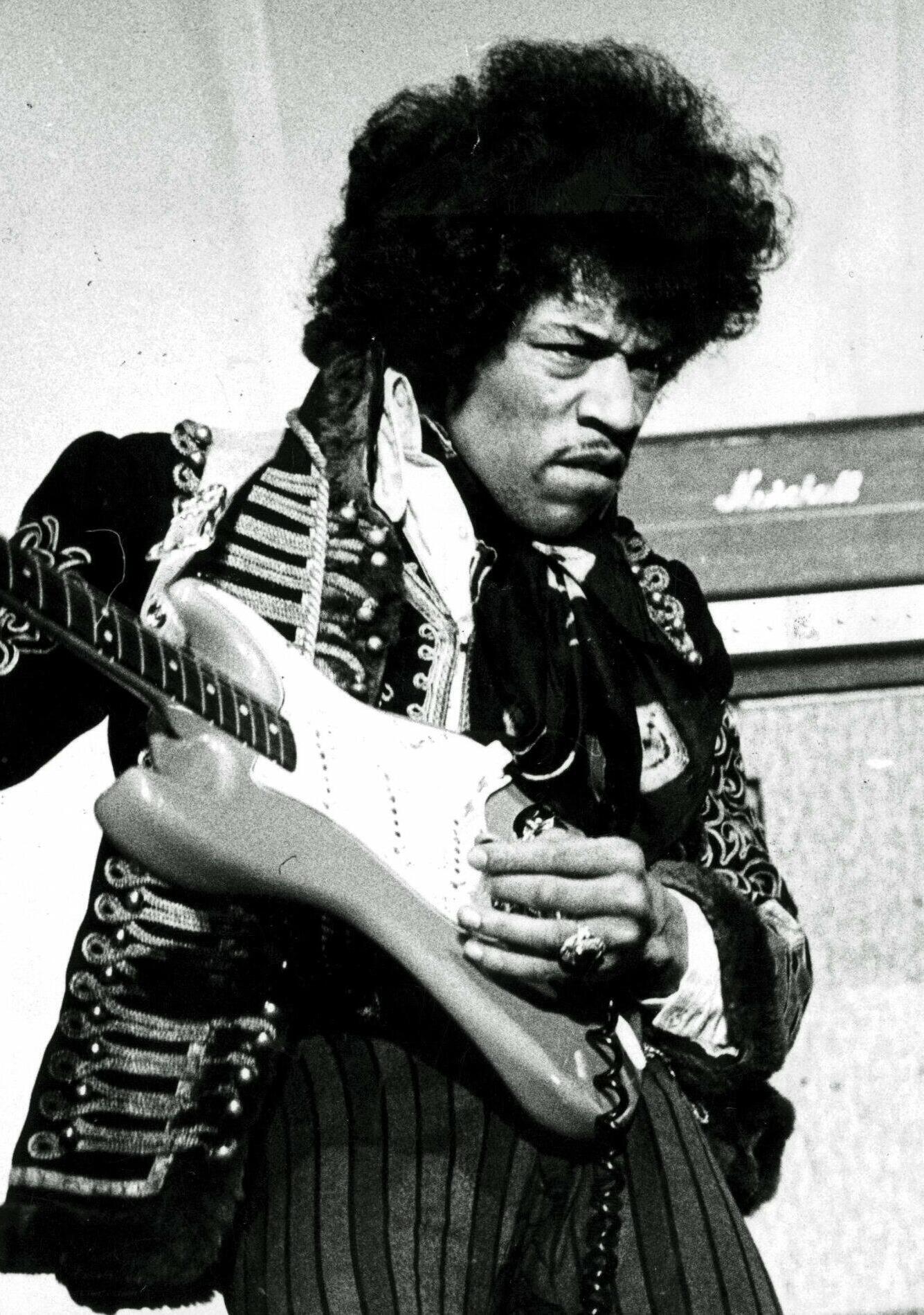
Jimi Hendrix
Jimi Hendrix redefined what was possible on the electric guitar between 1966 and 1970. His combination of left-handed playing on a right-handed Stratocaster, radical whammy bar technique and feedback manipulation created a vocabulary that still hasn't been exhausted. In four years of recording he changed rock music irrevocably.
Bright Strat neck pickup into a cranked Marshall Super Lead — wide, saturated tone with explosive fuzz overtones from a Fuzz Face, expressive wah sweeps and amp feedback used as a melodic instrument. The sound sits between clean and full distortion, always singing.
Signal Chain Order
Guitars
Fender Stratocaster (right-handed, played left)
1966–1970Flipped right-handed Strats, sometimes with string order reversed. Preferred 1962–1965 sunburst models.
Full specs & buy →Fender Stratocaster Jimi Hendrix Signature
Modern replica of his iconic Olympic White 1968 Strat.
Full specs & buy →Amplifiers
Marshall Super Lead 100W "Plexi"
1966–1970Stacked in pairs — typically 2 heads with 4 cabs. All controls at full. The breakup point of the output stage was his primary overdrive source.
Fender Bassman
1966–1967Used early in career alongside Marshalls.
Sunn Model T
1969–1970Used at Woodstock and his final recordings.
Effects Pedals
Dallas Arbiter Fuzz Face
1966–1970Germanium NKT275 transistors. Position: first in chain directly after guitar. Settings: Fuzz at 3 o'clock, Volume maxed.
Vox Wah (V846)
1967–1970Used rhythmically and melodically. Fundamental to "Voodoo Child (Slight Return)", "Little Wing" intro and countless Hendrix solos.
Univox Uni-Vibe
1969–1970Photocell-based chorus/vibrato. Defined the tone on "Machine Gun" and "Band of Gypsys" material. Set to vibrato mode for swirling, watery movement.
Roger Mayer Octavia
1967–1970Custom octave fuzz built by Roger Mayer. Creates an octave-up harmonic effect. Used on "Purple Haze" solo and "Fire".
Marshall Sola Sound Tone Bender
1966–1967Used before the Fuzz Face became his primary fuzz.
Key Albums & Tone
Raw Fuzz Face into Marshalls — "Purple Haze" and "Foxy Lady" define the tone.
"Little Wing" shows his clean Strat tone with subtle vibrato and expressiveness.
"Voodoo Child (Slight Return)" is the definitive Hendrix wah tone.
Rawer, funkier — Uni-Vibe and overdriven Marshall dominate.
Frequently Asked Questions
What guitar does Jimi Hendrix use?
Fender Stratocaster (right-handed, played left) and Fender Stratocaster Jimi Hendrix Signature. Flipped right-handed Strats, sometimes with string order reversed. Preferred 1962–1965 sunburst models.
What amp does Jimi Hendrix use?
Marshall Super Lead 100W "Plexi" and Fender Bassman. Stacked in pairs — typically 2 heads with 4 cabs. All controls at full. The breakup point of the output stage was his primary overdrive source.
What pedals does Jimi Hendrix use?
Jimi Hendrix uses Dallas Arbiter Fuzz Face, Vox Wah (V846), Univox Uni-Vibe and more.
What is Jimi Hendrix's signature sound?
Bright Strat neck pickup into a cranked Marshall Super Lead — wide, saturated tone with explosive fuzz overtones from a Fuzz Face, expressive wah sweeps and amp feedback used as a melodic instrument. The sound sits between clean and full distortion, always singing.