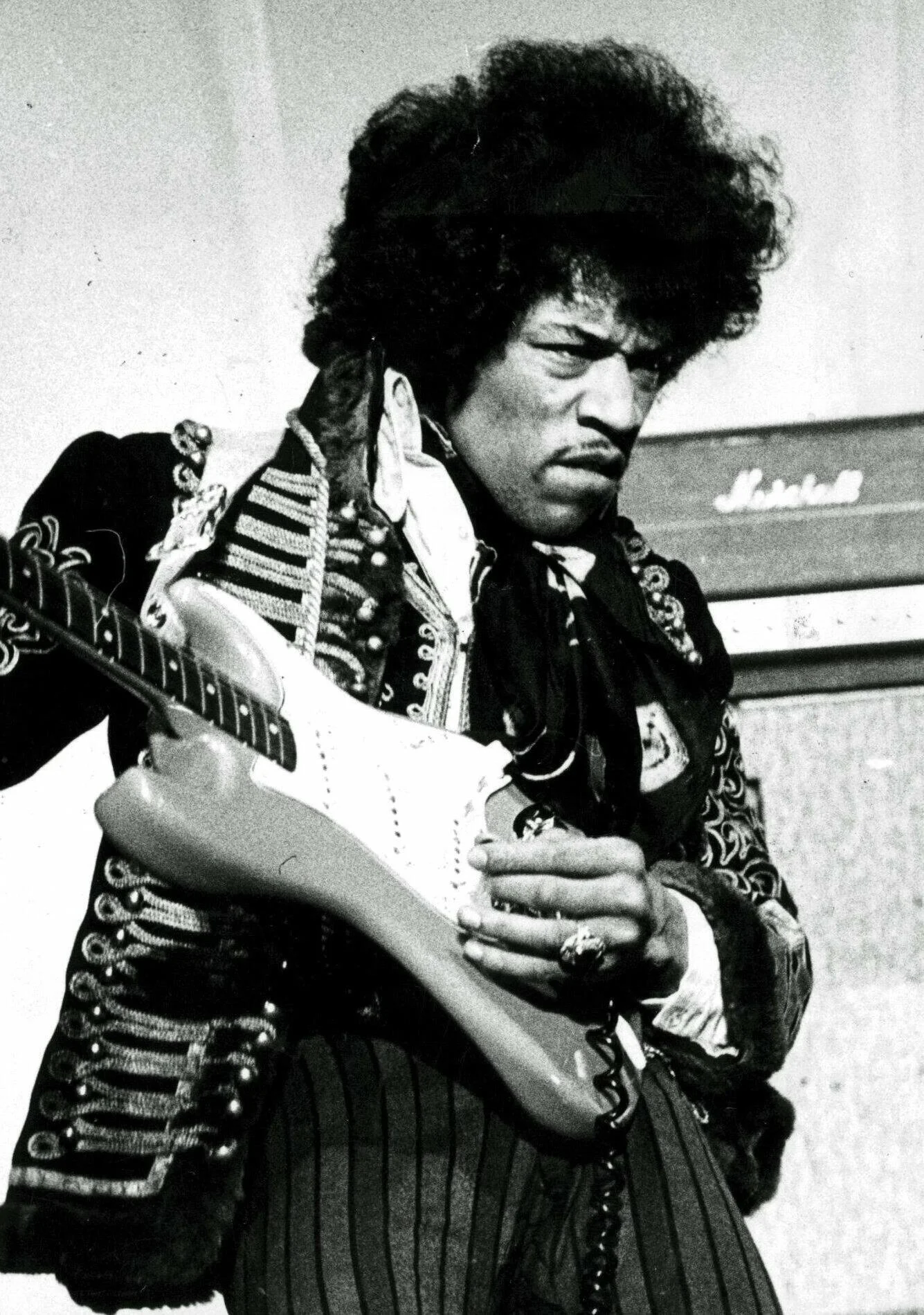
Sound Like Jimi Hendrix
Jimi Hendrix is one of the most recognisable voices in rock — a powerful and driving player who shaped the sound of the golden age of electric guitar innovation. Jimi Hendrix revolutionised the electric guitar with raw feedback, expressive wah, and psychedelic fuzz. His right-handed Stratocaster played upside down became one of the most iconic images in music. Below are complete rig guides at four budget levels, so you can start building their sound whether you're just starting out or ready to invest in the full setup.
Quick Answer
To sound like Jimi Hendrix, start with a Squier Classic Vibe 60s Stratocaster into a Boss Katana 50 MkII.
Tone Analysis
Jimi Hendrix's Guitar Tone — In Depth
Tone Philosophy
Jimi Hendrix did not approach the guitar as an instrument with established rules. He approached it as a sound-making device with unexplored possibilities. The feedback that other guitarists avoided became melody in his hands. The tremolo arm that was used for subtle vibrato became a vehicle for orchestral gestures. The volume and tone knobs that most players set and forgot became real-time expressive controls. This philosophy — that everything about the guitar is a tool for expression — is inseparable from his tone.
The Signature Sound
The Hendrix sound is built on a specific physical reality: a right-handed Stratocaster played upside-down, fed into Marshall Super Lead heads run at full volume, with a Dallas Arbiter Fuzz Face pedal directly after the guitar. The Marshall at full volume is the foundation, not the pedal. The Fuzz Face sits on top of an amplifier already working at its limits — and this is the critical insight that most imitations miss. Running a Fuzz Face into a clean amp produces a different sound entirely. The bloom, the sustain, the singing quality of Hendrix's lead tone comes from the interaction between the fuzz circuit and a power amp under saturation.
Key Gear
His primary pedals were three: the Dallas Arbiter Fuzz Face for lead and heavy rhythm work, a Vox Cry Baby wah for filtered effects and the iconic wah technique on Voodoo Child, and a Univibe for the rotating speaker simulation heard on Machine Gun and the Star-Spangled Banner. The Univibe is particularly important — it is not a chorus or a tremolo. Its photocell circuit produces a slow, slightly seasick modulation that works on the sound's phase relationships in a way that digital modellers still struggle to capture accurately.
Playing Approach
The distinguishing element of Hendrix's technique was the use of the thumb to fret bass notes on the low E string, leaving the other fingers free to play chord voicings that would be impossible in conventional thumb-behind-neck position. Combined with a floating tremolo arm, this produced chord stabs, drone note passages, and simultaneous bass-melody combinations that no one had done before. He also used his guitar's volume control as a performance tool — rolling it down cleaned up the Fuzz Face entirely, allowing him to move between clean and heavy lead tone in real time.
Legacy
Hendrix's influence cannot be overstated simply because it is not limited to guitar. His approach to the electric guitar as an orchestral instrument, his use of studio technology as a compositional tool, and his physical expressiveness on stage changed the language of popular music. Every guitarist who followed him — in rock, blues, funk, and metal — either built on his innovations or consciously reacted against them.
Budget Comparison
Pick Your Budget Level
£500 · Sweet Spot
~£448
- GuitarSquier Classic Vibe 60s Stratocaster
- AmpBoss Katana 50 MkII
£1,000 · Pro-Level
~£995
- GuitarSquier Classic Vibe 60s Stratocaster
- WahDunlop GCB95 Cry Baby Wah
- FuzzDunlop Fuzz Face Mini (germanium)
- AmpFender Blues Junior IV
- ReverbElectro-Harmonix Holy Grail Nano
£2,500 · Premium
~£2474
- GuitarFender Player Stratocaster
- WahDunlop GCB95 Cry Baby Wah
- FuzzDunlop Fuzz Face Mini (germanium)
- AmpFender Blues DeVille
- DelayTC Electronic Flashback 2
- ReverbStrymon Flint
Shop Now
Buy the Key Gear — £500 Sweet Spot
Guitar, amp and essential effects for the authentic Hendrix sound. The guitar and amp together account for 80% of the tone.
Complete the Rig
Essentials Every Guitarist Needs
These aren't exciting — but every rig needs them. Buy once, sorted forever.
Tone Profile
Hendrix's Sound
Bright, singing Strat neck pickup into a cranked Marshall Plexi — thick fuzz, expressive wah swells, controlled feedback and vibrato arm dives. The key is amp volume: Hendrix ran his amps loud enough to sustain naturally.
Modeling Amps
Get Hendrix's Tone on Your Modeler
Targeting Marshall (Plexi / JCM800). Use these amp models and IRs as your starting point — dial in from there using the knob settings above.
Low master, drive at 6–7 for Plexi crunch; Brit 2204 for JCM800 lead
Keep presence at 5, let the amp breathe — avoid over-EQing
Song Match
Which Hendrix Songs Suit Your Amp
Tone Match
Closest Real-World Tone Match
If you like Jimi Hendrix's tone, these players use a similar approach — same gear philosophy, comparable sound characteristics.
Weekly Tone Tips
One setting, one artist insight, one gear pick. No noise.