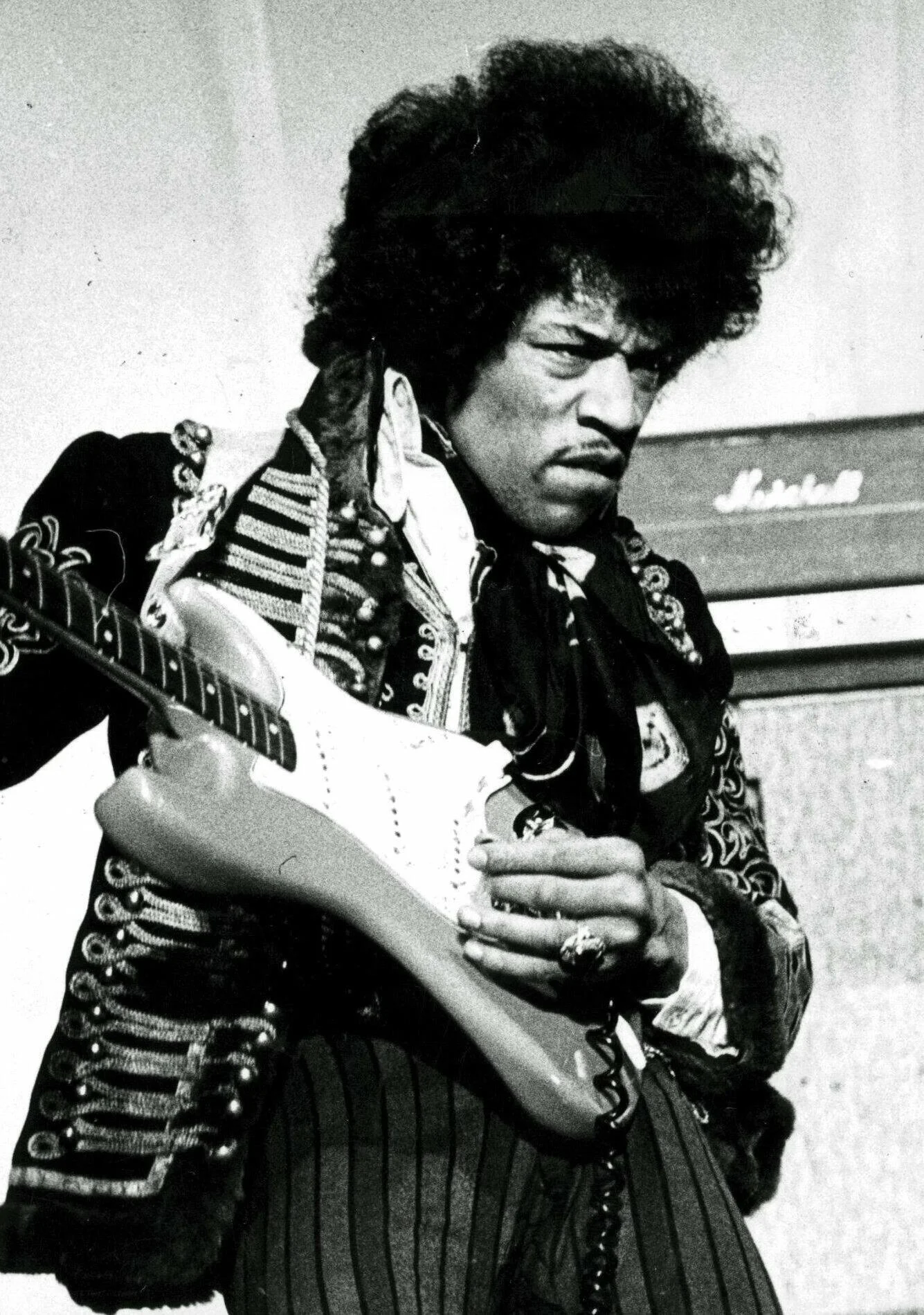
Jimi Hendrix — £2,500 · Premium Tone
Jimi Hendrix's powerful and driving tone took shape during the golden age of electric guitar innovation and remains one of the most sought-after sounds on guitar. Jimi Hendrix revolutionised the electric guitar with raw feedback, expressive wah, and psychedelic fuzz. His right-handed Stratocaster played upside down became one of the most iconic images in music. At the £2,500 · Premium mark — a premium build targeting the most accurate recreation possible — the build centres on a Fender Player Stratocaster running through a Fender Blues DeVille, with Dunlop GCB95 Cry Baby Wah and Dunlop Fuzz Face Mini (germanium) completing the signal chain, totalling ~£2474.
Build Jimi Hendrix's £2,500 · Premium Rig
6 pieces · Total ~$3,142
What guitar does Hendrix use?
Hendrix is primarily associated with strat style guitars. At a £2,500 budget, Fender Player Stratocaster delivers the essential tonal character.
What to Buy
£2,500 · Premium — Complete Gear List
Can't find one? See alternatives:
Why This Rig Works
How Jimi Hendrix's gear choices create the signature tone
Fender Player Stratocaster
Where the Squier approximates the Strat voice, the Player Strat *is* the Strat voice. Noticeably more articulate and dynamic, responding to every nuance of pick attack.
- Expression Filtervocal mid-sweep with Fasel resonance
- Foundation Fuzzvintage germanium sag, bloom, and breath
- Delay Enginestudio-grade digital and tape delay echo
- ReverbStrymon Flint
Fender Blues DeVille
The Fender Blues DeVille converts the guitar signal into audible sound and adds its own tonal character — EQ shaping, natural gain, and the overall feel of the final tone.
The Combined Tone
Bright, singing Strat neck pickup into a cranked Marshall Plexi — thick fuzz, expressive wah swells, controlled feedback and vibrato arm dives. The key is amp volume: Hendrix ran his amps loud enough to sustain naturally.
Tone Tips
Getting the Sound Right
- The Fender Blues DeVille stays cleaner longer than a Marshall-style amp — push it with a low-gain overdrive (gain at 2–3, level up) rather than cranking its own gain. Set treble at 6, bass at 4, and let the guitar's volume knob handle the dynamics.
- Use the neck pickup — Hendrix rarely used the bridge
- Turn the amp up until the preamp starts to break up
- Build solos from motifs and bends, not scale runs — Hendrix repeated melodic phrases and bent single notes to pitch; the technique is conversational, not athletic
- The loose 'kiss the pick' right-hand grip — Hendrix held the pick loosely between thumb and bent index finger, with the fleshy thumb pad brushing the strings during chord strums. This grip produces the warm, slightly smeared chord attack that is physically distinct from the sharp attack of a firmly-held plectrum
- Thumb-over-the-neck fretting for bass notes — the thumb frets the low E string while the four fingers fret chord notes above. This technique enables the bass-chord voicings and bass-note combinations in 'Little Wing' and 'Castles Made of Sand' that are physically impossible with standard thumb-behind-neck position
- Feedback is used structurally in live performances — Hendrix sustained feedback on specific notes by positioning the guitar at the correct angle and distance from the amp. Practice finding feedback nodes on each string at lower volume before attempting at performance volume where the feedback is harder to control precisely
Avoid These Pitfalls
Common Mistakes When Chasing This Tone
- Placing a tuner or buffered pedal before the Fuzz Face — most fuzz circuits (especially germanium ones) are sensitive to the impedance of the signal feeding them. A buffered pedal before the fuzz changes how the guitar volume knob responds. Run fuzz first in the chain
- Using a humbucker guitar as a substitute — the quack, string noise, and bright attack of single coils are irreplaceable. No amount of EQ on a humbucker produces the same result.
- Moving the wah too fast — wah is a filter effect that needs time to sweep through its range musically. Fast rocking produces a quacking sound; musical use is slower and more deliberate.
- Using the bridge pickup as the default — the bridge is an accent position, not where the warmth and expressiveness of blues lead tone lives.
- Choosing a pick that is too heavy — thin to medium picks give edge noise and articulation that heavier picks smooth away. That edge is part of the sound.
Budget Alternatives
Same Tone, Different Budget
FAQ
Jimi Hendrix Tone — Common Questions
Hendrix is primarily associated with strat style guitars. At a £2,500 budget, Fender Player Stratocaster delivers the essential tonal character.
Hendrix's amp is vintage blues voiced — clean to moderate gain. At the £2,500 level, Fender Blues DeVille is the closest match.
The £2,500 tier uses Hendrix's actual gear choices or direct equivalents. Total: £2,474. The tonal step up from £1,000 is real but diminishing — worth it for regular performers and studio work.
Hendrix's essential pedals include Fuzz, Wah. At the £2,500 tier: Dunlop GCB95 Cry Baby Wah, Dunlop Fuzz Face Mini (germanium), TC Electronic Flashback 2. Fuzz is the most important pedal — the others add nuance.
Hendrix's tone is defined by feedback, wah-driven, vintage-fuzz. The combination of strat guitar and vintage blues amp creates a sound that is immediately recognisable.
Hendrix's gain approach is pedal-driven — distortion pedals into a relatively clean amp. The pedal defines the distortion character. At £2,500, this is replicated through Fender Blues DeVille paired with Dunlop GCB95 Cry Baby Wah.
Jimi Hendrix — £2,500 · Premium Complete Rig
~£2474Guitar
Fender Player Stratocaster
Wah
Dunlop GCB95 Cry Baby Wah
Fuzz
Dunlop Fuzz Face Mini (germanium)
Amp
Fender Blues DeVille
Delay
TC Electronic Flashback 2
Reverb
Strymon Flint
Tone Match
Closest Real-World Tone Match
If you like Jimi Hendrix's tone, these players use a similar approach — same gear philosophy, comparable sound characteristics.
Related Tones