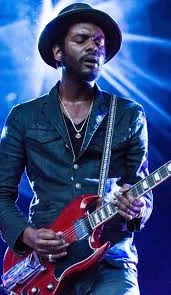
Gary Clark Jr — £2,500 · Premium Tone
Gary Clark Jr's raw and emotionally charged tone took shape during a generation pushing the boundaries of modern guitar and remains one of the most sought-after sounds on guitar. Gary Clark Jr bridges the electric blues tradition and modern rock with a tone that spans pristine clean to wall-of-fuzz. His Epiphone Casino or ES-335 through a Fender Super Reverb and Vox AC30 delivers an expressive, wah-soaked blues-rock vocabulary that references Hendrix, SRV and BB King simultaneously. At the £2,500 · Premium mark — a premium build targeting the most accurate recreation possible — the build centres on a Epiphone ES-339 running through a Fender Blues DeVille, with Dunlop GCB95 Cry Baby Wah and King Tone Duellist OD completing the signal chain, totalling ~£2494.
Build Gary Clark Jr's £2,500 · Premium Rig
6 pieces · Total ~$3,167
What guitar does Gary Clark Jr use?
Gary Clark Jr is primarily associated with semi hollow style guitars. At a £2,500 budget, Epiphone ES-339 delivers the essential tonal character.
What to Buy
£2,500 · Premium — Complete Gear List
Can't find one? See alternatives:
Why This Rig Works
How Gary Clark Jr's gear choices create the signature tone
Epiphone ES-339
The Epiphone ES-339 provides the tonal foundation for the entire rig — its character shapes everything that follows.
- Expression Filtervocal mid-sweep with Fasel resonance
- OverdriveKing Tone Duellist OD
- Lead Fuzzenormous four-transistor sustain wall
- DelayBoss DD-8 Digital Delay
Fender Blues DeVille
The Fender Blues DeVille converts the guitar signal into audible sound and adds its own tonal character — EQ shaping, natural gain, and the overall feel of the final tone.
The Combined Tone
Epiphone Casino or Gibson ES-335 into a Fender Super Reverb (clean channel) and Vox AC30 (breakup), blended. A Cry Baby wah and Electro-Harmonix Big Muff Pi add texture and fuzz. Clark's tone is wide-ranging — from clean jangle to full-bore fuzz — controlled by guitar volume and pick attack.
Tone Tips
Getting the Sound Right
- The Fender Blues DeVille stays cleaner longer than a Marshall-style amp — push it with a low-gain overdrive (gain at 2–3, level up) rather than cranking its own gain. Set treble at 6, bass at 4, and let the guitar's volume knob handle the dynamics.
- Two-amp setup: clean Fender and breaking-up Vox blended gives width and harmonic complexity
- Wah pedal rocked slowly mid-phrase — Clark uses it as a filter, not a wah-wah effect
- Spring reverb from the amp (not a pedal) gives the depth without washing the clarity
- Listen to how Clark bends the string after initial attack — he often plays a note straight, then adds vibrato or a slow, deliberate bend as the note sustains, which gives the phrase a vocal, expressive quality distinct from players who bend immediately on attack
- Mix Big Muff with clean amp signal if running a two-amp setup — the clean amp's clarity prevents the Muff's mid-scoop from making the tone disappear; blend the two amps so the fuzz adds texture while the clean preserves articulation
- Use your picking thumb as a dampener on the low strings during fast riff sections — Clark frequently ghosts the low E and A strings with the heel of his picking thumb to keep bass frequencies controlled while the fuzz pedal is engaged
Avoid These Pitfalls
Common Mistakes When Chasing This Tone
- Placing a tuner or buffered pedal before the Big Muff — most fuzz circuits (especially germanium ones) are sensitive to the impedance of the signal feeding them. A buffered pedal before the fuzz changes how the guitar volume knob responds. Run fuzz first in the chain
- Using the Big Muff into a driven amp with the sustain above 8 — at high sustain into a driven amp the signal becomes a thick, undefined wall of fuzz with no note definition. Keep the amp channel clean
- Putting fuzz after other pedals (especially wah or overdrive) — most fuzz circuits are sensitive to input impedance. Wah before fuzz is fine; overdrive into fuzz creates unpredictable gating.
- Moving the wah too fast — wah is a filter effect that needs time to sweep through its range musically. Fast rocking produces a quacking sound; musical use is slower and more deliberate.
- Using a humbucker where single coils are needed — the quack, string definition, and high-frequency air of single coils cannot be EQ'd into a humbucker
Budget Alternatives
Same Tone, Different Budget
FAQ
Gary Clark Jr Tone — Common Questions
Gary Clark Jr is primarily associated with semi hollow style guitars. At a £2,500 budget, Epiphone ES-339 delivers the essential tonal character.
Gary Clark Jr's amp is vintage blues voiced — the amp running hot, providing natural tube saturation. At the £2,500 level, Fender Blues DeVille is the closest match.
The £2,500 tier uses Gary Clark Jr's actual gear choices or direct equivalents. Total: £2,494. The tonal step up from £1,000 is real but diminishing — worth it for regular performers and studio work.
Gary Clark Jr's essential pedals include Fuzz, Wah. At the £2,500 tier: Dunlop GCB95 Cry Baby Wah, King Tone Duellist OD, Electro-Harmonix Big Muff Pi. Fuzz is the most important pedal — the others add nuance.
Gary Clark Jr's tone is defined by feedback, modern-blues, dynamic. The combination of semi hollow guitar and vintage blues amp creates a sound that is immediately recognisable.
Gary Clark Jr's gain approach is amp-driven — natural tube saturation from pushing the amp hard, not from distortion pedals. At £2,500, this is replicated through Fender Blues DeVille paired with Dunlop GCB95 Cry Baby Wah.
Gary Clark Jr — £2,500 · Premium Complete Rig
~£2494Guitar
Epiphone ES-339
Wah
Dunlop GCB95 Cry Baby Wah
Overdrive
King Tone Duellist OD
Fuzz
Electro-Harmonix Big Muff Pi
Amp
Fender Blues DeVille
Delay
Boss DD-8 Digital Delay
Tone Match
Closest Real-World Tone Match
If you like Gary Clark Jr's tone, these players use a similar approach — same gear philosophy, comparable sound characteristics.
Related Tones