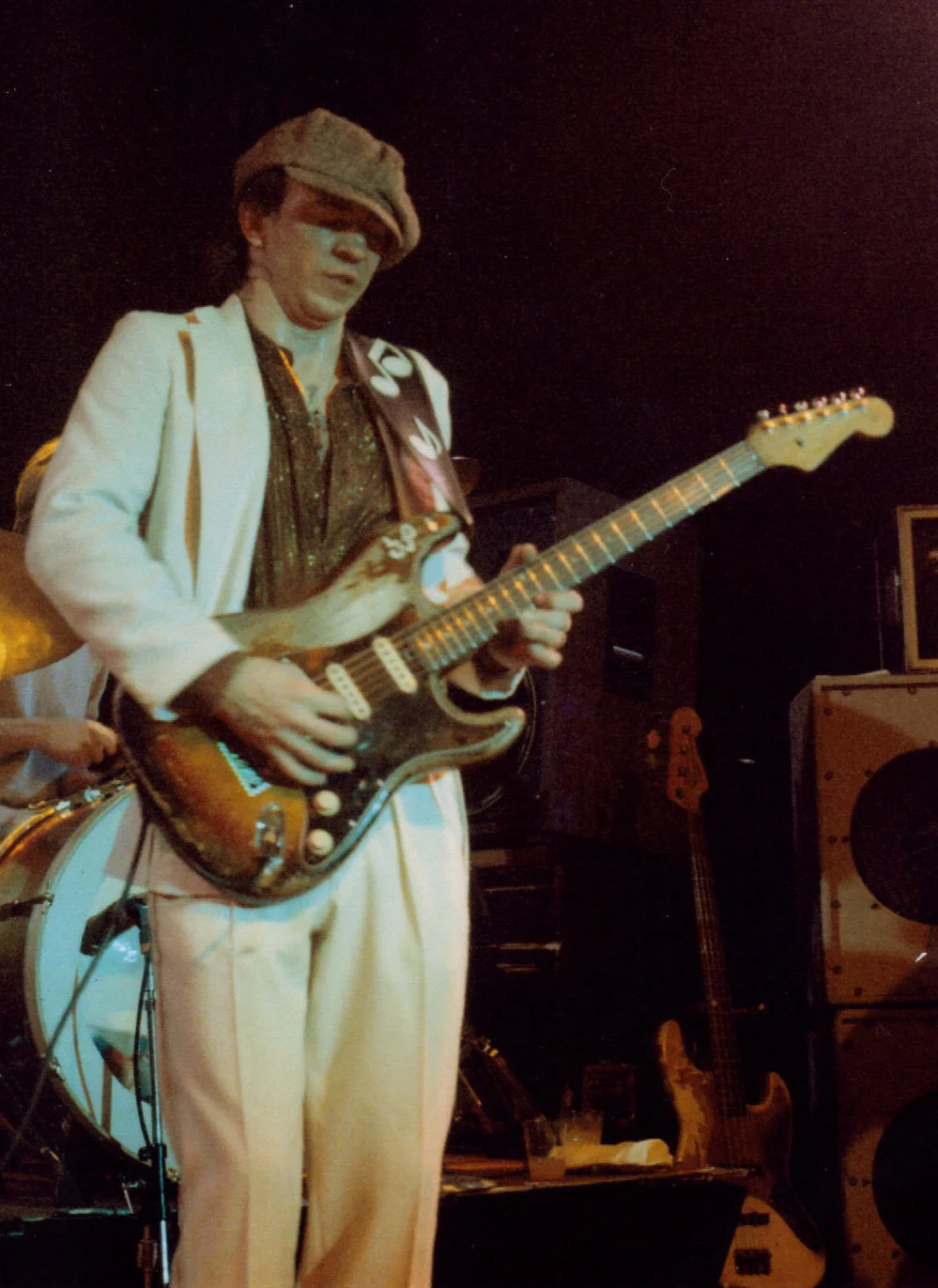
Stevie Ray Vaughan — £2,500 · Premium Tone
SRV's tone is the pinnacle of Texas blues — a heavy-strung Strat with raw aggression, warm Fender sparkle and a Tube Screamer used as a clean boost. Everything in his tone came from his hands. Replicating that soulful and deeply expressive sound at the £2,500 · Premium mark means Fender Player Stratocaster into Fender Blues DeVille. The effects — Wilson Effects MkII Wah, Ibanez TS9 Tube Screamer — add the finishing texture. This build totals ~£2485 and captures the core character — a premium build targeting the most accurate recreation possible.
Build Stevie Ray Vaughan's £2,500 · Premium Rig
5 pieces · Total ~$3,156
What guitar does SRV use?
SRV is primarily associated with strat style guitars. At a £2,500 budget, Fender Player Stratocaster delivers the essential tonal character.
What to Buy
£2,500 · Premium — Complete Gear List
Can't find one? See alternatives:
Why This Rig Works
How Stevie Ray Vaughan's gear choices create the signature tone
Fender Player Stratocaster
Where the Squier approximates the Strat voice, the Player Strat *is* the Strat voice. Noticeably more articulate and dynamic, responding to every nuance of pick attack.
- WahWilson Effects MkII Wah
- Amp Boost / ODwarm mid-hump boost that makes your amp sing
- ReverbElectro-Harmonix Holy Grail Nano
Fender Blues DeVille
The Fender Blues DeVille converts the guitar signal into audible sound and adds its own tonal character — EQ shaping, natural gain, and the overall feel of the final tone.
The Combined Tone
Heavy strings on a Strat (.13s) through a loud Fender Vibroverb or Super Reverb, with a Tube Screamer boosting the already-clean amp. The tone is thick, dynamic and full of character — because SRV's attack was so physical.
Tone Tips
Getting the Sound Right
- The Fender Blues DeVille stays cleaner longer than a Marshall-style amp — push it with a low-gain overdrive (gain at 2–3, level up) rather than cranking its own gain. Set treble at 6, bass at 4, and let the guitar's volume knob handle the dynamics.
- The Tube Screamer is a boost, not a distortion — high volume, low gain
- SRV played heavy strings (.13s) for the thick tone — try .11s as a start
- Set the Tube Screamer volume at 8–10 and drive near minimum — the pedal's job is to push the amp's input stage harder, not to contribute its own clipping character; gain above 3 muddies the tone
- Keep amp bass restrained (around 3–4) despite the heavy strings — SRV's rig ran low bass to prevent muddiness; the heavy strings provide the body, not the bass knob
- Vibrato originates from the wrist rotating, not from the finger pushing side to side — SRV's wide, vocal vibrato was a whole-arm motion pivoting at the wrist, giving it a smooth, singing quality unlike finger vibrato
- Use hybrid picking on Texas shuffle rhythms — alternate between the pick and middle finger on adjacent strings to get the rolling, percussive bounce that defines "Pride and Joy" and "The House Is Rockin'"
Avoid These Pitfalls
Common Mistakes When Chasing This Tone
- Setting the TS808 gain above 5 into a clean amp — at high gain settings the TS becomes a distortion pedal that colours the tone heavily. Below 4, it's a boost and focus pedal. Single coils into a TS above 5 gets nasal and harsh
- Running the Octavia into an already-driven amp channel — fuzz into a driven amp creates uncontrolled intermodulation that sounds chaotic rather than musical. The Octavia works best into a clean or barely-clean amp
- Setting gain too high on the overdrive pedal — most overdrive pedals are most useful at gain settings of 2-5, where they add character without dominating the tone. High gain settings on an OD pedal become a distortion, not an overdrive.
- Using light strings (9s or 10s) — the reduced string tension and output produces a thinner sound that can't be EQ'd to match the heaviness of 11s or 13s.
- Setting the tube screamer gain above 5 — at high gain settings the TS becomes a distortion pedal. Below 4, it's a boost/focus pedal that works correctly in this context.
Budget Alternatives
Same Tone, Different Budget
FAQ
Stevie Ray Vaughan Tone — Common Questions
SRV is primarily associated with strat style guitars. At a £2,500 budget, Fender Player Stratocaster delivers the essential tonal character.
SRV's amp is vintage blues voiced — clean with headroom, pushed by an overdrive pedal. At the £2,500 level, Fender Blues DeVille is the closest match.
The £2,500 tier uses SRV's actual gear choices or direct equivalents. Total: £2,485. The tonal step up from £1,000 is real but diminishing — worth it for regular performers and studio work.
SRV's essential pedals include Overdrive. At the £2,500 tier: Wilson Effects MkII Wah, Ibanez TS9 Tube Screamer, Electro-Harmonix Holy Grail Nano. Overdrive is the most important pedal — the others add nuance.
SRV's tone is defined by heavy-strings, texas-blues, amp-pushed. The combination of strat guitar and vintage blues amp creates a sound that is immediately recognisable.
SRV's gain approach is clean-boosted — a clean amp pushed by an overdrive pedal. The pedal adds colour; the amp adds body. At £2,500, this is replicated through Fender Blues DeVille paired with Wilson Effects MkII Wah.
Stevie Ray Vaughan — £2,500 · Premium Complete Rig
~£2485Guitar
Fender Player Stratocaster
Wah
Wilson Effects MkII Wah
Overdrive
Ibanez TS9 Tube Screamer
Amp
Fender Blues DeVille
Reverb
Electro-Harmonix Holy Grail Nano
Tone Match
Closest Real-World Tone Match
If you like Stevie Ray Vaughan's tone, these players use a similar approach — same gear philosophy, comparable sound characteristics.
Related Tones