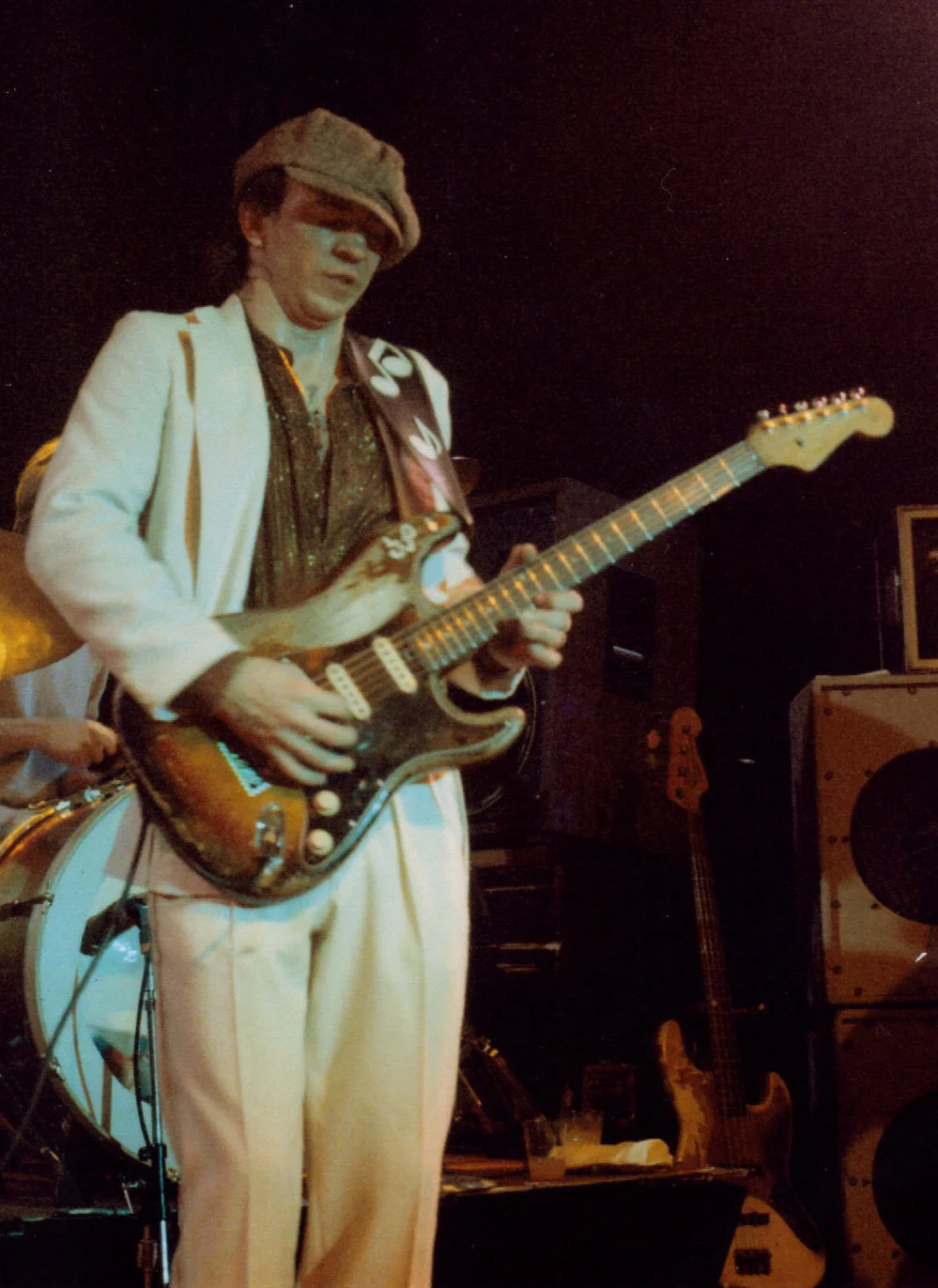
Stevie Ray Vaughan — £1,000 · Pro-Level Tone
SRV's tone is the pinnacle of Texas blues — a heavy-strung Strat with raw aggression, warm Fender sparkle and a Tube Screamer used as a clean boost. Everything in his tone came from his hands. Replicating that soulful and deeply expressive sound at the £1,000 · Pro-Level mark means Squier Classic Vibe 60s Stratocaster into Fender Blues Junior IV. The effects — Dunlop Cry Baby 535Q, Ibanez TS9 Tube Screamer — add the finishing texture. This build totals ~£996 and captures the core character — a serious investment that brings you within touching distance of the real thing.
Build Stevie Ray Vaughan's £1,000 · Pro-Level Rig
4 pieces · Total ~$1,265
What guitar does SRV use?
SRV is primarily associated with strat style guitars. At a £1,000 budget, Squier Classic Vibe 60s Stratocaster delivers the essential tonal character.
What to Buy
£1,000 · Pro-Level — Complete Gear List
Can't find one? See alternatives:
Why This Rig Works
How Stevie Ray Vaughan's gear choices create the signature tone
Squier Classic Vibe 60s Stratocaster
The alnico V pickups are the real deal — they deliver genuine Strat chime, quack and warmth that responds naturally to pick attack. An ideal foundation for Hendrix, Mayer, Gilmour or SRV tones.
- WahDunlop Cry Baby 535Q
- Amp Boost / ODwarm mid-hump boost that makes your amp sing
Fender Blues Junior IV
This is where the magic happens for Mayer and SRV tones. The EL84 power section breaks up beautifully when pushed, and the bright, clean headroom is exactly what Tube Screamer boost tones are built on.
The Combined Tone
Heavy strings on a Strat (.13s) through a loud Fender Vibroverb or Super Reverb, with a Tube Screamer boosting the already-clean amp. The tone is thick, dynamic and full of character — because SRV's attack was so physical.
Tone Tips
Getting the Sound Right
- The Fender Blues Junior IV stays cleaner longer than a Marshall-style amp — push it with a low-gain overdrive (gain at 2–3, level up) rather than cranking its own gain. Set treble at 6, bass at 4, and let the guitar's volume knob handle the dynamics.
- The Tube Screamer is a boost, not a distortion — high volume, low gain
- SRV played heavy strings (.13s) for the thick tone — try .11s as a start
- Use string bends aggressively — SRV bent sharp deliberately
- Tune down to Eb standard — SRV played in Eb his entire career, which reduces string tension slightly even with .13s and adds harmonic depth
- Ride the volume knob constantly — between 7 and 10 for dynamic shaping; SRV never left it pegged at full
- Play behind the beat on slow 12-bar blues — SRV's rhythmic feel was relaxed and behind the kick drum, especially on ballads like "Lenny" and "Riviera Paradise"
Avoid These Pitfalls
Common Mistakes When Chasing This Tone
- Setting the TS808 gain above 5 into a clean amp — at high gain settings the TS becomes a distortion pedal that colours the tone heavily. Below 4, it's a boost and focus pedal. Single coils into a TS above 5 gets nasal and harsh
- Running the Octavia into an already-driven amp channel — fuzz into a driven amp creates uncontrolled intermodulation that sounds chaotic rather than musical. The Octavia works best into a clean or barely-clean amp
- Setting the boost level too high relative to the base tone — a boost for solos should raise the presence of the guitar, not cause a volume jump that overwhelms the mix. Level matching matters.
- Setting gain too high on the overdrive pedal — most overdrive pedals are most useful at gain settings of 2-5, where they add character without dominating the tone. High gain settings on an OD pedal become a distortion, not an overdrive.
- Using light strings (9s or 10s) — the reduced string tension and output produces a thinner sound that can't be EQ'd to match the heaviness of 11s or 13s.
Budget Alternatives
Same Tone, Different Budget
FAQ
Stevie Ray Vaughan Tone — Common Questions
SRV is primarily associated with strat style guitars. At a £1,000 budget, Squier Classic Vibe 60s Stratocaster delivers the essential tonal character.
SRV's amp is vintage blues voiced — clean with headroom, pushed by an overdrive pedal. At the £1,000 level, Fender Blues Junior IV is the closest match.
The £1,000 tier adds noticeably better build quality and tonal nuance over the £500 rig. This build totals £996 with Squier Classic Vibe 60s Stratocaster, Fender Blues Junior IV, 2 effects. This is the tier where the tone becomes genuinely convincing for gigging and recording.
SRV's essential pedals include Overdrive. At the £1,000 tier: Dunlop Cry Baby 535Q, Ibanez TS9 Tube Screamer. Overdrive is the most important pedal — the others add nuance.
SRV's tone is defined by heavy-strings, texas-blues, amp-pushed. The combination of strat guitar and vintage blues amp creates a sound that is immediately recognisable.
SRV's gain approach is clean-boosted — a clean amp pushed by an overdrive pedal. The pedal adds colour; the amp adds body. At £1,000, this is replicated through Fender Blues Junior IV paired with Dunlop Cry Baby 535Q.
Stevie Ray Vaughan — £1,000 · Pro-Level Complete Rig
~£996Guitar
Squier Classic Vibe 60s Stratocaster
Wah
Dunlop Cry Baby 535Q
Overdrive
Ibanez TS9 Tube Screamer
Amp
Fender Blues Junior IV
Tone Match
Closest Real-World Tone Match
If you like Stevie Ray Vaughan's tone, these players use a similar approach — same gear philosophy, comparable sound characteristics.
Related Tones