RockBlues1960s
Jimi Hendrix — £500 · Sweet Spot Rig
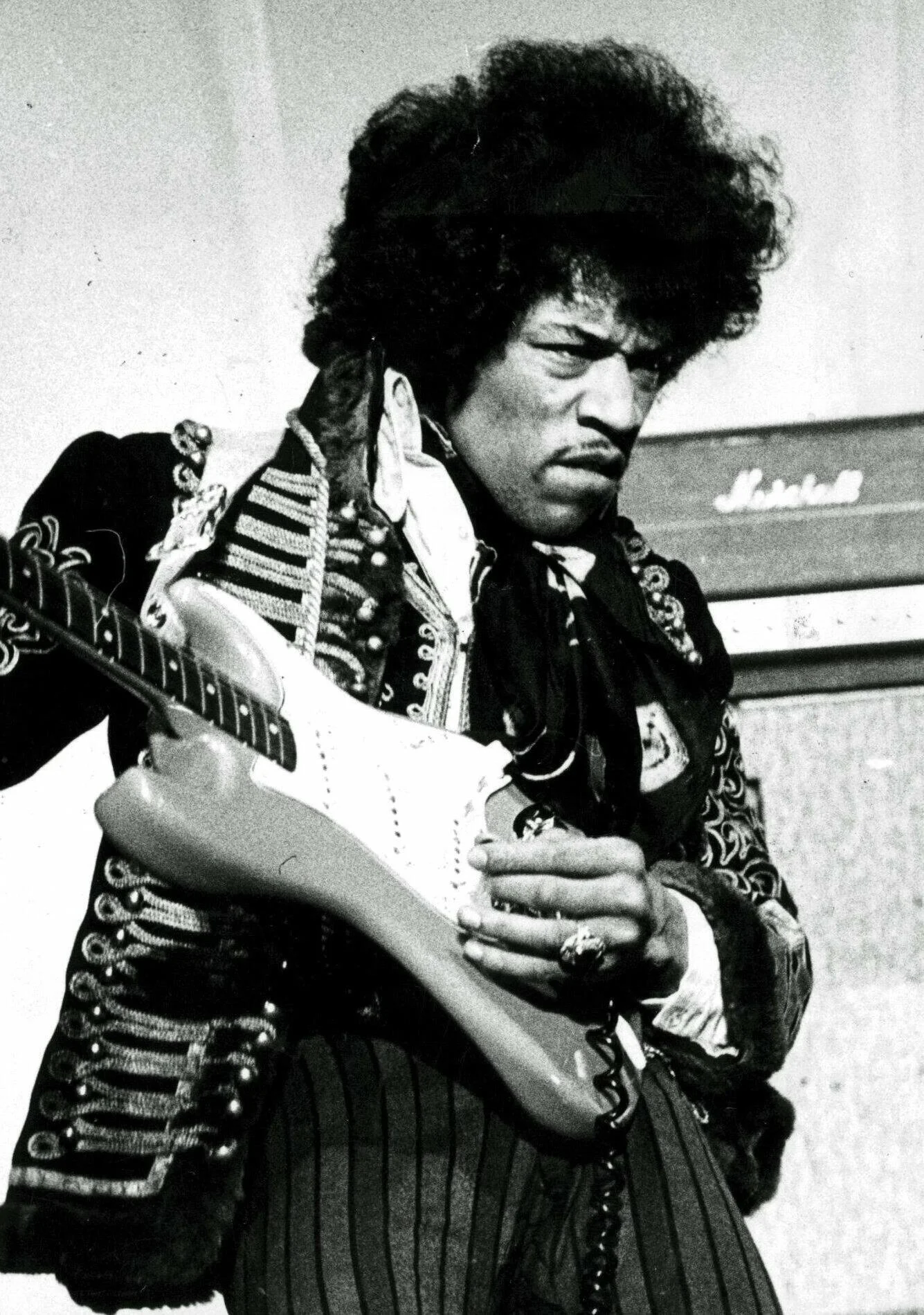
Bright, singing Strat neck pickup into a cranked Marshall Plexi — thick fuzz, expressive wah swells, controlled feedback and vibrato arm dives. The key is amp volume: Hendrix ran his amps loud enough to sustain naturally.
Signal Path
Signal Chain
Full signal path
GuitarCV Strat
AmpKatana 50
Full Gear List
£500 · Sweet Spot — Complete Rig


Tone Tips
Getting the Sound Right
- Use the neck pickup — Hendrix rarely used the bridge
- Turn the amp up until the preamp starts to break up
- Roll your picking attack for dynamic control through the fuzz
- Use the wah slowly and expressively, not as a fast filter
- Engage vibrato arm for subtle warbles, not dive bombs
- Tune down half a step to Eb — Hendrix played in Eb standard throughout his career, adding richer harmonics and a slightly looser feel
- Roll the guitar tone knob to around 6 on the neck pickup — takes the Strat's edge off for a thicker, more vocal lead tone
- Set Fuzz Face bias low for sputter and gating, high for smooth sustain — Hendrix used germanium fuzz for its unpredictable, temperature-sensitive character
Avoid These Pitfalls
Common Mistakes When Chasing This Tone
- Placing a tuner or buffered pedal before the Fuzz Face — most fuzz circuits (especially germanium ones) are sensitive to the impedance of the signal feeding them. A buffered pedal before the fuzz changes how the guitar volume knob responds. Run fuzz first in the chain
- Using a humbucker guitar as a substitute — the quack, string noise, and bright attack of single coils are irreplaceable. No amount of EQ on a humbucker produces the same result.
- Using a distortion pedal instead of pushing the amp — vintage-voiced amps create better overdrive by being pushed hard than by a pedal circuit. Let the amp do the work.
- Using too much gain on the drive pedal — pedal-driven tone works best with the amp providing some character and the pedal adding focus and saturation, not replacing the amp entirely.
- Putting fuzz after other pedals (especially wah or overdrive) — most fuzz circuits are sensitive to input impedance. Wah before fuzz is fine; overdrive into fuzz creates unpredictable gating.
- Moving the wah too fast — wah is a filter effect that needs time to sweep through its range musically. Fast rocking produces a quacking sound; musical use is slower and more deliberate.
- Using the bridge pickup as the default — the bridge is an accent position, not where the warmth and expressiveness of blues lead tone lives.
- Choosing a pick that is too heavy — thin to medium picks give edge noise and articulation that heavier picks smooth away. That edge is part of the sound.
Tone Profile
Hendrix's Sound
Bright, singing Strat neck pickup into a cranked Marshall Plexi — thick fuzz, expressive wah swells, controlled feedback and vibrato arm dives. The key is amp volume: Hendrix ran his amps loud enough to sustain naturally.