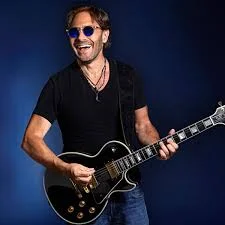
Tone Timeline
Al Di Meola — Tone Evolution
Al Di Meola is celebrated for his right-hand picking technique — an extremely clean, fast alternate-picking approach on both acoustic and electric guitars. His career spans jazz fusion with Return to Forever to acoustic world music collaborations with Paco de Lucía and John McLaughlin.
1974–1978: Return to Forever / Elegant Gypsy
Di Meola joined Chick Corea's Return to Forever at 19 and recorded Romantic Warrior (1976). His solo debut Land of the Midnight Sun (1976) and Elegant Gypsy (1977) established his approach: a Gibson Les Paul or SG through a Mesa/Boogie Mark I, using his signature machine-gun alternate picking at extreme speeds. The Mesa/Boogie's compressed midrange was perfect for his line clarity.
Signal Chain
1980–1990: Friday Night in San Francisco / Cielo e Terra
↑ Acoustic period showed Di Meola's technique was instrument-independent — the same precision and speed applied to classical/nylon string contexts.
Friday Night in San Francisco (1981) with McLaughlin and de Lucía was a landmark acoustic album. Di Meola used a Rodriguez classical guitar — nylon strings, very fast right hand. His approach to acoustic playing retained the alternate-picking precision of his electric work. Cielo e Terra (1985) and Soaring Through a Dream blended acoustic and electric work.
Signal Chain
1994–present: World Sinfonia / Opus
↑ World Sinfonia era broadened the musical palette without changing the technical approach — same right-hand precision, wider stylistic range.
Di Meola's World Sinfonia incorporated Argentine tango, Brazilian music, and Mediterranean styles alongside jazz fusion. He maintains both electric and acoustic guitar work. His electric tone shifted to Vigier guitars (a French brand with carbon fibre necks) and more modern amp setups. The core alternate-picking identity is unchanged.
Signal Chain