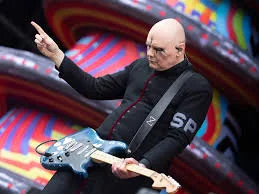
Song Rig
Cherub Rock
Billy Corgan · Siamese Dream · 1993
Tone Overview
What Makes This Sound Unique
Siamese Dream's guitar production is widely regarded as one of the greatest rock guitar recordings ever made. Producer Butch Vig and Corgan doubled and tripled guitar tracks — each panned differently — to create a wall of guitar sound that no live rig can truly replicate. The core tone came from a 1974 Marshall JMP "Super Lead" head through multiple Marshall 4x12 cabinets, with nearly all guitar tracks recorded multiple times for density.
Signal Chain
- 1Gibson Les Paul Custom (1974)
- 2Marshall JMP Super Lead (1974)
- 3Marshall 4x12 cabinets
- 4Electro-Harmonix Big Muff Pi (Russian)
- 5Hiwatt DR103
Amp Settings
The Marshall JMP was run at its full natural gain — nearly at the limit of the output stage. The Big Muff was used for specific overdubs rather than as the primary distortion device. The presence control is crucial for the nasal, cutting midrange quality.
Technique
How to Play It
Corgan's use of studio layering as a compositional tool sets Siamese Dream apart from contemporaneous albums. His live approach with Smashing Pumpkins compensated with a huge stereo rig, but the studio tracks are simply unreproducible as a single guitar sound.
Budget Alternative
Achievable With
A humbucker-equipped guitar into a vintage-style Marshall (JCM800 or JMP) with gain at 7-8. Stack multiple guitar tracks for density if recording. A Russian Big Muff adds character for lead lines.
Your Gear
Adapt to My Amp
More from Billy Corgan