Tone Timeline
Buddy Holly — Tone Evolution
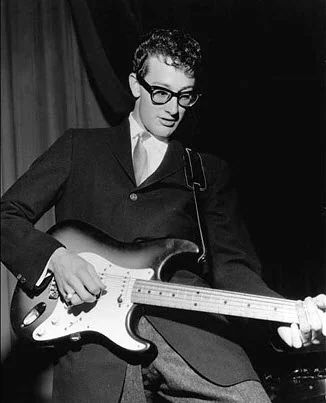
Buddy Holly was the first guitarist to make the Fender Stratocaster iconic in popular music. His tone — bright, trebly, and rhythmically precise — defined early rock and roll and directly influenced the Beatles, Stones, and every British Invasion band that followed.
1956–1957: Decca / That'll Be the Day
Early recordings with producer Owen Bradley used a variety of setups. Holly's playing was distinctive — precise, rhythmic, and melodically inventive — but the production was generic Nashville. That'll Be the Day from this era failed commercially.
Signal Chain
1957–1959: Coral / Rave On
↑ Petty's studio captured Holly's natural tone — bright Stratocaster, amp tremolo, and Holly's extremely precise picking created the template for rock and roll guitar.
Norman Petty's Clovis, New Mexico studio recordings are the essential Holly — Peggy Sue, That'll Be the Day (re-recorded), Rave On, Not Fade Away. His Stratocaster through a small Fender amp (Twin or Tremolux) gave a bright, slightly compressed tone. The tremolo effect on Peggy Sue came from the amp's built-in tremolo circuit, not his playing — but the picking hand technique across muted strings created the percussive attack. Holly died in February 1959 aged 22.
Signal Chain