Tone Timeline
Dave Davies — Tone Evolution
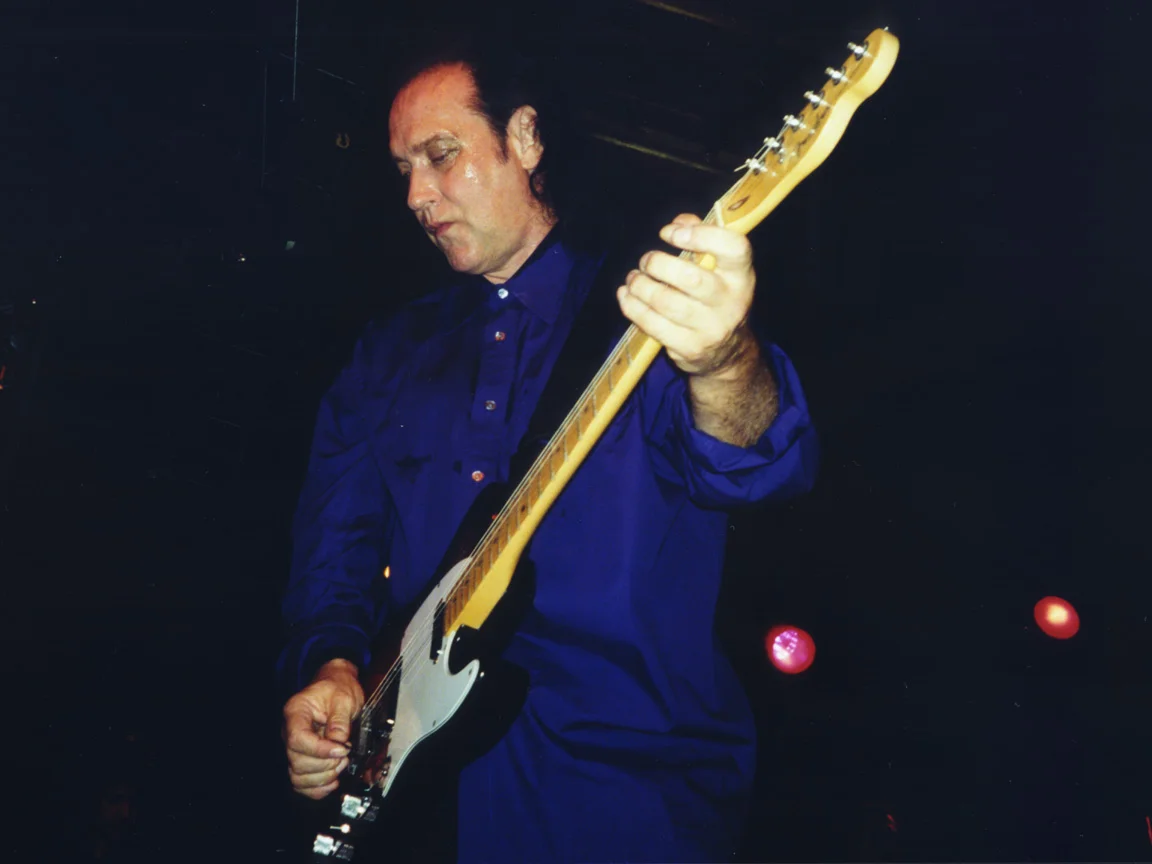
Dave Davies accidentally invented the power chord and the proto-distortion sound that would underpin rock for sixty years. By slashing the speaker cone of a small amplifier with a razor blade on "You Really Got Me" (1964), he created a ripping fuzz tone from damage rather than design. His contribution to rock guitar is foundational.
1963–1967: "You Really Got Me" / Face to Face
"You Really Got Me" (1964) was recorded with a slashed Elpico speaker cone pushed into a larger Vox AC30 — the result was a distorted riff that predated every fuzz pedal by accident. Davies' rhythm attack on early Kinks records is propulsive and violent: a Gibson Flying V, a Harmony Meteor, direct and loud. Face to Face (1966) began The Kinks' transition to art rock.
Signal Chain
1968–1979: Village Green / Muswell Hillbillies
↑ Adapted to softer, more melodic role within Ray's concept albums — raw distortion of early era gave way to textural support.
The Kinks' concept album era (Village Green, Arthur, Muswell Hillbillies) reduced Davies' guitar to a supporting melodic role within Ray Davies' Englishness vision. Electric guitar was deployed sparingly — acoustic and music hall textures dominated. When Dave's guitar appeared, it cut through cleanly: a Stratocaster or SG through modest gain.
Signal Chain
1977–1996: Sleepwalker / Phobia
↑ Arena rock return to heavier guitar — power chord approach from the 1960s reimagined with 1980s production values.
Sleepwalker (1977) marked a harder rock approach as the Kinks competed with punk and new wave. Give the People What They Want (1981) was the most guitar-forward Kinks album in years. Davies' solos became longer and more prominent. After the Kinks disbanded in 1996, he pursued a solo career with the same Strat/Marshall approach.
Signal Chain