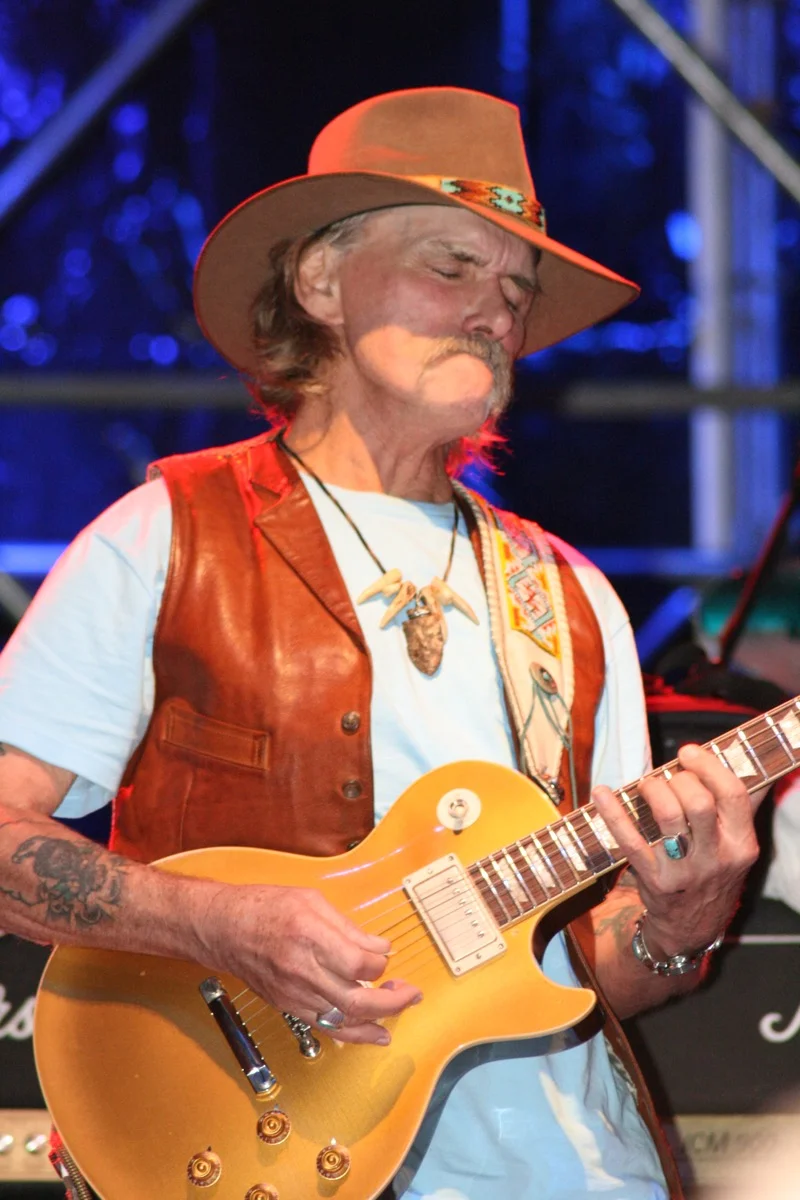
Tone Timeline
Dickey Betts — Tone Evolution
Dickey Betts was the melodic counterweight to Duane Allman in the Allman Brothers Band — his country-influenced lead lines balanced Duane's blues-rooted attack. After Duane's death, Betts became the band's primary lead guitarist, writing "Ramblin' Man" and introducing a Southern rock melodic sensibility that blended country and jazz with the blues foundation.
1969–1971: With Duane Allman
The original Allman Brothers Band featured two lead guitarists — Duane's slide blues and Betts' melodic country-rock lines. At Fillmore East (1971) remains the definitive statement: Betts played a Les Paul through a Marshall, Duane played Stratocaster and slide. Their twin-guitar harmony lines ("In Memory of Elizabeth Reed", "Whipping Post") set the template for Southern rock lead guitar interplay.
Signal Chain
1972–1982: Post-Duane / Ramblin' Man
↑ Became primary lead voice — SG's brighter attack suited his melodic/country approach better than the Les Paul's warmth.
After Duane's death, Betts stepped into the primary lead role. "Ramblin' Man" (1973) was a country-pop hit built on his melodic sensibility. Brothers and Sisters (1973) showed the band at its most commercially successful. Betts' guitar moved toward a cleaner, brighter SG-through-Marshall sound — less chunky than Les Paul, more articulate for his jazz-influenced phrases.
Signal Chain
1989–2015: Reunions & Betts Band
↑ Consistent identity across reunions — the SG/Marshall tone became a Southern rock archetype.
Multiple Allman Brothers Band reunions through the 1990s and 2000s kept Betts active. He also led his own band. His SG/Marshall approach remained intact — one of the most consistent tone combinations in Southern rock. The Beacon Theatre residencies (2009–2014) showed Betts and Warren Haynes sharing lead duties in a context that echoed the original dual-lead structure with Duane.
Signal Chain