Tone Timeline
Freddie King — Tone Evolution
Freddie King was the Texas-Ohio hybrid of blues guitar — combining the raw Delta influence with a harder, more aggressive approach than his contemporaries B.B. or Albert King. His clean Fender Jazzmaster tone and fingerpicks became a blueprint for British blues guitarists.
1956–1963: Federal Records / Hideaway
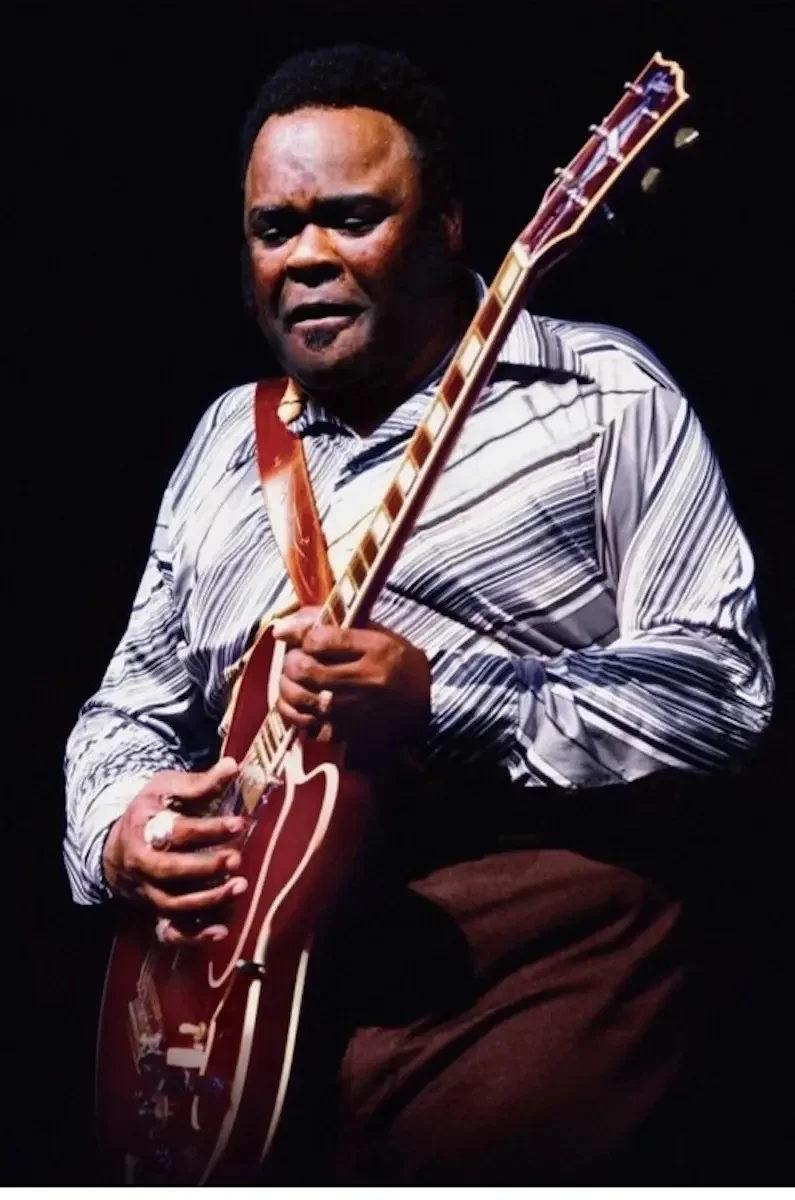
Freddie King's Federal Records era produced his most famous work — Hideaway (1961) was an instrumental that became a blues standard. He used a Gibson ES-345 or ES-355 semi-hollow body, but his most distinctive gear was his use of fingerpicks (a plastic thumbpick plus metal fingerpick on his index finger) which gave his playing a sharper, more percussive attack than most blues players. The tone was bright, slightly compressed, amp-driven overdrive.
Signal Chain
1968–1975: Cotillion / RSO Records
↑ The shift to Telecaster for RSO era recordings gave King a brighter, more aggressive tone — suited to the harder rock context of mid-'70s blues.
Eric Clapton produced two Freddie King albums for RSO (1974-75) — Getting Ready and Burglar. By this period King was using a Fender Telecaster and various Fender amplifiers rather than the semi-hollow Gibsons of the Federal era. The tone was rawer and more direct. He died of heart failure in 1976 aged 42, still at a creative peak.
Signal Chain