Tone Timeline
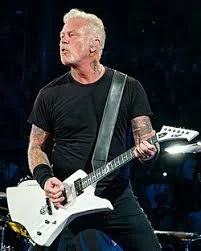
James Hetfield — Tone Evolution
Hetfield's rhythm tone is the most studied in thrash metal — mechanical, percussive down-picking with absolute string separation at extreme gain. The journey from Marshall JCM 800 to Mesa Boogie Dual Rectifier to his own Mesa/Boogie "Hetfield" signature amp traces the evolution of modern metal rhythm tone.
1983–1985: Kill 'Em All / Ride the Lightning
The earliest Metallica recordings used a Gibson Flying V (with a custom EMG pickup) and a BC Rich into a Marshall JCM 800 2203 100W. The down-picking technique that would define thrash was already present — Hetfield used palm muting and pick attack to create rhythmic separation that sustained chords couldn't achieve. The tone was hot and slightly scooped but not yet the ultra-refined machine of later records.
Signal Chain
Songs from this era
1986–1988: Master of Puppets / …And Justice for All
↑ Custom ESP replaced the Gibson Flying V — the Explorer shape and more aggressive fretboard profile better suited the playing style.
The Master of Puppets sessions used Hetfield's ESP Explorer — a custom-built instrument that became his signature shape. The Marshall JCM 800 remained the amp of choice, though with the gain pushed harder and the mids slightly scooped. The tone on Battery and Master of Puppets was built from pure amp saturation: no distortion pedal, just the JCM 800 at high volume. The And Justice for All mix famously buried the bass — Hetfield's guitar was compensating for the midrange space.
Signal Chain
1991–1997: The Black Album / Load / Reload
↑ Mesa Boogie Dual Rectifier replaced the Marshall JCM 800 — tighter, heavier, more modern American high-gain sound replaced the British mid-crunch.
Bob Rock's production on The Black Album introduced the Mesa Boogie Dual Rectifier to Hetfield's rig. The Recto's tighter, more compressed gain structure suited the slower, heavier mid-tempo riffs of Enter Sandman. Hetfield's tone became more scooped and thunderous — less mid-forward Marshall, more modern American high-gain. The Load era softened the tone further with more emphasis on melody and even some clean work on Until It Sleeps.
Signal Chain
2008–present: Death Magnetic / Hardwired
↑ Mesa/Boogie James Hetfield signature amp — purpose-built to his spec, tighter low end than a stock Dual Rectifier, designed for maximum pick articulation at high gain.
Death Magnetic saw a return to the tighter, more aggressive Metallica sound after the experimental 2000s. Hetfield used his ESP signature guitars alongside the Mesa/Boogie James Hetfield "Snakebyte" signature amp — a custom-voiced head designed to replicate his live tone at the 2008–2016 world tour. The Hardwired… to Self-Destruct production by Greg Fidelman aimed for the band's classic tone with modern clarity.
Signal Chain