Tone Timeline
Jonny Greenwood — Tone Evolution
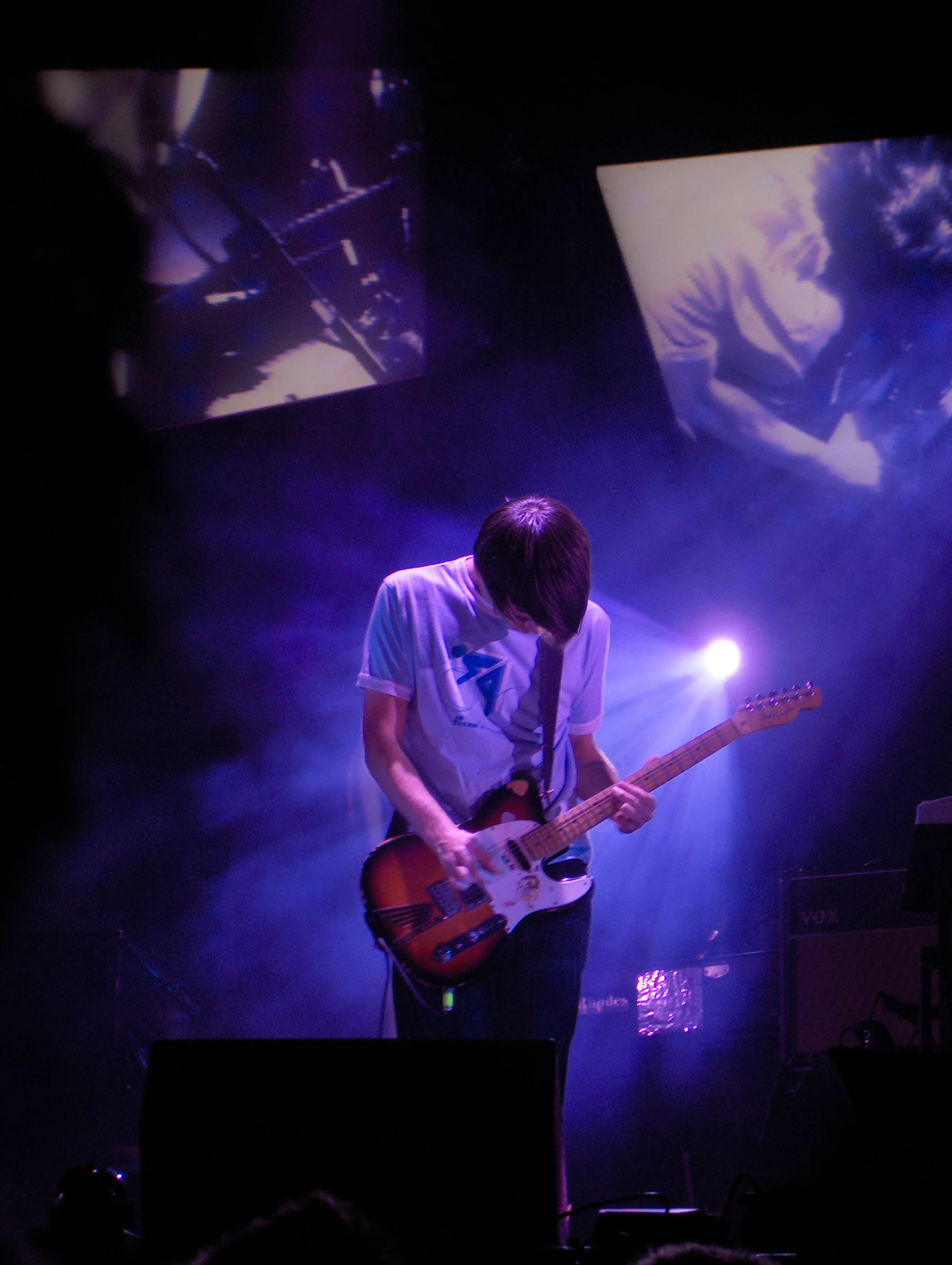
Jonny Greenwood is Radiohead's sonic architect — his guitar approach is deliberately anti-virtuosic, using texture, noise, and unconventional technique to create atmospheres rather than showcase technique. His tone ranges from Telecaster jangle to orchestrated feedback to ondes Martenot.
1993–1995: Pablo Honey / The Bends
Early Radiohead Greenwood used a Fender Telecaster Plus through a Mesa/Boogie studio preamp — the tone was relatively conventional alternative rock. The Bends showed more sophistication: Just and Fake Plastic Trees demonstrated his ability to shift between gentle clean tones and aggressively distorted passages within the same song.
Signal Chain
1997–2000: OK Computer / Kid A
↑ The shift from OK Computer to Kid A was radical — guitar became one texture among many rather than the lead instrument; Greenwood's identity as a guitarist was deliberately obscured.
OK Computer saw Greenwood deliberately moving away from traditional guitar heroics — Paranoid Android's multiple-section structure and No Surprises' clean glockenspiel-like tone showed a guitarist rejecting conventional rock playing. Kid A went further: guitar was often processed beyond recognition, used as texture rather than instrument. He used an Ondes Martenot and various electronic treatments.
Signal Chain
2001–present: Amnesiac / In Rainbows / Film Scores
↑ Film scoring work fed back into Radiohead — orchestral dynamics and tonal palette expanded Greenwood's guitar vocabulary beyond what conventional rock contexts allowed.
Post-Kid A Radiohead albums saw guitar return to a more central role but forever changed — Greenwood incorporated orchestral thinking from his film score work (There Will Be Blood, The Master, Spencer). In Rainbows had some of his most beautiful guitar work: Nude, Reckoner. His signal chain evolved to include more sophisticated amp modelling and processing.
Signal Chain