Tone Timeline
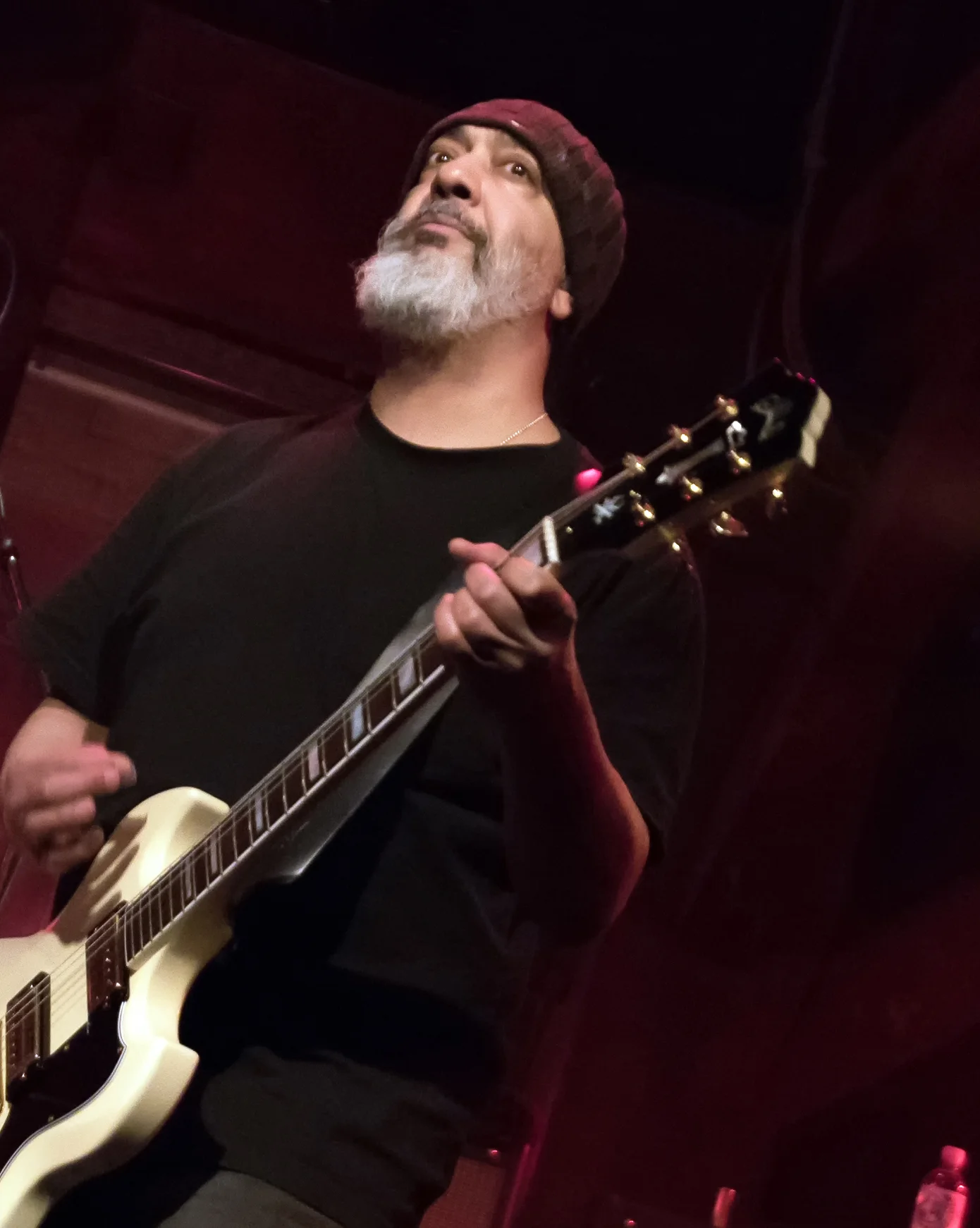
Kim Thayil — Tone Evolution
Kim Thayil built Soundgarden's guitar foundation using detuned, dark, heavy riffs through a Hamer guitar and Mesa/Boogie setup. His approach was rooted in noise rock and Black Sabbath as much as conventional metal, giving Soundgarden a distinctly unconventional heaviness.
1984–1989: Ultramega OK / Louder Than Love
Early Soundgarden was rawer and more noise-rock influenced than the polished grunge era — Thayil used a Hamer Californian (a double-cutaway guitar) through a Mesa/Boogie Mark III. Ultramega OK (1988) showed the Sabbath influence and the tuned-down approach (various alternative tunings). His playing favoured unusual chord voicings and unconventional intervallic choices over conventional riffing.
Signal Chain
1991–1996: Badmotorfinger / Superunknown
↑ Superunknown demanded tonal range — from the ES-335's clean warmth on Black Hole Sun to the downtuned Hamer heaviness; Thayil showed a dynamic versatility absent from earlier records.
Badmotorfinger (1991) and Superunknown (1994) are his peak era. Superunknown required extraordinary range — Black Hole Sun's clean semi-hollow tone (he used a Gibson ES-335 for it), Spoonman's heavy riffing, The Day I Tried to Live's verse/chorus dynamic. Thayil's Hamer remained central but the guitar arsenal expanded. His downtuned open-string riffs created the foundation of grunge's heaviest side.
Signal Chain
2010–present: Soundgarden Reunion
↑ King Animal brought modern production to the Soundgarden formula — slightly cleaner and more polished than Superunknown but the Hamer/Mesa identity maintained.
Soundgarden reunited in 2010 and recorded King Animal (2012). Thayil's tone on the reunion material was heavier and more polished than the original era. He continued using Hamer guitars and Mesa/Boogie amps, adding modern studio processing. Chris Cornell's death in 2017 ended the reunion.
Signal Chain