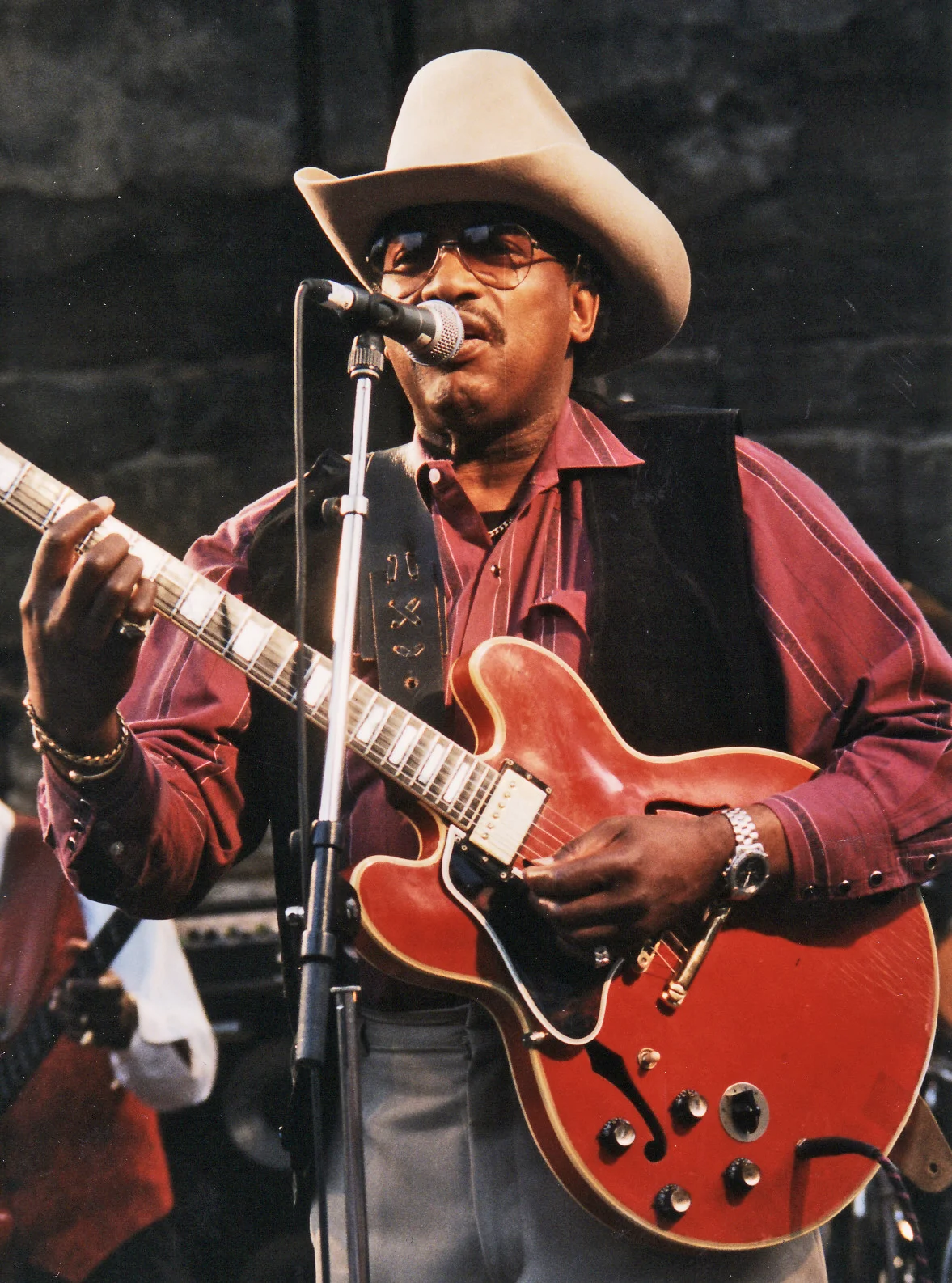
Tone Timeline
Otis Rush — Tone Evolution
Otis Rush was one of the architects of the West Side Chicago blues sound — a style characterised by minor keys, dramatic dynamic contrasts, and emotional intensity that influenced Eric Clapton, Peter Green, and Carlos Santana directly. He played left-handed but strung his guitar conventionally, creating unusual string-bend angles.
1956–1960: Cobra Records
"I Can't Quit You Baby" (1956) became a blues standard — Led Zeppelin covered it. Rush's recordings for Cobra Records established the West Side Chicago blues template: minor key, dramatic vibrato, left-hand string bends with reversed string tension (left-handed playing on right-handed stringing). His ES-335 or 330 through a Fender Bassman gave a warm, full tone.
Signal Chain
1965–2003: Delmark / Continuing
↑ Legacy confirmed West Side Chicago influence on British Invasion — direct line from Rush to Clapton to the global blues revival.
Right Place Wrong Time (Bullseye Blues, 1976) won a Grammy. Rush's career was marked by brilliant recordings separated by commercial and personal setbacks. His influence on British blues-rock was enormous — Clapton specifically mentioned "Double Trouble" as an influence on his own vibrato development. He suffered a stroke in the 1990s that affected his playing.
Signal Chain