Tone Timeline
Son House — Tone Evolution
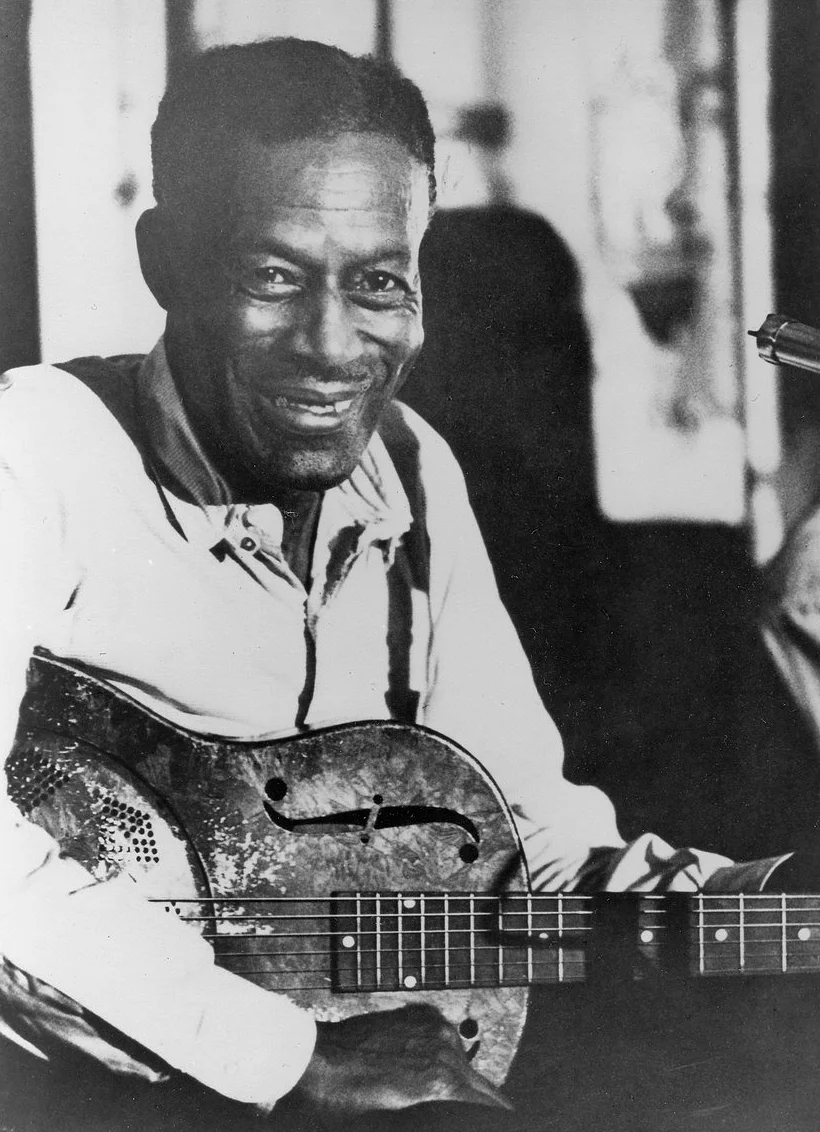
Son House was one of the two or three most important Delta blues musicians — his bottleneck slide playing and raw, emotional vocal delivery directly influenced Robert Johnson and Muddy Waters. He was largely unknown for decades before a 1960s rediscovery.
1930–1942: Paramount / Library of Congress
House recorded for Paramount in 1930 — Preachin' Blues and My Black Mama (the template for Robert Johnson's Love in Vain and Walkin' Blues). He used an acoustic steel-string guitar with a metal slide, in open G tuning. The Paramount recordings are primitive by technical standards but emotionally overwhelming. Alan Lomax recorded House for the Library of Congress in 1941-42 — better audio quality but same essential approach.
Signal Chain
1964–1974: Rediscovery / Father of Folk Blues
↑ Rediscovery era added electric guitar as an accommodation to larger venues — House's acoustic technique was essentially unchanged; the electric amplified rather than altered his approach.
House was found in Rochester, New York by blues researchers in 1964 — he had essentially stopped playing and had to relearn his own songs. His rediscovery-era recordings (Father of Folk Blues, 1965) capture him at age 64, still electrifying. The Woodstock Festival and subsequent concerts introduced him to rock audiences. He used a Harmony electric guitar for some performances. He retired from performing in the early 1970s.
Signal Chain