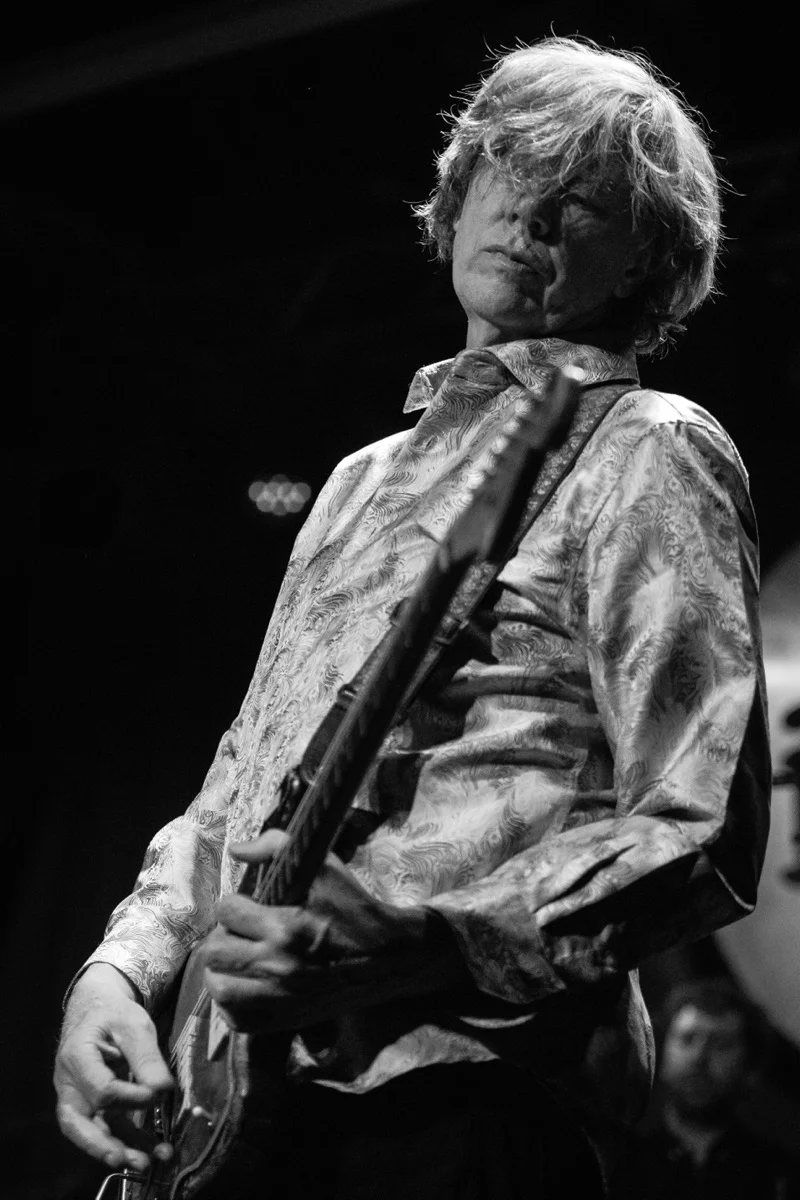
Tone Timeline
Thurston Moore — Tone Evolution
Thurston Moore co-founded Sonic Youth and pioneered an approach to electric guitar that treated tuning, preparation, and feedback as compositional materials. His use of alternative tunings and objects inserted in strings created an entirely new sonic vocabulary for rock guitar.
1981–1992: Sonic Youth / Daydream Nation
Sonic Youth used dozens of alternative guitar tunings — many with strings tuned to unisons or with objects (screwdrivers, drum sticks) wedged between strings to create drones. Daydream Nation (1988) is the canonical document. Moore used Fender Jazzmaster and Jaguar guitars because their floating tremolo bridges made unusual tunings more manageable. Teen Age Riot and The Sprawl show his range from melodic to abrasive.
Signal Chain
1992–2011: Dirty / Rather Ripped
↑ Major label era Sonic Youth incorporated the noise experiments into more structured songwriting — Moore's guitar became more melodic without abandoning the alternative tuning philosophy.
Dirty (1992) was Sonic Youth's most commercially accessible album — produced by Butch Vig on a major label budget. Rather Ripped (2006) showed Moore's melodic side most clearly. As the band matured, the noise experiments were balanced by more conventional song structures. Moore and Kim Gordon's marriage ended in 2011, effectively ending Sonic Youth.
Signal Chain
2011–present: Solo / Chelsea Light Moving
↑ Post-Sonic Youth work freed Moore from band constraints — solo albums are more abstract and experimental than Sonic Youth's most accessible work.
Post-Sonic Youth Moore has released solo albums, formed Chelsea Light Moving, and remained active in experimental music communities. His approach is unchanged — Jazzmaster, alternative tunings, volume and feedback as materials. His writing on music and his presence in underground music culture maintain his influence.
Signal Chain