Alternative RockArt Rock1990s–present
Jonny Greenwood — £2,500 · Premium Rig
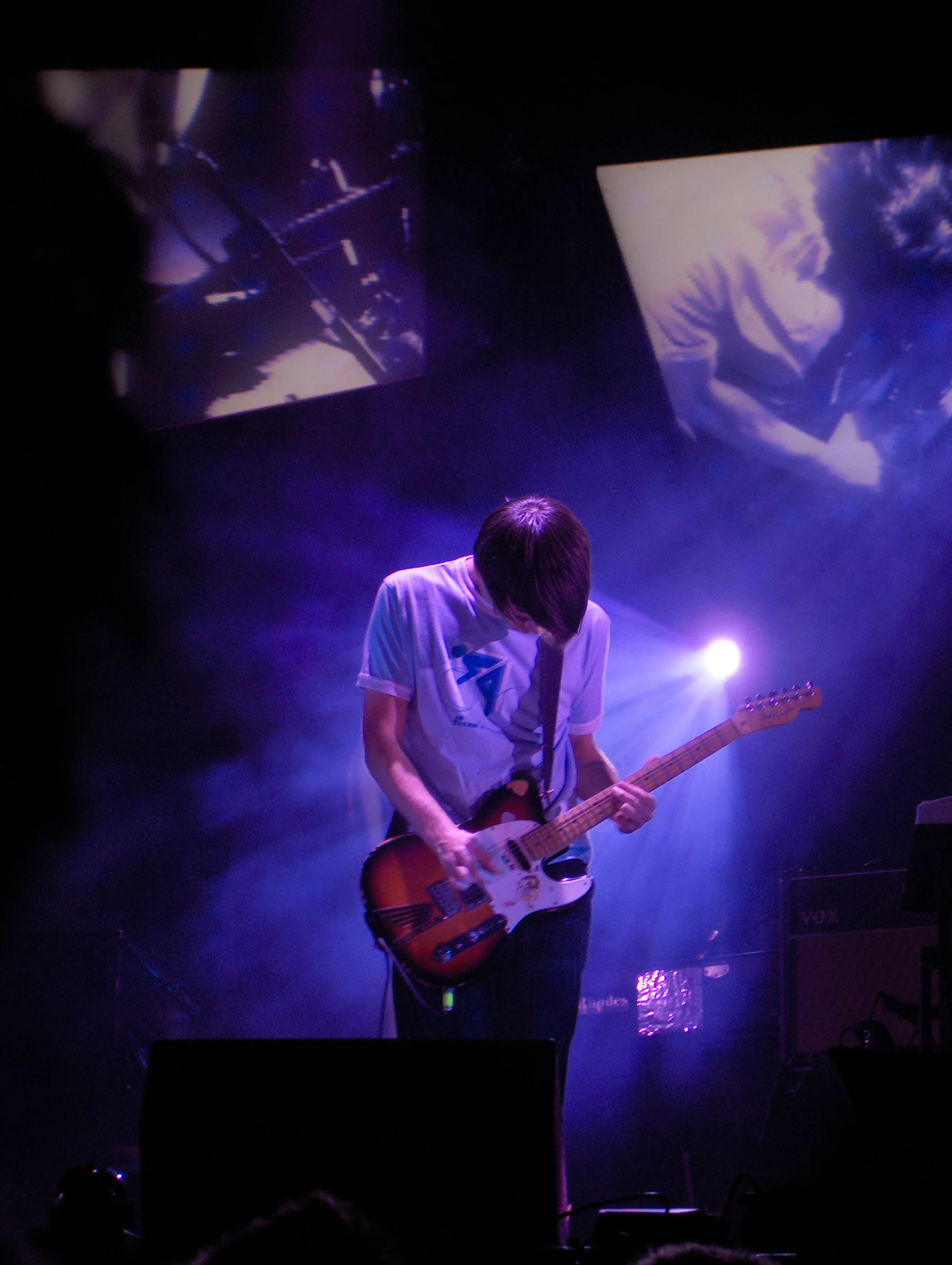
Fender Telecaster, Gretsch Country Gentleman or vintage guitar into a Vox AC30 or Fender Twin, with extensive effects including DigiTech Whammy, EHX POG and various modulation. The tone varies dramatically — from jangly clean on "High and Dry" to the screaming whammy bar of "Just" to the orchestral noise of "National Anthem."
Signal Path
Signal Chain
Full signal path
GuitarFender Player
ODKing Tone
ModWalrus Audio
AmpMarshall DSL40CR
DelayWalrus Audio
ReverbWalrus Audio
Full Gear List
£2,500 · Premium — Complete Rig
●●● Pro-Level$824


●●● Pro-Level$1,142
Tone Tips
Getting the Sound Right
- The Whammy pedal is central to the "Just" and "Planet Telex" guitar sounds — set to octave up or two octaves up, it creates the screaming harmonics
- Jangly clean is equally important — "High and Dry" and "Fake Plastic Trees" use clean Telecaster into AC30. Contrast between clean and extreme is the Radiohead guitar vocabulary
- Prepared guitar techniques — sticking objects on strings, playing with a bow, tapping on the body. These textural elements appear throughout OK Computer and Kid A
- Chord voicings avoid conventional root-position triads — inversions and suspended chords (sus2, sus4, add9) replace standard major and minor chords for a more ambiguous harmonic character
- The tremolo arm is used for controlled noise, not melody — a sharp downward dive followed by a slow rise creates the wrenching effect on some tracks
- Study "Just," "Lucky," "Karma Police" and "How to Disappear Completely" — four completely different approaches within the same band's catalogue
- Layering guitar and orchestral elements is a Greenwood strength — in solo orchestral work, he understands how guitars interact with string instruments
- Noise is composed, not spontaneous — the feedback and distortion are controlled and placed intentionally, not random
Avoid These Pitfalls
Common Mistakes When Chasing This Tone
- Running the Big Muff into an already-driven amp channel — fuzz into a driven amp creates uncontrolled intermodulation that sounds chaotic rather than musical. The Big Muff works best into a clean or barely-clean amp
- Setting the Big Muff tone control at noon or above — this position is where the Big Muff's scooped mid character becomes harsh and cutting. The musical range is 9 o'clock to 11 o'clock on most units
- Ignoring the neck pickup position as a usable tone — the neck pickup on a Tele produces a warm, jazz-like sound completely unlike the bridge. It is not an afterthought.
- Using a high-gain distortion pedal instead of amp gain — British crunch amps have a specific harmonic character when driven from their own gain stage. A pedal changes this character.
- Clean amp at too low a volume — even a clean amp provides warmth and tonal character that the pedal sits in. An amp at minimum volume has no character for the pedal to interact with.
- Setting gain too high on the overdrive pedal — most overdrive pedals are most useful at gain settings of 2-5, where they add character without dominating the tone. High gain settings on an OD pedal become a distortion, not an overdrive.
- Ignoring alternative tunings — many of the most iconic riffs and chord voicings in the genre are impossible in standard tuning.
- Homogenising the tone — playing at the same volume and gain level throughout removes the compositional impact of the loud-quiet dynamic.
Tone Profile
Jonny Greenwood's Sound
Fender Telecaster, Gretsch Country Gentleman or vintage guitar into a Vox AC30 or Fender Twin, with extensive effects including DigiTech Whammy, EHX POG and various modulation. The tone varies dramatically — from jangly clean on "High and Dry" to the screaming whammy bar of "Just" to the orchestral noise of "National Anthem."