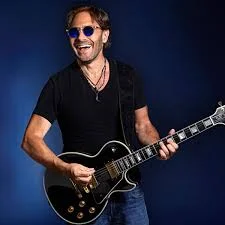
Al Di Meola
Al Di Meola is the fastest and most technically precise alternate-picking guitarist in jazz fusion history, achieving picking speeds on his Gibson guitar that remained unmatched for over a decade after his debut with Return to Forever (1974) at age 19. His technique is based on extreme alternate picking precision rather than legato, producing an articulate, almost mechanical clarity even at maximum velocity. His collaborations with Paco de Lucía and John McLaughlin on the acoustic Friday Night in San Francisco (1980) and subsequent tours demonstrated that his technique translated perfectly to nylon-string acoustic guitar — an unusual crossover that few electric-primary guitarists have achieved convincingly.
Blinding, rhythmically precise single-note runs through a Mesa/Boogie — each note is equally articulated at maximum picking speed, without the smearing of a legato player. The sound is clean and bright enough to hear individual notes in the fastest passages. The acoustic guitar tone (on the Conde Hermanos or similar Spanish guitar) maintains the same picado-influenced precision of the electric work but through nylon strings.
Signal Chain Order
Why Al Di Meola's Rig Works
Di Meola's strict alternate-picking approach, rather than the legato-heavy technique many fast players favor, depends entirely on every pick stroke being individually audible — that's precisely why the Mesa Mark I stays at minimal gain despite his reputation for extreme intensity; heavy saturation compresses and smooths transients together, which would undermine the mechanically precise, almost percussive articulation that distinguishes his playing from a smoother legato shredder's.
The bright, presence-forward EQ setting reinforces the same priority as the low-gain approach — emphasizing the upper frequencies where pick-attack transients live keeps each note's onset sharp and distinct even at his fastest tempos, which is functionally similar to why Paul Gilbert favors a bright Laney setting, though Di Meola's context is jazz fusion rather than rock shred.
His successful crossover to nylon-string acoustic guitar on Friday Night in San Francisco demonstrates that his core technical asset — extremely precise, evenly weighted alternate picking — transfers between fundamentally different instruments, since the skill lives in his picking hand's mechanics rather than being tied to any specific pickup, amp, or electric guitar setup; few electric-primary shred guitarists have made that transition as convincingly.
Guitars
Gibson Les Paul Custom
1974–1985Di Meola's primary electric guitar through Return to Forever and his early solo career — the Les Paul Custom's three-humbucker configuration and ebony fretboard provide the fast-playing, high-output foundation for his extreme alternate picking. The sustained sustain of the Les Paul suits his picked approach.
Conde Hermanos (acoustic flamenco)
1980–presentUsed for the Friday Night in San Francisco recordings and subsequent acoustic collaborations — the Conde's nylon strings and percussive flamenco construction suit his alternate-picking technique transferred to the acoustic context.
Amplifiers
Mesa/Boogie Mark I
1974–1985The original Mesa/Boogie — Di Meola used the Mark I through his Return to Forever and early solo career. The amp's warm, compressed gain suits his picking technique by providing sustain without blur.
Effects Pedals
Boss DD-3 Delay
1985–presentDelay for adding dimension to lead passages — set for short, clean repeats rather than extended echo.
Key Albums & Tone
"Race with Devil on Spanish Highway", "Mediterranean Sundance" — the definitive Di Meola album. The Les Paul Custom through the Mesa at full alternate-picking velocity. "Race with Devil" established his reputation for extreme picking speed; the acoustic "Mediterranean Sundance" (with Paco de Lucía) for lyrical acoustic fusion.
The trio album with Paco de Lucía and John McLaughlin — Di Meola on acoustic Conde Hermanos. His alternate picking on nylon string creates a unique texture: the attack is sharp as his electric work but warmer in tone.
Frequently Asked Questions
What guitar does Al Di Meola use?
Gibson Les Paul Custom and Conde Hermanos (acoustic flamenco). Di Meola's primary electric guitar through Return to Forever and his early solo career — the Les Paul Custom's three-humbucker configuration and ebony fretboard provide the fast-playing, high-output foundation for his extreme alternate picking. The sustained sustain of the Les Paul suits his picked approach.
What amp does Al Di Meola use?
Mesa/Boogie Mark I. The original Mesa/Boogie — Di Meola used the Mark I through his Return to Forever and early solo career. The amp's warm, compressed gain suits his picking technique by providing sustain without blur.
What pedals does Al Di Meola use?
Al Di Meola uses Boss DD-3 Delay.
What is Al Di Meola's signature sound?
Blinding, rhythmically precise single-note runs through a Mesa/Boogie — each note is equally articulated at maximum picking speed, without the smearing of a legato player. The sound is clean and bright enough to hear individual notes in the fastest passages. The acoustic guitar tone (on the Conde Hermanos or similar Spanish guitar) maintains the same picado-influenced precision of the electric work but through nylon strings.
About This Data
Gear information for Al Di Meola is compiled from live performance footage, rig-rundown interviews, manufacturer and signature-model documentation, and cross-referenced guitar press coverage — not a single source. Where accounts conflict (a common issue with decades-old gear history), we favour the version corroborated by the most independent sources and note genuine ambiguity in the text rather than presenting a guess as settled fact.
This page is maintained by Alex Hall, last reviewed July 2026. Spotted something out of date or inaccurate? Let us know — corrections are usually made within a few days.