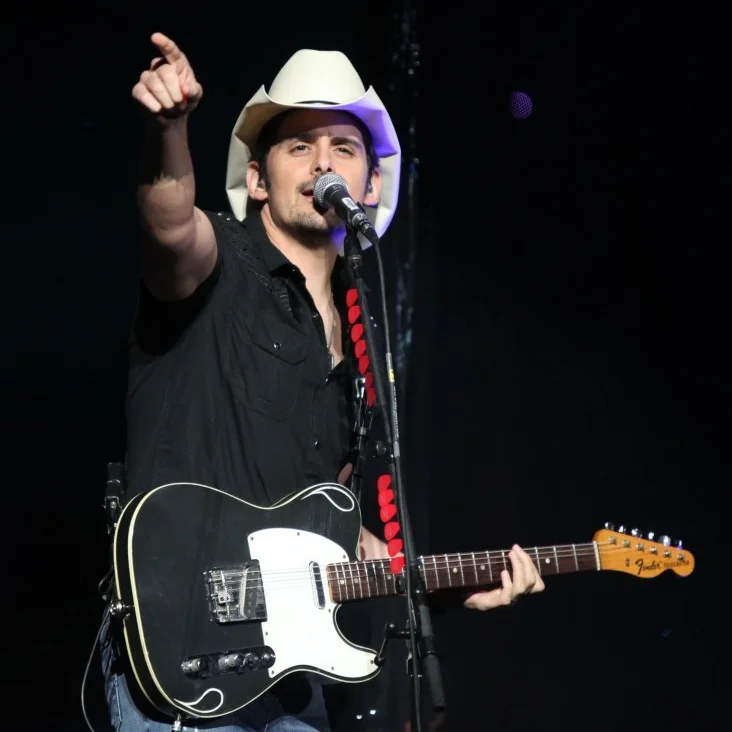
Brad Paisley
Brad Paisley is one of the most technically accomplished guitarists in modern country music — a player whose instrumental precision would be notable in any genre but is particularly striking within commercial Nashville country. He has released instrumental guitar albums alongside his mainstream country work, and his live guitar solos routinely extend into passages of complex technique that reference everything from chicken-picking to blues-rock. He is also a committed telecaster player who has collaborated with Tom Anderson, Fender, and Gibson on signature instruments.
Bright, crisp Telecaster twang with a clean foundation — the signature Brad Paisley tone is defined by quick attack, precise note articulation, and a controlled reverb that preserves pick definition. No extreme gain, no heavy distortion; the tone lives in the clean-to-light-crunch space where every note of a complex run is audible.
Signal Chain Order
Why Brad Paisley's Rig Works
Paisley's fast, technically complex runs demand a tone that stays clean-to-lightly-crunched rather than heavily gained, and that's a structural requirement, not just a stylistic preference — at higher gain levels, the kind of rapid chicken-picking and hybrid-picking runs he plays would blur together as individual note attacks get smeared by compression and sustain. Staying in the clean-to-light-crunch zone keeps every note in a fast run individually articulate, which is what lets his technique actually be heard rather than implied.
The Telecaster platform specifically (rather than a humbucker-loaded guitar) reinforces the same priority — a Tele's bridge pickup produces a bright, cutting, low-output tone with fast note decay, which suits rapid articulate picking far better than a higher-output humbucker's longer sustain and thicker output would. A humbucker's natural compression works against the percussive clarity his style depends on.
Using a transparent overdrive (the Zendrive) rather than a coloring, high-gain distortion pedal for his pushed lead tone follows the same logic one step further — a transparent pedal adds volume and a little grit without imposing its own strong tonal character on top of the amp's clean voicing, keeping the note definition that a more aggressive pedal would start to erode, even for the moments in his solos where he genuinely wants more push.
Guitars
Tom Anderson T Classic
2000–presentPrimary live guitar — boutique Telecaster-style with Anderson's superior fretwork and pickup quality. Paisley uses multiple T Classic instruments in different finishes.
Fender Brad Paisley Road Worn Telecaster
Signature Telecaster with Seymour Duncan pickups and Road Worn aging — designed to play and sound like a vintage instrument at an accessible price.
Full specs & buy →Gibson Les Paul Custom
2000–presentUsed for heavier, darker tones — not Paisley's primary voice but deployed for colour in the lower registers.
Full specs & buy →Martin HD-28
Acoustic guitar for Nashville recording sessions and unplugged performances.
Amplifiers
Carr Rambler
2005–presentPrimary amp in many recording and live contexts. Hand-built boutique American clean — extended clean headroom and exceptional reverb integration.
Fender Twin Reverb
2000–presentClassic clean platform used on Nashville studio recordings. The factory reverb is preferable for certain song textures.
Amp guide →Tone King Imperial
2010–presentThe Tone King Imperial's built-in power attenuator allows Paisley to push the amp harder at lower stage volumes.
Fender Deluxe Reverb
2000–presentLower-wattage option for studio — easier to push into light breakup at controlled recording levels.
Amp guide →Effects Pedals
Hermida Audio Zendrive
Transparent overdrive for pushed lead tones — Paisley's primary gain pedal. Light gain character that preserves the Telecaster's articulation.
Boss DD-20 Giga Delay
Multiple tap-tempo delay presets for live performance — country-appropriate echo without obscuring the note definition.
Eventide H9
2013–presentHarmonizer and pitch effects for specific tonal passages in live performance.
Xotic SP Compressor
Transparent compression for sustain and evening of attack across complex picking passages.
Pedal guide →Key Albums & Tone
"Celebrity" and title track — Telecaster twang at its most characteristic. Clean, bright, Nashville sound.
"Alcohol" and "Barbeque Stain" — the guitar playing becoming more prominent in the production.
"Online" and "Letter to Me" — Paisley's most refined country-pop production. Clean lead breaks prominent in the mix.
Instrumental album — full range of his technique without vocal melody to structure the guitar. The most complete display of the Paisley guitar voice.
Frequently Asked Questions
What guitar does Brad Paisley use?
Tom Anderson T Classic and Fender Brad Paisley Road Worn Telecaster. Primary live guitar — boutique Telecaster-style with Anderson's superior fretwork and pickup quality. Paisley uses multiple T Classic instruments in different finishes.
What amp does Brad Paisley use?
Carr Rambler and Fender Twin Reverb. Primary amp in many recording and live contexts. Hand-built boutique American clean — extended clean headroom and exceptional reverb integration.
What pedals does Brad Paisley use?
Brad Paisley uses Hermida Audio Zendrive, Boss DD-20 Giga Delay, Eventide H9 and more.
What is Brad Paisley's signature sound?
Bright, crisp Telecaster twang with a clean foundation — the signature Brad Paisley tone is defined by quick attack, precise note articulation, and a controlled reverb that preserves pick definition. No extreme gain, no heavy distortion; the tone lives in the clean-to-light-crunch space where every note of a complex run is audible.
About This Data
Gear information for Brad Paisley is compiled from live performance footage, rig-rundown interviews, manufacturer and signature-model documentation, and cross-referenced guitar press coverage — not a single source. Where accounts conflict (a common issue with decades-old gear history), we favour the version corroborated by the most independent sources and note genuine ambiguity in the text rather than presenting a guess as settled fact.
This page is maintained by Alex Hall, last reviewed July 2026. Spotted something out of date or inaccurate? Let us know — corrections are usually made within a few days.