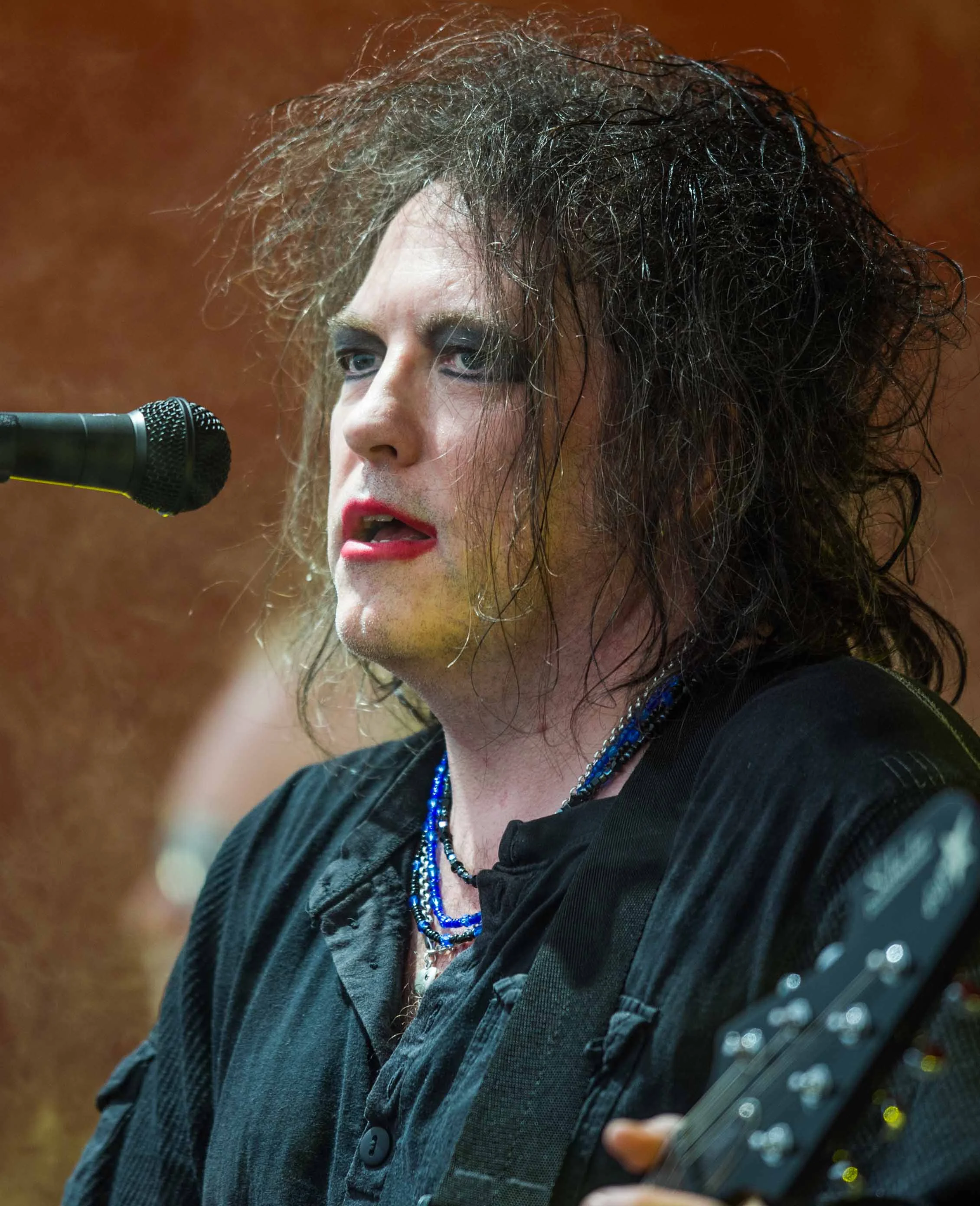
Robert Smith
Robert Smith is the guitarist, vocalist, and sole constant member of The Cure since their formation in Crawley in 1976. His guitar style is deceptively simple — arpeggiated chord patterns on the upper strings, clean to moderately effected, with layered studio textures that create immersive sonic environments. The Cure's sonic evolution from post-punk (Three Imaginary Boys, 1979) through gothic rock (Pornography, 1982), accessible new wave (The Head on the Door, 1985), and lush pop (Disintegration, 1989) is a complete artistic arc, and Smith's guitar evolves through each phase. The Roland JC-120's built-in stereo chorus is central to The Cure's clean guitar sound, and the Memory Man delay defines the atmospheric quality of their lead work.
Arpeggiated chord patterns through a Roland JC-120 with heavy chorus — the JC-120's stereo chorus creates the immediate spatial breadth of The Cure's clean guitar sound without the complexity of external chorus pedals. The Schecter guitar's extended tonal range suits both the clean arpeggios of 'Close to Me' and the heavier, more aggressive guitar of 'Pornography'. Delay (particularly the Memory Man) provides the atmospheric lead character of 'A Forest' and '10:15 Saturday Night'.
Signal Chain Order
Why Robert Smith's Rig Works
The JC-120's built-in stereo chorus, the same core mechanism found in Johnny Marr's rig, matters here for a related but distinct reason — Smith's arpeggiated upper-string chord patterns depend on that immediate spatial width to sound full and immersive rather than thin, since arpeggios by nature don't have the harmonic density of full strummed chords. The chorus's stereo spread compensates for that inherent thinness, giving sparse note-by-note patterns a sense of atmosphere and scale.
The Memory Man's specific analog delay character — described as "slightly imperfect" and "warm" rather than pristine — is functionally important, not just an aesthetic preference: its bucket-brigade circuit introduces subtle pitch and tone degradation with each repeat, which gives sustained lead lines on tracks like "A Forest" a hazy, dreamlike quality that a cleaner digital delay of the same era wouldn't replicate. That imperfection is load-bearing to the atmosphere.
Smith's guitar tone shifts dramatically between the icy clean arpeggios of Disintegration and the dense, saturated wall of guitar on Pornography, and both extremes route through fundamentally the same JC-120-plus-Memory-Man signal path — the difference comes from how hard the guitar and additional overdrive are pushed into that chain, demonstrating that the core rig is flexible enough to support The Cure's dramatically different stylistic eras without a fundamentally different setup.
Guitars
Schecter Ultra III
1982–presentRobert Smith's primary electric guitar from the early 1980s onward — a Schecter Ultra III with three single-coil pickups providing the tonal range for both the delicate arpeggios and the heavier passages within The Cure's catalog. The Schecter's American-style construction and three-pickup configuration gives versatility across the band's diverse stylistic palette.
Fender Jazzmaster
1980–1986Used through the early Cure period — the Jazzmaster's rhythm/lead circuit switching and floating bridge suit the rhythmic complexity of post-punk strumming. The Jazzmaster's slightly dark single-coil tone suits the gothic rock context.
Fender Stratocaster
1982–1990Various Strats used as backup and for specific tonal contexts — the Strat's five pickup positions provide clean versatility for recording different Cure textures.
Amplifiers
Roland JC-120 Jazz Chorus
1981–presentThe Roland JC-120 is the definitive Robert Smith amp — its solid-state design produces a pristinely clean tone unlike any valve amplifier, and its built-in stereo chorus creates the signature wide, shimmering clean sound. Smith has said the JC-120's clean character is non-negotiable for The Cure's guitar tone.
Amp guide →Fender Twin Reverb
1979–1982Early Cure period amplification before the JC-120 became his standard — the Twin's spring reverb provides the dimension on the earliest recordings.
Amp guide →Effects Pedals
Electro-Harmonix Memory Man
1980–presentThe Memory Man is Smith's most important pedal — its analog delay circuit produces the slightly imperfect, warm repeat that defines 'A Forest', '10:15 Saturday Night', and the atmospheric guitar lead textures throughout The Cure's catalog. Set for medium delay time (300–400ms) with one to two repeats at a prominent level.
Boss CE-1 Chorus Ensemble
1980–1986External chorus before the JC-120 became his primary amp — the CE-1's warmer, bucket-brigade chorus character supplements the guitar signal before hitting the amp's own internal chorus.
Pedal guide →Ibanez TS-808 Tube Screamer
1982–presentMild overdrive for transitioning from clean to driven passages within a song — Smith uses the Tube Screamer at low gain for a warm, soft breakup rather than aggressive distortion.
Key Albums & Tone
"One Hundred Years", "The Hanging Garden", "A Strange Day" — the darkest and most intense Cure album. Distorted, dense, oppressive guitar textures. Smith's guitar is not the clean arpeggio player here but a wall of saturated sound. The Memory Man's disorienting delay creates the suffocating atmosphere.
"Lovesong", "Lullaby", "Pictures of You" — the commercial and artistic peak. The JC-120 chorus is at its most lush and the Memory Man delay at its most expressive. "Pictures of You" opening arpeggios are the defining statement of Smith's guitar style.
"Why Can't I Be You?", "Just Like Heaven", "The Kiss" — the double album demonstrating The Cure's tonal range. From aggressive rock to acoustic balladry within the same record. Smith's Schecter through the JC-120 covers all of it.
Frequently Asked Questions
What guitar does Robert Smith use?
Schecter Ultra III and Fender Jazzmaster. Robert Smith's primary electric guitar from the early 1980s onward — a Schecter Ultra III with three single-coil pickups providing the tonal range for both the delicate arpeggios and the heavier passages within The Cure's catalog. The Schecter's American-style construction and three-pickup configuration gives versatility across the band's diverse stylistic palette.
What amp does Robert Smith use?
Roland JC-120 Jazz Chorus and Fender Twin Reverb. The Roland JC-120 is the definitive Robert Smith amp — its solid-state design produces a pristinely clean tone unlike any valve amplifier, and its built-in stereo chorus creates the signature wide, shimmering clean sound. Smith has said the JC-120's clean character is non-negotiable for The Cure's guitar tone.
What pedals does Robert Smith use?
Robert Smith uses Electro-Harmonix Memory Man, Boss CE-1 Chorus Ensemble, Ibanez TS-808 Tube Screamer.
What is Robert Smith's signature sound?
Arpeggiated chord patterns through a Roland JC-120 with heavy chorus — the JC-120's stereo chorus creates the immediate spatial breadth of The Cure's clean guitar sound without the complexity of external chorus pedals. The Schecter guitar's extended tonal range suits both the clean arpeggios of 'Close to Me' and the heavier, more aggressive guitar of 'Pornography'. Delay (particularly the Memory Man) provides the atmospheric lead character of 'A Forest' and '10:15 Saturday Night'.
About This Data
Gear information for Robert Smith is compiled from live performance footage, rig-rundown interviews, manufacturer and signature-model documentation, and cross-referenced guitar press coverage — not a single source. Where accounts conflict (a common issue with decades-old gear history), we favour the version corroborated by the most independent sources and note genuine ambiguity in the text rather than presenting a guess as settled fact.
This page is maintained by Alex Hall, last reviewed July 2026. Spotted something out of date or inaccurate? Let us know — corrections are usually made within a few days.