Stevie Ray Vaughan
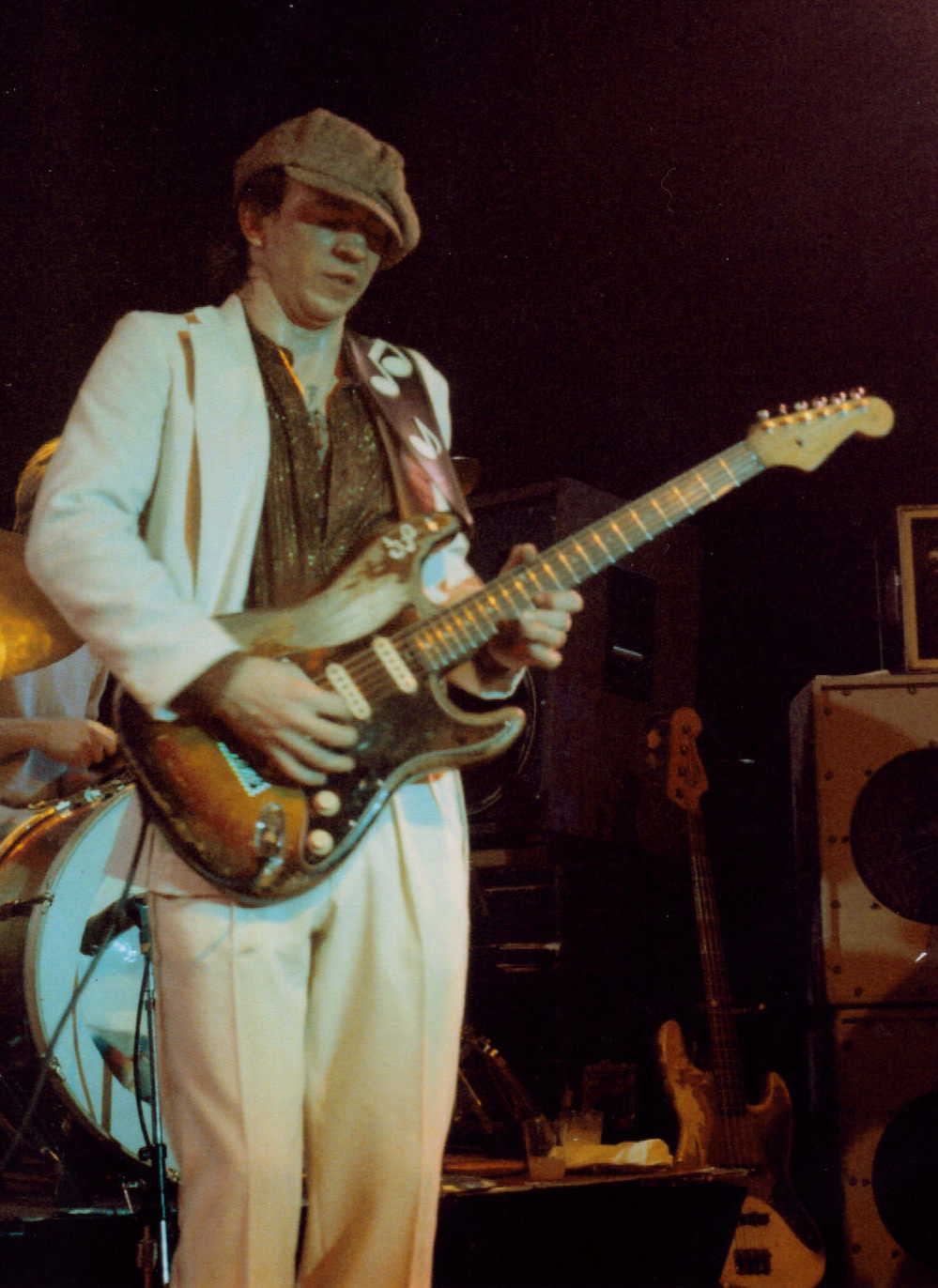
Stevie Ray Vaughan dragged Texas blues into the 1980s with a physicality and fire that silenced any talk of blues being a spent genre. Playing .013 gauge strings with a thumb pick and fingers, he extracted a tone from a Stratocaster that nobody else has matched — ferocious attack, huge dynamic range, and a melodic sensibility inherited from Albert King and Jimi Hendrix.
Number One — a beaten 1963 Stratocaster with heavy .013–.058 strings — into a cluster of loud Fender Vibroverbs and Dumble amps. Tube Screamer used as a clean boost pushing already-loud amps harder. The sound is huge, physical and unmistakably Texan.
Signal Chain Order
Guitars
Fender Stratocaster "Number One"
1963/1965Left-handed tremolo arm, 1963 body, 1962 neck believed. Action set very high for heavy-gauge strings. Primary guitar through entire career.
Full specs & buy →Fender Stratocaster "Lenny"
1965Named after his wife, given as a birthday gift. 1965 sunburst. Used for "Lenny" live and in studio.
Full specs & buy →Fender Stratocaster "Charley"
19591959 Strat with gold hardware. Loaned by Charley Wirz.
Full specs & buy →Amplifiers
Fender Vibroverb (1964)
1980–1990Primary amp — cranked for natural tube saturation with 15" speaker adding fullness.
Howard Dumble SSS-100 Super
1984–1990High-end boutique amp used from "Couldn't Stand the Weather" onwards. Smooth, warm saturation.
Marshall Major
1980–1984200W lead amp used early career alongside Fenders.
Fender Super Reverb
1980–1990Second amp in rig — used for thickness and spread.
Effects Pedals
Ibanez Tube Screamer TS808
1980–1990Drive at zero, Level maxed. Used as a clean boost to push amplifiers harder, not as an overdrive pedal.
Vox Wah (V846)
1980–1990Played with aggressive rocking motion. Essential on "Voodoo Child" covers.
Dallas Arbiter Fuzz Face
1980–1990Germanium fuzz for sustain and warmth on selected songs.
Uni-Vibe (reissue)
1985–1990Used for slow, hypnotic vibrato effect on blues ballads.
Boss CE-1 Chorus Ensemble
1983–1987Subtle chorus for cleaner passages.
MXR Digital Delay
1983–1990Subtle slap-back delay for blues ambience.
Key Albums & Tone
Raw, powerful — Vibroverbs cranked. "Pride and Joy" is the quintessential SRV clean tone.
Dumble introduced — heavier, more saturated. "Tin Pan Alley" shows his slowest, most expressive tone.
Fuller production with organ — "Look at Little Sister" showcases his rhythmic chops.
The definitive live document of his peak tone.
Most polished production — "Crossfire" and "Tightrope" show his mature lead voice.
Frequently Asked Questions
What guitar does Stevie Ray Vaughan use?
Fender Stratocaster "Number One" and Fender Stratocaster "Lenny". Left-handed tremolo arm, 1963 body, 1962 neck believed. Action set very high for heavy-gauge strings. Primary guitar through entire career.
What amp does Stevie Ray Vaughan use?
Fender Vibroverb (1964) and Howard Dumble SSS-100 Super. Primary amp — cranked for natural tube saturation with 15" speaker adding fullness.
What pedals does Stevie Ray Vaughan use?
Stevie Ray Vaughan uses Ibanez Tube Screamer TS808, Vox Wah (V846), Dallas Arbiter Fuzz Face and more.
What is SRV's signature sound?
Number One — a beaten 1963 Stratocaster with heavy .013–.058 strings — into a cluster of loud Fender Vibroverbs and Dumble amps. Tube Screamer used as a clean boost pushing already-loud amps harder. The sound is huge, physical and unmistakably Texan.