Tone Timeline
Ace Frehley — Tone Evolution
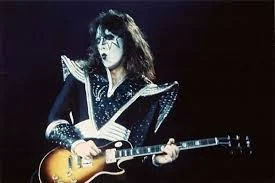
Ace Frehley built one of rock's most recognisable rhythm guitar tones — a Les Paul through a Marshall with no pedals, bright attack and heavy mids, perfectly suited to KISS's anthemic hard rock. His simplicity was his superpower: everything came from the hands and the amp volume.
1973–1978: KISS / Destroyer
Classic Ace tone was a 1959 Gibson Les Paul Standard through a Marshall Super Lead. Destroyer (1976) defined his approach: warm, slightly compressed humbucker tone with natural amp overdrive. He used very few pedals — the tone came from cranking a tube amp into saturation. Beth and Detroit Rock City both show his clean and overdriven tones in the same record.
Signal Chain
1978–1982: Ace Frehley Solo Album / Frehley's Comet
↑ Slightly more studio polish on the solo record but fundamentally the same raw amp tone — minimal processing philosophy remained.
His 1978 solo album showed a slightly more polished version of the same approach — minor studio processing but the Les Paul/Marshall core remained. New York Groove remains his best-known solo track and demonstrates his rhythm playing: thick, warm, and sitting perfectly in the mix without dominating it.
Signal Chain
1996–present: KISS Reunion / Solo Work
↑ Modern rig added noise control for arena stages but the Les Paul/Marshall identity was intentionally preserved — nostalgia demanded it.
Reunion-era Ace used Budweiser-branded Les Paul copies (made by Gibson) and signature models. Modern rigs add some noise suppression and a bit more gain but the philosophy remains unchanged. His tone is still a Les Paul into a Marshall — everything else is window dressing.
Signal Chain