Tone Timeline
Adam Jones — Tone Evolution
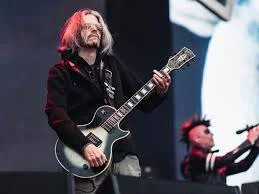
Adam Jones built one of rock's most distinctive rhythm guitar sounds — a saturated, mid-scooped, drop-D tone using Les Pauls through Mesa/Boogie amps that provided the foundation for Tool's progressive metal. His approach prioritises texture and riff over lead flash.
1992–1996: Undertow / Ænima
Undertow established the Tool guitar sound: drop-D tuning, heavily distorted Les Paul through a Mesa/Boogie Dual Rectifier, aggressive palm-muting, and complex odd-time signatures. Jones favoured a scooped mid EQ that gave space for Maynard's vocals. Ænima (1996) refined this — songs like Stinkfist and Eulogy show the rhythmic precision and controlled aggression that defined his playing.
Signal Chain
2001–2006: Lateralus / 10,000 Days
↑ Progressive era Tool added tonal texture — clean passages, ambient sections, and more dynamic range complemented the wall-of-riff approach of early albums.
Lateralus pushed Tool into progressive territory — odd time signatures became more extreme (Schism in 5/4+7/8), guitar tones gained additional texture. Jones began using the Diezel VH4 alongside the Mesa/Boogie. More melodic sections (The Patient) showed a clean side that the raw Undertow era lacked. 10,000 Days continued this approach with slightly warmer production.
Signal Chain
2019–present: Fear Inoculum
↑ Fear Inoculum tone was more mature and nuanced — 13 years of development showed in greater dynamic control and textural sophistication.
Fear Inoculum was recorded after a 13-year gap. Jones' tone had evolved subtly — warmer, more layered, with seven-string guitars added to the arsenal for extended range. The album's long-form compositions (most tracks exceed 10 minutes) demanded sustained textural playing rather than riff repetition.
Signal Chain