Tone Timeline
Joe Walsh — Tone Evolution
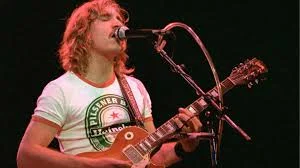
Joe Walsh is one of the most versatile American rock guitarists — equally effective with slide, melodic single-note leads, and hard rock riffs. His tone shifted from the power trio attack of the James Gang to the sophisticated layered rock of the Eagles, and his solo work demonstrated a sharp melodic wit that influenced American rock guitar for decades.
1969–1971: James Gang — Yer' Album / Rides Again
The James Gang era used a Gibson Les Paul and a Gibson SG through a Marshall stack in a power trio context. Funk 49 and The Bomber demonstrated Walsh's ability to fill sonic space without a rhythm guitarist — big riffs, open chord voicings, and the slide technique that would become a Walsh signature. Rides Again's country-influenced tones showed an early flexibility between genres.
Signal Chain
1973–1978: So What / Eagles (Hotel California era)
↑ Talk box added — Rocky Mountain Way's talk-box lead became one of the defining sounds of 1970s rock and a signature Walsh live moment.
Walsh's solo albums Rocky Mountain Way and So What established his slide-guitar voice alongside melodic electric leads. Hotel California's guitar solos (co-written with Don Felder) used a Gibson Les Paul through a Marshall for the iconic harmonised outro. Walsh's Telecaster appeared for the cleaner country-influenced Eagles material. The live rig during the Hotel California tour used a Maestro Talk Box for Rocky Mountain Way's talk-box effect.
Signal Chain
1994–present: Hell Freezes Over / Eagles reunion
↑ Mesa Boogie added alongside Marshall — the Recto's tight, consistent high-gain for modern live contexts supplemented the vintage Marshall character of the original records.
The Eagles reunion Hell Freezes Over required Walsh to recreate the Hotel California tones faithfully. Modern rigs used Mesa Boogie amps alongside vintage Marshalls, with a Korg Rack tuner and noise gate for touring. Walsh's solo career in this period used a more modern signal chain — Line 6 effects in parallel with analog overdrive — while keeping the Les Paul and Telecaster as primary guitars.
Signal Chain