Rig Builder
Budget Rig Breakdown
Signal Chain
ODJoyo Vintage
ChorusStrymon Ola
AmpKatana 50

£ Budget$37
££ Mid-Range$380

Technique
Key Tone Tips
- Clean amp — always. No overdrive or distortion in The Smiths. The complexity comes from arpeggiation and chord choice, not gain
- Capo at fret 2, 4, or 5 is used extensively — arpeggiated open chord shapes with capo produce the bright, ringing character of "This Charming Man"
- Arpeggiate rather than strum — right-hand technique picks individual strings in sequence rather than sweeping across them
- The Rickenbacker's jangle requires light picks (0.50mm) — heavier picks dull the high-end sparkle essential to the sound
- Two-guitar layering in studio recordings — many Smiths tracks have a rhythm guitar and a lead fill guitar running simultaneously. Live, Marr played both parts simultaneously
- Delay adds shimmer, not echo — the Korg SDD-3000 is set to very short delay times (80-150ms) at low feedback. It widens the sound without creating obvious echoes
- Open chord shapes with the capo provide the ringing open-string quality — bar chords are almost never used
- The Roland JC-120's built-in chorus is often used at subtle settings — the dual speaker stereo spread adds width
- Study "This Charming Man" right-hand pattern — it appears to be a simple riff but actually involves simultaneous melody, bass movement and chord tones picked individually
Background
About Johnny Marr's Sound
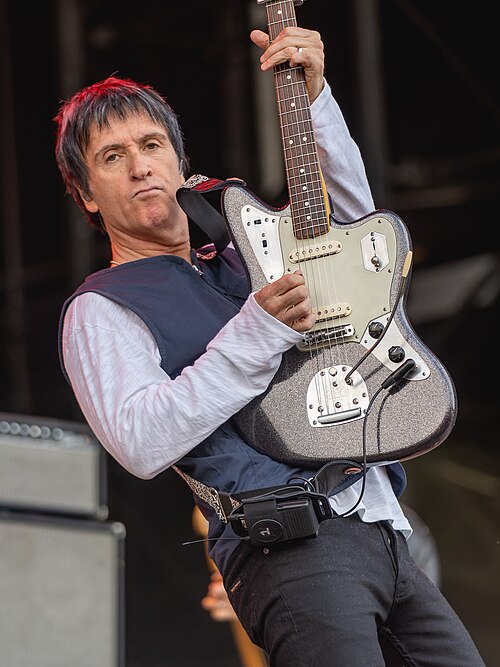
Johnny Marr of The Smiths is the architect of the British indie guitar sound — arpeggiated chord voicings, capo use, shimmering clean tones and an intricate right-hand technique that sounds like multiple guitarists at once.