Rig Builder
Budget Rig Breakdown
Signal Chain
GuitarCV Strat
ODJoyo Vintage
AmpKatana 50

££ Mid-Range$380

£ Budget$37
Technique
Key Tone Tips
- Uni-Vibe is always on — set speed to medium-slow (around 3Hz) for the signature depth
- Play slightly behind the beat with a heavy, deliberate pick attack
- Bridge pickup for the cutting, nasal quality; neck for the thicker, warmer tone
- Hendrix-style thumb-over chord voicings on the low strings add range to chord work
- Amp at moderate gain — the Uni-Vibe adds apparent warmth; don't fight it with more gain
- Trower's vibrato is slow and wide, covering nearly a full semitone in each oscillation
- Listen to "Bridge of Sighs" for the defining Uni-Vibe tone that made his reputation
- Large interval jumps in solos — Trower doesn't solo up and down scale positions linearly
- Minor pentatonic with blues notes (b5, maj3) forms the core of his improvising vocabulary
Background
About Robin Trower's Sound
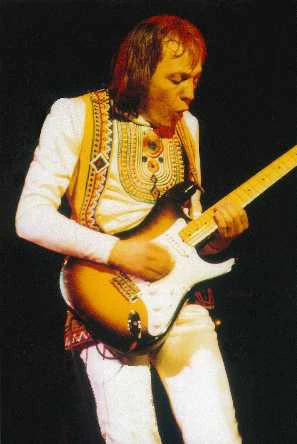
Robin Trower took the Hendrix Stratocaster blueprint and pushed it further into psychedelic, heavily modulated blues-rock territory. His Uni-Vibe-soaked tone, slow-roasting vibrato and technique of playing behind the beat with a heavy right-hand touch created some of the most atmospheric and hypnotic rock of the 1970s.