Tone Timeline
Steve Howe — Tone Evolution
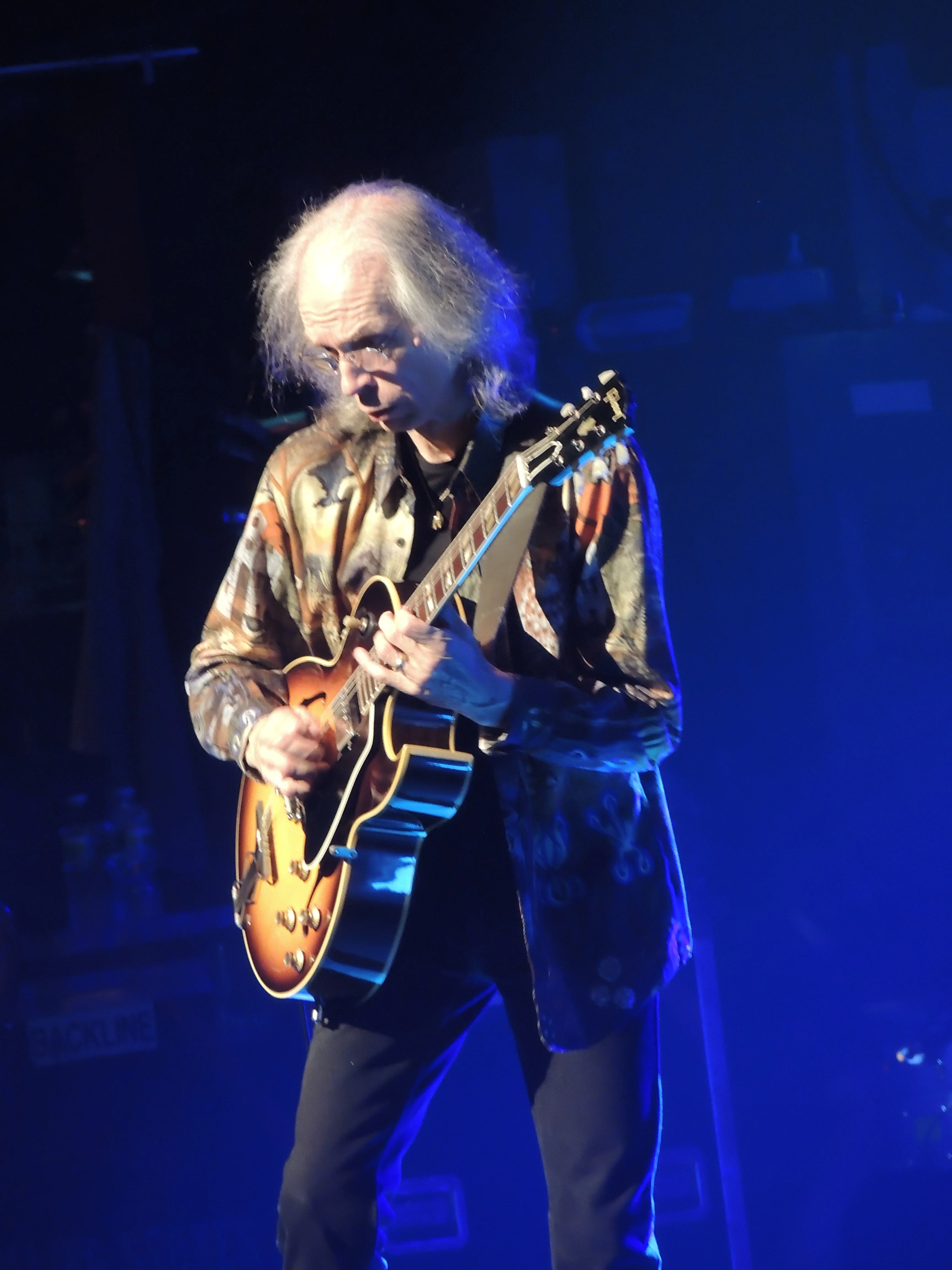
Steve Howe is Yes's guitarist — his classical acoustic technique, unusual guitar collection (Gibson ES-175 electric, Martin acoustic, pedal steel), and eclectic influence range made him one of progressive rock's most distinctive voices.
1970–1978: The Yes Album / Going for the One
The Yes Album (1971) introduced Howe's eclectic approach — electric lead on a Gibson ES-175 alongside acoustic finger-picked work and country-influenced pedal steel. Roundabout and Heart of the Sunrise from Fragile (1971) used his ES-175's warm jazz archtop tone in a rock context. Going for the One (1977) included the pedal steel-dominated Parallels. His technique was always in service of the music's extraordinary compositional ambitions.
Signal Chain
1978–1983: Drama / Asia
↑ Asia era traded prog complexity for commercial accessibility — Howe's eclectic multi-guitar approach was channelled into more conventional rock songwriting.
Asia (with Carl Palmer, John Wetton, and Geoff Downes) was a more commercial direction than Yes — Howe's guitar served more straightforward rock songs. He maintained the ES-175 but the compositional context demanded less eccentricity. Drama (with Yes, featuring the Buggles) showed the stretched-thin Yes approaching the end of its original run.
Signal Chain
1991–present: Yes Reunion / Synergystra
↑ Late Yes era showed Howe as archivist and custodian of the Yes approach — maintaining the ES-175 identity while the band's lineups changed around him.
Multiple Yes reunions through the 1990s-2000s with varying lineups. Howe has been a constant presence in Yes reunions and continues to record and tour. His guitar collection expanded further — he owns an extraordinary range of vintage instruments. Steve Howe Trio and solo acoustic work shows the classical finger-picking technique in its clearest form.
Signal Chain