Tone Timeline
Stevie Ray Vaughan — Tone Evolution
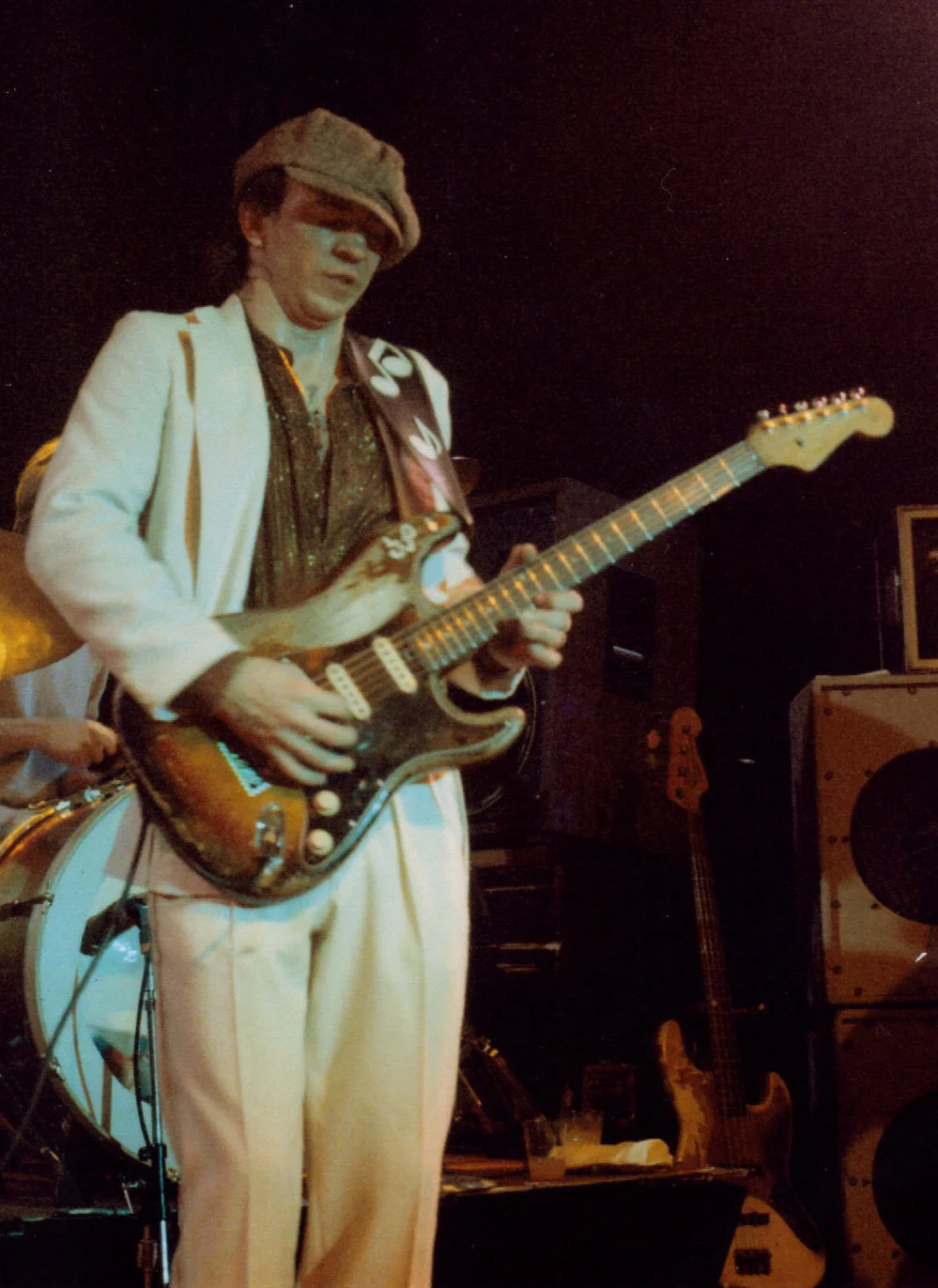
SRV's tone was essentially fixed by 1983 and changed only in degree thereafter — heavier strings, more amp volume, and a rotating cast of vintage Stratocasters. The evolution was in confidence and technique, not equipment.
1983–1985: Texas Flood
SRV hit the mainstream with a rig already fully formed: Number One Strat, Dumble Overdrive Special and Vibroverb running simultaneously, Ibanez Tube Screamer as a clean boost. The core tone was established and never fundamentally altered.
Signal Chain
Songs from this era
Texas Flood
Raw, heavy-string Texas blues at its most emotionally direct. The Super Reverb barely holds together…
Full rig →Texas Flood
Chunky shuffle groove with a slightly cleaner, more controlled tone than Texas Flood. The amp is sti…
Full rig →Texas Flood
SRV's most beautiful clean tone — fingerpicked warmth from the neck pickup into the Super Reverb at …
Full rig →1985–1987: Couldn't Stand the Weather
↑ Added Marshall for stage volume and introduced guitar rotation — Lenny brought a brighter, more brittle character.
Growing fame and bigger venues required more stage volume. SRV added a Marshall Super Lead to the rig and began rotating between multiple Stratocasters including Lenny. The Ibanez TS808 remained a permanent fixture.
Signal Chain
1989–1990: In Step
↑ Post-recovery maturity — more dynamic range, slightly cleaner base tone, greater expressive control of the pick attack.
Post-rehabilitation, SRV returned with a slightly cleaner, more open tone — the Dumbles remained but the raw aggression of the mid-1980s gave way to more dynamic control and expressive bending. In Step documents this matured approach.
Signal Chain