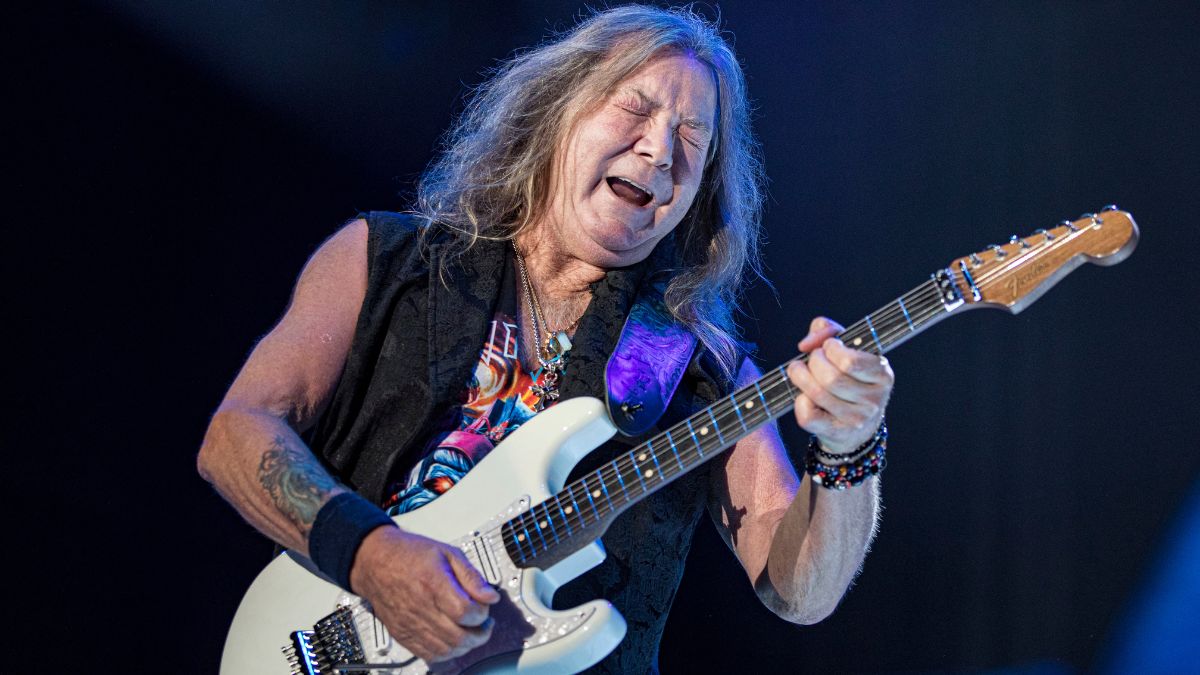
How to Sound Like Dave Murray
Dave Murray's crushing and technically demanding sound hinges on two things: Squier Classic Vibe 60s Stratocaster and Boss Katana 50 MkII. Get those right and the rest of the signal chain falls into place. Fender Stratocaster with EMG pickups through a Marshall — Murray's Iron Maiden leads are melodic, harmonised and technically precise, rooted in the NWOBHM tradition but with a bluesy Hendrix influence. Here's the step-by-step process — from selecting the guitar to dialling in the final settings.
Based on the £500 rig · Total: ~£448
To sound like Dave Murray, you need a Squier Classic Vibe 60s Stratocaster (guitar), a Boss Katana 50 MkII (amp). Follow these 3 steps: Choose your guitar: Squier Classic Vibe 60s Stratocaster; Dial in your amp: Boss Katana 50 MkII; Fine-tune your tone. Total budget: ~£448.
⚡ Quick Answer
Fender Stratocaster with EMG pickups through a Marshall — Murray's Iron Maiden leads are melodic, harmonised and technically precise, rooted in the NWOBHM tradition but with a bluesy Hendrix influence
Step-by-Step Guide
Building Dave Murray's Tone
- 1
Step 1 — Choose your guitar: Squier Classic Vibe 60s Stratocaster
The foundation of Dave Murray's crushing and technically demanding sound is the guitar. For this budget build, a Squier Classic Vibe 60s Stratocaster provides the right tonal character — the pickup configuration and body resonance both point in the right direction.
- 2
Step 2 — Dial in your amp: Boss Katana 50 MkII
The amp is where much of Dave Murray's character lives. A Boss Katana 50 MkII at this budget level gives you the clean headroom or natural breakup needed to start shaping the tone. Set the gain and EQ to match the characteristic sound before adding any effects.
- 3
Step 4 — Fine-tune your tone
Spend time with the amp EQ and guitar volume knob. Dave Murray's crushing and technically demanding sound lives in the dynamics — guitar volume rolled back gives cleans, dug in harder drives the amp naturally.
£500 Reference Rig
Complete Parts List
Why This Rig Works
How Dave Murray's gear choices create the signature tone
Squier Classic Vibe 60s Stratocaster
The alnico V pickups are the real deal — they deliver genuine Strat chime, quack and warmth that responds naturally to pick attack. An ideal foundation for Hendrix, Mayer, Gilmour or SRV tones.
Boss Katana 50 MkII
Its 'Brown' amp character at low gain is an excellent approximation of the Fender-style clarity that Hendrix, Mayer, Gilmour and SRV all relied on. Built-in effects mean you're a few knob turns away from the right tone.
The Combined Tone
Fender Stratocaster with EMG pickups through a Marshall — Murray's Iron Maiden leads are melodic, harmonised and technically precise, rooted in the NWOBHM tradition but with a bluesy Hendrix influence.
Tone Science
Why This Combination Works
The Squier Classic Vibe 60s Stratocaster uses single-coil pickups — these produce a bright, clear, and slightly glassy tone with natural string noise and picking dynamics. The high-frequency content is what gives this style its sparkle and note separation.
The Boss Katana 50 MkII digitally models classic amp circuits — the key is selecting the right model and keeping the gain at a level that matches the original's dynamics. The tone is in the model selection more than the physical amp topology.
High-gain metal tone is defined by palm muting precision and pick attack consistency as much as equipment. The tight, punchy character comes from the right gain/muting combination — too much gain actually makes palm mutes less defined, not more.
Reference Listening
Songs to Study Before Buying
Listen to these specific tracks to hear the target tone before you shop. Each song demonstrates a different aspect of the rig.
The Trooper— Piece of Mind (Iron Maiden)
Strat-style into Marshall: melodic dual-guitar harmonic leads — the Iron Maiden approach of two guitars harmonising over a galloping bass line.
Hallowed Be Thy Name— The Number of the Beast
Most ambitious Maiden composition: his parts against Adrian Smith — the dual-guitar arrangement fully realised, hear the two voices independently.
Aces High— Powerslave
Fast galloping intro: Strat into Marshall at its most aggressive — Iron Maiden power metal at peak velocity.
Avoid These Pitfalls
Common Mistakes to Avoid
- ✗
Leaving the guitar volume at 10 — single coil brightness at full volume can be harsh. Rolling back to 8-9 tames the top end without killing output.
- ✗
Using a high-gain distortion pedal instead of amp gain — British crunch amps have a specific harmonic character when driven from their own gain stage. A pedal changes this character.
- ✗
Playing at bedroom volume expecting amp-driven tone — the power-tube saturation that defines this gain structure only occurs when the amp is working at substantial output. This is not replicable at low volumes.
- ✗
Too many repeats at high mix — more than 3 repeats makes the delay effect accumulate and overwhelm the dry guitar signal. Keep it to 2-3 repeats at a subtle mix level.
- ✗
Ignoring down-tuning — trying to achieve dropped-tuning riff character at standard pitch produces a thinner, less aggressive result regardless of EQ.
- ✗
Running gain at maximum — above 8 on most high-gain channels, palm mutes become indistinct and individual notes blur. The right amount of gain is the minimum for the target saturation.
Dave Murray — £500 · Sweet Spot Complete Rig
~£448Guitar
Squier Classic Vibe 60s Stratocaster
Amp
Boss Katana 50 MkII
Tone Match
Similar Players to Dave Murray
If you like Dave Murray's tone, these players use a similar approach — same gear philosophy, comparable sound characteristics.
Related Guides
Similar Players
FAQ
How to Sound Like Dave Murray — Common Questions
The guitar body type (strat) and amp character (british) are non-negotiable. Technique — specifically iron-maiden — accounts for 30% of the sound.
Yes. Dave Murray's exact gear (Squier Classic Vibe 60s Stratocaster, Boss Katana 50 MkII) is one path, but any guitar and amp in the same tonal family will work. The tone is defined by pickup type, amp voicing, and gain structure — not the brand on the headstock.
The gear side is immediate — the right setup delivers the signature tone from day one. The technique side (vibrato, pick dynamics, phrasing) takes 6-18 months to develop meaningfully. Most players underestimate how much Dave Murray's actual playing style contributes to the sound.