RockInstrumental Rock1980s–present
Joe Satriani — £2,500 · Premium Rig
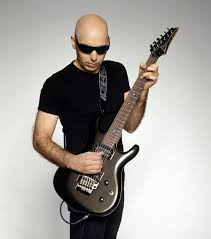
Ibanez JS (single humbucker, floating trem) into a Marshall JVM or Mesa Boogie Mark IV. High gain but very controlled — Satriani's tone is smooth and singing rather than chaotic. The DigiTech Whammy adds octave effects and divebombs; controlled legato technique produces the fluid, effortless phrasing.
Signal Path
Signal Chain
Full signal path
GuitarIbanez RG550
WahWilson Effects
AmpMarshall DSL40CR
DelayStrymon El
ReverbWalrus Audio
Full Gear List
£2,500 · Premium — Complete Rig

£££ Pro-Level$888

££ Mid-Range$443

£££ Pro-Level$1,142
££ Mid-Range$418
Tone Tips
Getting the Sound Right
- Legato technique: hammer-ons and pull-offs with consistent velocity — every note equally loud
- DigiTech Whammy set to 1 octave up for dive bombs and pitch-shifted leads
- Lydian mode (#4) gives Satriani's melodies their floaty, uplifting quality
- High gain but pick lightly — Satriani's controlled attack prevents muddiness
- Whammy bar for subtle vibrato between notes (bar never sits still)
- Natural harmonics (12th, 7th, 5th frets) feature heavily — tap lightly for bell-like tones
- Artificial harmonics: pick near the nut while lightly touching at the 12th fret above the fretted note
- Delay: 300–400ms at low feedback — adds depth without cluttering melodic lines
Avoid These Pitfalls
Common Mistakes When Chasing This Tone
- Running the Marshall DSL's gain channel at maximum — above 8 on most high-gain channels, palm mutes lose note separation and become an indistinct wall. The target is the minimum gain for the target saturation, not maximum
- Leaving the wah pedal engaged but stationary between rocking it — a cocked wah (fixed position, not moving) acts as a midrange filter that changes the core tone. Either rock it expressively or bypass it completely; a cocked wah changes the sound in ways that are often unintended
- Forgetting to adjust technique for the different neck profile — thinner, faster necks require less grip pressure. Playing with the same pressure as on a thicker neck causes note choke.
- Scooping the mids on a Marshall-style amp — the upper midrange emphasis is what makes British amps cut through. Mid-scoop EQ sounds good alone but disappears in a band mix.
- Maximum gain on the amp channel — this is the most common mistake in high-gain playing. The clarity and note separation that makes fast playing readable degrades at maximum gain.
- Leaving the wah in a fixed position (cocked) between uses — a cocked wah acts as a midrange filter and changes the tone. If not using the wah expressively, take it out of the chain.
- Too many repeats at high mix — more than 3 repeats makes the delay effect accumulate and overwhelm the dry guitar signal. Keep it to 2-3 repeats at a subtle mix level.
- Setting gain to maximum — above 8 on most amp channels, note separation degrades and riffs lose definition. The loudness feels greater but the clarity goes down.
Tone Profile
Joe Satriani's Sound
Ibanez JS (single humbucker, floating trem) into a Marshall JVM or Mesa Boogie Mark IV. High gain but very controlled — Satriani's tone is smooth and singing rather than chaotic. The DigiTech Whammy adds octave effects and divebombs; controlled legato technique produces the fluid, effortless phrasing.