Alternative RockFunk Rock1990s–present
John Frusciante — £1,000 · Pro-Level Rig
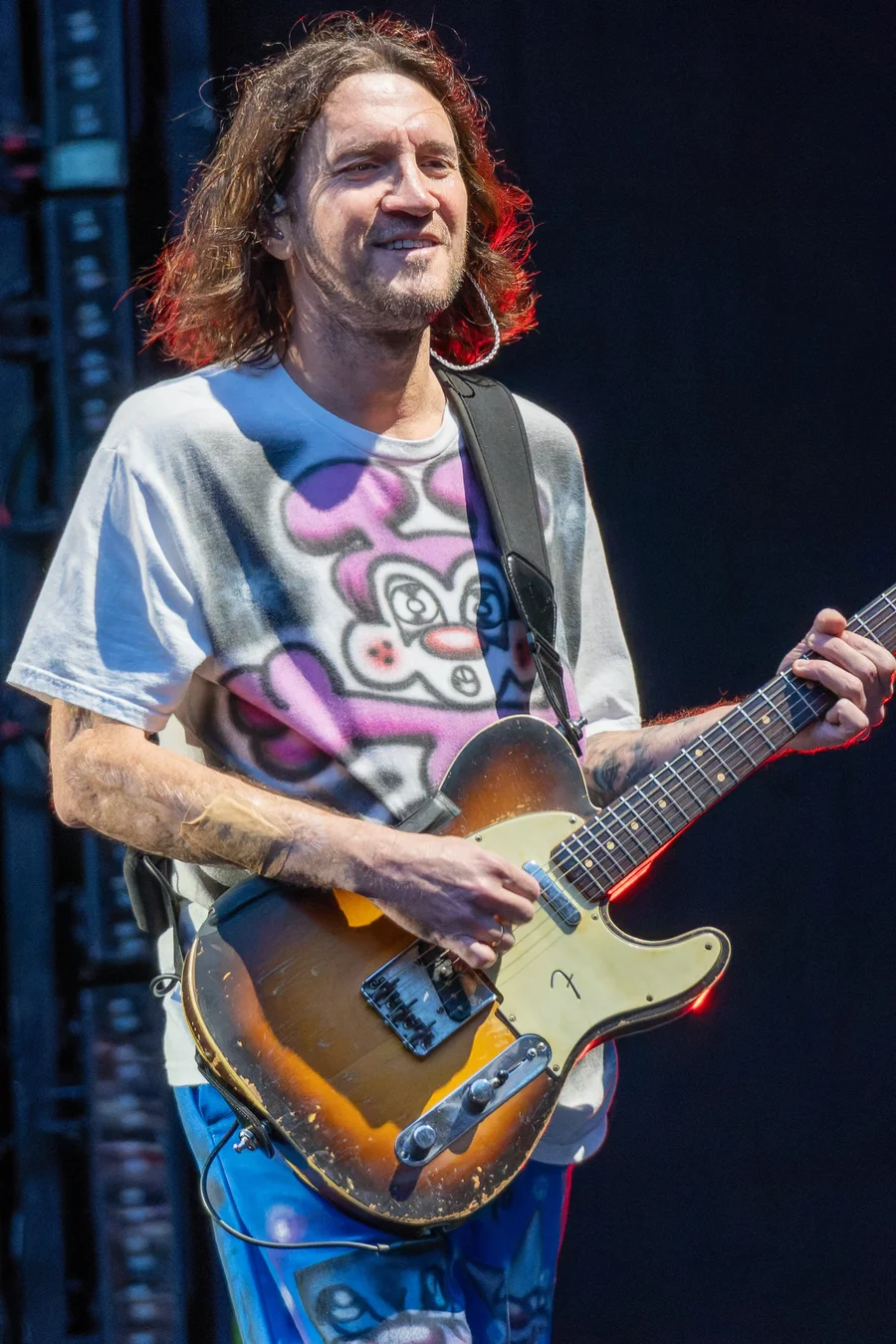
Neck pickup Strat into a Marshall for singing leads with a DS-2 for crunch, combined with a Small Clone chorus for RHCP's dreamy clean parts. The tone is both raw and musical — expressive vibrato and a light pick touch are essential.
Signal Path
Signal Chain
Full signal path
GuitarPacifica
WahCry Baby
DistDS-2
ChorusSmall Clone
AmpDSL20
Full Gear List
£1,000 · Pro-Level — Complete Rig
●● Mid-Range$380
●● Mid-Range$418
● Budget$88
● Budget$100
Tone Tips
Getting the Sound Right
- Use the neck pickup for leads — Frusciante rarely used the bridge
- The DS-2 in Turbo mode adds Marshall-like sustain at lower volumes
- Small Clone chorus at full depth and moderate rate for RHCP cleans
- Light pick attack, lots of vibrato — the expression is in the fingertips
- Marshall at bedroom volumes with the DS-2 pushing it is key
- Park the wah pedal at mid-position (around 50% toe) as a fixed filter for a nasal, vocal quality on funk rhythm parts — don't sweep it
- The RHCP clean funk tone has no overdrive at all: neck pickup, light compression, chorus — the rhythm feel comes from muting and attack, not gain
- Add a short slapback delay (160–200ms, single repeat, level at 3) under dirty lead lines — barely audible on its own but adds dimension to the DS-2 sound
Avoid These Pitfalls
Common Mistakes When Chasing This Tone
- Setting the TS9 gain above 5 into a clean amp — at high gain settings the TS becomes a distortion pedal that colours the tone heavily. Below 4, it's a boost and focus pedal. Single coils into a TS above 5 gets nasal and harsh
- Leaving the wah pedal engaged but stationary between rocking it — a cocked wah (fixed position, not moving) acts as a midrange filter that changes the core tone. Either rock it expressively or bypass it completely; a cocked wah changes the sound in ways that are often unintended
- Running the tone knob at 10 the entire time — the tone control on a Strat is an expressive tool. Rolling it back changes the character of the sound in ways that affect how you phrase.
- Scooping the mids on a Marshall-style amp — the upper midrange emphasis is what makes British amps cut through. Mid-scoop EQ sounds good alone but disappears in a band mix.
- Using a distortion pedal to replace amp saturation — amp-driven tone has a specific feel (dynamics, touch sensitivity, natural compression) that pedal distortion cannot replicate. The source of gain matters.
- Setting gain too high on the overdrive pedal — most overdrive pedals are most useful at gain settings of 2-5, where they add character without dominating the tone. High gain settings on an OD pedal become a distortion, not an overdrive.
- Too many repeats at high mix — more than 3 repeats makes the delay effect accumulate and overwhelm the dry guitar signal. Keep it to 2-3 repeats at a subtle mix level.
- Homogenising the tone — playing at the same volume and gain level throughout removes the compositional impact of the loud-quiet dynamic.
Tone Profile
Frusciante's Sound
Neck pickup Strat into a Marshall for singing leads with a DS-2 for crunch, combined with a Small Clone chorus for RHCP's dreamy clean parts. The tone is both raw and musical — expressive vibrato and a light pick touch are essential.