RockPop Rock1970s–present
Lindsey Buckingham — £1,000 · Pro-Level Rig
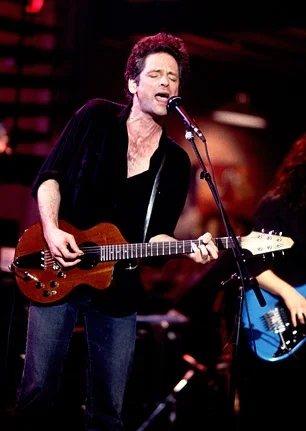
Fender Stratocaster into a clean Fender or Marshall, with a light chorus and delay for studio texture. The defining characteristic is the absence of a pick — Buckingham uses his bare index finger for strumming and his other fingers for plucking individual strings, creating a dense, percussive sound on clean tones.
Signal Path
Signal Chain
Full signal path
GuitarLP Special
ODJoyo Vintage
ChorusBoss CE-2W
AmpDSL20
DelayFlashback 2
Full Gear List
£1,000 · Pro-Level — Complete Rig
●● Mid-Range$215

●●● Pro-Level$608
Tone Tips
Getting the Sound Right
- No pick — play entirely with the right hand fingers. The index finger provides the attack for downstrokes; the other fingers pluck treble strings
- The right-hand thumb plays bass strings while fingers handle the treble — this enables simultaneous bass movement and melody lines impossible with a pick
- Percussive right-hand technique: strike the strings then immediately mute with the palm for a percussive, staccato quality
- Study "The Chain" bass run — even though it's played on guitar, the bass riff shows Buckingham's comfort moving into low register territory
- Clean amp is essential — the natural pick-free attack has a different transient than a picked note. Overdrive compresses and obscures this difference
- Acoustic guitar technique applied to electric — Buckingham's right-hand approach is essentially folk/classical acoustic technique transposed to electric
- "Big Love" (live solo version) is the masterclass — his right-hand creates rhythm, bass, chords and melody simultaneously on one guitar
- Moderate compression on the amp or a light compressor pedal evens out the finger-attack variations for studio consistency
Avoid These Pitfalls
Common Mistakes When Chasing This Tone
- Setting the amp bass too high — the inherent warmth of mahogany means you need less bass EQ than with a Strat. Starting at 5 rather than 7 prevents low-end mud.
- Scooping the mids on a Marshall-style amp — the upper midrange emphasis is what makes British amps cut through. Mid-scoop EQ sounds good alone but disappears in a band mix.
- Using too much gain on the drive pedal — pedal-driven tone works best with the amp providing some character and the pedal adding focus and saturation, not replacing the amp entirely.
- Not setting delay to song tempo — a delay that doesn't match the song tempo creates a rhythmic clash that builds and becomes increasingly obvious. Tap the tempo every time.
- Scooping the mids — a mid-cut EQ setting removes the character of British amp tone. Mids should be at 5-6, not cut.
- Using too much reverb — classic rock is relatively dry. A small room reverb is acceptable; a large hall wash is not appropriate for the genre.
Tone Profile
Lindsey Buckingham's Sound
Fender Stratocaster into a clean Fender or Marshall, with a light chorus and delay for studio texture. The defining characteristic is the absence of a pick — Buckingham uses his bare index finger for strumming and his other fingers for plucking individual strings, creating a dense, percussive sound on clean tones.