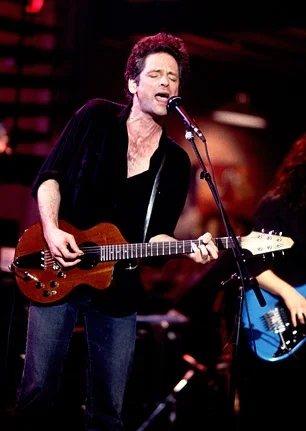
Lindsey Buckingham — £2,500 · Premium Tone
Lindsey Buckingham is arguably the most influential fingerstyle rock guitarist — playing without a pick, his right hand produces simultaneous bass lines, chord stabs and melody on a Stratocaster with a rhythmic power and percussive attack that pick players cannot replicate. Replicating that powerful and driving sound at the £2,500 · Premium mark means Gibson Les Paul Junior into Marshall DSL100H. The effects — Boss CE-2W Chorus, TC Electronic Flashback 2 — add the finishing texture. This build totals ~£2496 and captures the core character — a premium build targeting the most accurate recreation possible.
Build Lindsey Buckingham's £2,500 · Premium Rig
4 pieces · Total ~$3,170
What guitar does Lindsey Buckingham use?
Lindsey Buckingham is primarily associated with lp style guitars. At a £2,500 budget, Gibson Les Paul Junior delivers the essential tonal character.
What to Buy
£2,500 · Premium — Complete Gear List
Can't find one? See alternatives:
Why This Rig Works
How Lindsey Buckingham's gear choices create the signature tone
Gibson Les Paul Junior
The Gibson Les Paul Junior delivers warm humbucker thickness and singing sustain — the classic foundation for rock and blues tones.
- ChorusBoss CE-2W Chorus
- Delay Enginestudio-grade digital and tape delay echo
Marshall DSL100H
The Marshall DSL100H converts the guitar signal into audible sound and adds its own tonal character — EQ shaping, natural gain, and the overall feel of the final tone.
The Combined Tone
Fender Stratocaster into a clean Fender or Marshall, with a light chorus and delay for studio texture. The defining characteristic is the absence of a pick — Buckingham uses his bare index finger for strumming and his other fingers for plucking individual strings, creating a dense, percussive sound on clean tones.
Tone Tips
Getting the Sound Right
- The Marshall DSL100H delivers power-tube saturation at master volume 6–7 — this compression and sag is what separates amp-driven tone from pedal tone. Set the master first, then dial back the channel gain to taste rather than the other way around.
- No pick — play entirely with the right hand fingers. The index finger provides the attack for downstrokes; the other fingers pluck treble strings
- The right-hand thumb plays bass strings while fingers handle the treble — this enables simultaneous bass movement and melody lines impossible with a pick
- Tune to Eb standard for most Fleetwood Mac recordings — like many players from this era, Buckingham played a half step down
- Hybrid picking with a plectrum gives the rhythmic independence between bass and treble — the thumb and plectrum handle low strings while the fingers pluck treble strings independently, creating the impression of two guitars playing simultaneously on recordings like 'The Chain' and 'Go Your Own Way'
- The 'Big Love' solo is performed entirely with the thumb and one finger with no plectrum — developing consistent thumb and index fingerpicking as an alternative to plectrum-only playing opens Buckingham's complete acoustic vocabulary, including the intricate two-hand independence of his solo acoustic pieces
- Guitar parts are designed at the arrangement level, not added later — Buckingham's role in Fleetwood Mac was as producer-arranger as much as guitarist. Each guitar part is constructed to fill a specific harmonic and rhythmic gap in the arrangement without conflicting with piano, bass or vocal lines
Avoid These Pitfalls
Common Mistakes When Chasing This Tone
- Setting the amp bass too high — the inherent warmth of mahogany means you need less bass EQ than with a Strat. Starting at 5 rather than 7 prevents low-end mud.
- Scooping the mids on a Marshall-style amp — the upper midrange emphasis is what makes British amps cut through. Mid-scoop EQ sounds good alone but disappears in a band mix.
- Not setting delay to song tempo — a delay that doesn't match the song tempo creates a rhythmic clash that builds and becomes increasingly obvious. Tap the tempo every time.
- Scooping the mids — a mid-cut EQ setting removes the character of British amp tone. Mids should be at 5-6, not cut.
- Using too much reverb — classic rock is relatively dry. A small room reverb is acceptable; a large hall wash is not appropriate for the genre.
Budget Alternatives
Same Tone, Different Budget
FAQ
Lindsey Buckingham Tone — Common Questions
Lindsey Buckingham is primarily associated with lp style guitars. At a £2,500 budget, Gibson Les Paul Junior delivers the essential tonal character.
Lindsey Buckingham's amp is british crunch voiced — clean to moderate gain. At the £2,500 level, Marshall DSL100H is the closest match.
The £2,500 tier uses Lindsey Buckingham's actual gear choices or direct equivalents. Total: £2,496. The tonal step up from £1,000 is real but diminishing — worth it for regular performers and studio work.
Lindsey Buckingham's essential pedals include Chorus, Delay. At the £2,500 tier: Boss CE-2W Chorus, TC Electronic Flashback 2. Chorus is the most important pedal — the others add nuance.
Lindsey Buckingham's tone is defined by fingerpicking-electric, fleetwood-mac, layered-harmonics. The combination of lp guitar and british crunch amp creates a sound that is immediately recognisable.
Lindsey Buckingham's gain approach is pedal-driven — distortion pedals into a relatively clean amp. The pedal defines the distortion character. At £2,500, this is replicated through Marshall DSL100H paired with Boss CE-2W Chorus.
Lindsey Buckingham — £2,500 · Premium Complete Rig
~£2496Guitar
Gibson Les Paul Junior
Chorus
Boss CE-2W Chorus
Amp
Marshall DSL100H
Delay
TC Electronic Flashback 2
Tone Match
Closest Real-World Tone Match
If you like Lindsey Buckingham's tone, these players use a similar approach — same gear philosophy, comparable sound characteristics.
Related Tones