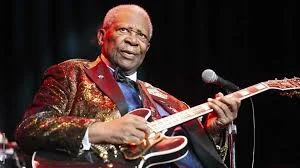
Sound Like B.B. King
B.B. King is one of the most recognisable voices in blues — a soulful and deeply expressive player who shaped the sound of the dawn of rock and roll. B.B. King's singing single-string lines through a semi-hollow guitar and clean amp defined the blues guitar voice for generations. He never used a tremolo bar — his entire vibrato came from his fretting hand alone, producing the "butterfly" vibrato that became one of the most studied techniques in blues. Below are complete rig guides at four budget levels, so you can start building their sound whether you're just starting out or ready to invest in the full setup.
Quick Answer
To sound like B.B. King, start with a Epiphone ES-339 into a Boss Katana 50 MkII, with a Boss Blues Driver BD-2 as your key effect.
Tone Analysis
B.B. King's Guitar Tone — In Depth
Tone Philosophy
B.B. King never used a slide. He never used a tremolo arm. He developed instead a vibrato so expressive and identifiable that the technique itself became inseparable from his identity — to the point where his guitar was named Lucille, and "Lucille" was the sound of B.B. King's left hand on a sustained note. His philosophy was the elimination of everything extraneous. One note, given absolute care and attention, could express more than ten. This restraint is the foundation of his approach to both tone and phrasing.
The Signature Sound
The B.B. King sound is built on a Gibson ES-355 (a semi-hollow body guitar with humbuckers and a vibrato system he never used) into a variety of amplifiers over his career — Fender Super Reverb and Boogie Bear in the classic recordings, various tube combos in later years. The tone is warm, round, with a particular singing quality on single notes sustained by his vibrato. There are no pedals in the classic B.B. King signal chain. No overdrive. No effects. Guitar into amp, and his hands doing everything else.
Key Gear
Lucille was a Gibson ES-355 in custom black or red finish, always without the tremolo system (which he had removed to prevent breakage during performances). The pickups were Gibson humbuckers — specifically the pickups on the neck position, which he used almost exclusively for lead playing. His amplifiers varied across decades, but the consistently warm, midrange-forward character was created by playing the neck pickup close to the fingerboard of a semi-hollow guitar, which gives the signal more body and less brightness than a solid body would produce.
Playing Approach
B.B. King's vibrato — the shaking of a sustained note by rapidly bending and releasing it — is the most influential vibrato technique in blues. It is not a gradual wavering but a rapid, wide oscillation that gives each sustained note life and movement. Every blues and rock guitarist who uses finger vibrato is working in his debt. His phrasing approach — playing a phrase, then stopping to let the last note sustain, then playing another phrase — created a conversational quality in his solos that storytellers have used as a model for both music and teaching.
Legacy
B.B. King is the most complete definition of the blues guitar tradition: technically masterful, emotionally direct, stylistically consistent over decades, and enormously influential. His impact on rock and roll — through the blues players who cited him (Clapton, Hendrix, SRV, Beck) who were then cited by subsequent generations — is one of the most important chains of influence in popular music history.
Budget Comparison
Pick Your Budget Level
£500 · Sweet Spot
~£517
- GuitarEpiphone ES-339
- AmpBoss Katana 50 MkII
- OverdriveBoss Blues Driver BD-2
£1,000 · Pro-Level
~£957
- GuitarEpiphone ES-335 Dot
- AmpFender Blues Junior IV
- EQMXR M108S 10-Band EQ
£2,500 · Premium
~£2497
- GuitarEpiphone ES-339
- AmpFender '65 Twin Reverb
- ReverbStrymon Flint
Shop Now
Buy the Key Gear — £500 Sweet Spot
Guitar, amp and essential effects for the authentic B.B. King sound. The guitar and amp together account for 80% of the tone.
Complete the Rig
Essentials Every Guitarist Needs
These aren't exciting — but every rig needs them. Buy once, sorted forever.
Tone Profile
B.B. King's Sound
Gibson Lucille (ES-355 with blocked tremolo, no f-holes) into a clean solid-state Lab Series or Polytone amp. Warm, mid-forward and completely unprocessed — no overdrive, no reverb, no delay. King's hand vibrato and phrasing do all the expressive work.
Modeling Amps
Get B.B. King's Tone on Your Modeler
Targeting Fender (Twin Reverb / Deluxe Reverb). Use these amp models and IRs as your starting point — dial in from there using the knob settings above.
Set volume high for natural breakup; add a TS-style drive in front for lead
Bright switch on for sparkle; use a clean boost for lead push
Song Match
Which B.B. King Songs Suit Your Amp
Tone Match
Closest Real-World Tone Match
If you like B.B. King's tone, these players use a similar approach — same gear philosophy, comparable sound characteristics.
Weekly Tone Tips
One setting, one artist insight, one gear pick. No noise.