Rig Builder
Budget Rig Breakdown
Signal Chain


Essentials
Complete Your Rig
The accessories every serious guitarist needs — cables, strings, and the rest.
D'Addario Chromes Flatwound Strings 11-50
Flatwound strings eliminate string noise and produce the warm, smooth tone jazz requires.
Dunlop Ultex Standard Pick 0.60mm
Thin picks produce the softer, warmer jazz attack — less attack = more warmth.
Planet Waves American Stage Guitar Cable 10ft
Solderless ends and lifetime warranty. The cable most session guitarists trust.
Boss TU-3 Chromatic Tuner Pedal
The professional standard for live tuning. True bypass, powers other pedals, ultra-accurate.
Levy's M8 Guitar Strap
Quality leather strap used by touring guitarists. Genuine comfort for 3-hour sets.
Technique
Key Tone Tips
- No tremolo bar — all vibrato comes from a fast, narrow shake of the fretting finger
- Neck pickup only; guitar tone at 6–7, amp completely clean
- BB's vibrato is fast and narrow — pivot from the wrist, not the whole forearm
- Leave wide gaps between phrases — the silence is as musical as the notes
- Bend upward into the note, hold, then add vibrato; never release early
- Play fewer notes with total intention — BB avoided runs, every note was deliberate
- Mid-forward amp EQ (boost 500Hz–1kHz) reproduces the semi-hollow body warmth
- Volume swells with the guitar knob add dynamics without a pedal
- Study "The Thrill Is Gone" — definitive example of his phrasing and space
- The vibrato IS the technique — King has said his vibrato is his voice, his cry. Practice holding a fretted note and developing a fast, narrow vibrato that sounds like a voice sustaining a vowel sound. Everything else in his playing is secondary to this single technique
- King almost never played rhythm guitar — every note he played was a melodic statement. He would play a phrase, then stop completely and let the band answer. Practice playing a BB-style solo with explicit rests of 2-4 bars between each phrase, letting silence be part of the music
- The Gibson ES-355 semi-hollow neck pickup gives the nasal, vocal warmth — the semi-hollow body resonance with the neck pickup at moderate amp volume creates the characteristic sound. Too much treble makes it harsh; rolled-off tone with the neck pickup is the target
Background
About B.B. King's Sound
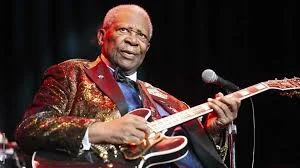
B.B. King's singing single-string lines through a semi-hollow guitar and clean amp defined the blues guitar voice for generations. He never used a tremolo bar — his entire vibrato came from his fretting hand alone, producing the "butterfly" vibrato that became one of the most studied techniques in blues.
Tone History
B.B. King's Tone Evolution
BB King's rig was among the most stable in blues history — Lucille (a Gibson semi-hollow, no vibrato bar) into a Gibson Lab Series amp, period. The evolution was purely in playing dynamics and never in equipment.
Full timeline: 2 eras →Song Breakdowns
B.B. King Song Rigs
The Thrill Is Gone
Completely Well · 1969
BB King's most famous tone — Lucille (a Gibson ES-335 variant) into a Lab S…
Every Day I Have the Blues
Live at the Regal · 1965
BB King live — the Regal Theatre recording captures his peak-era tone: raw,…
Three O'Clock Blues
RPM Records single · 1951
BB King's first number one hit — his earliest available tone uses a Gibson …