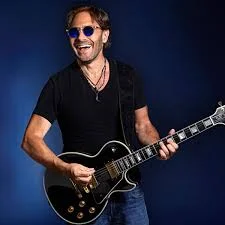
Al Di Meola — £1,000 · Pro-Level Tone
Al Di Meola brought flamenco-influenced right-hand technique to electric jazz-fusion guitar — his strict alternate picking (never legato), lightning-speed runs and Latin rhythmic sensibility created some of the 1970s' most technically astonishing recordings. Replicating that nuanced and harmonically sophisticated sound at the £1,000 · Pro-Level mark means Epiphone ES-335 into Fender Blues Junior IV. This build totals ~£1,048 and captures the core character — a serious investment that brings you within touching distance of the real thing.
Build Al Di Meola's £1,000 · Pro-Level Rig
2 pieces · Total ~$1,140
What guitar does Al Di Meola use?
Al Di Meola is primarily associated with superstrat style guitars. At a £1,000 budget, Epiphone ES-335 delivers the essential tonal character.
What to Buy
£1,000 · Pro-Level — Complete Gear List
Can't find one? See alternatives:
Why This Rig Works
How Al Di Meola's gear choices create the signature tone
Epiphone ES-335
The Epiphone ES-335 provides the tonal foundation for the entire rig — its character shapes everything that follows.
Fender Blues Junior IV
This is where the magic happens for Mayer and SRV tones. The EL84 power section breaks up beautifully when pushed, and the bright, clean headroom is exactly what Tube Screamer boost tones are built on.
The Combined Tone
Gibson SG or ES-335 into a clean Mesa/Boogie or Fender amp. The tone is bright and articulate — all pick attack and note definition. Unlike many fusion players, Di Meola rarely uses legato; every note is picked with strict alternate picking, producing an almost percussive clarity even at extreme speed.
Tone Tips
Getting the Sound Right
- The Fender Blues Junior IV stays cleaner longer than a Marshall-style amp — push it with a low-gain overdrive (gain at 2–3, level up) rather than cranking its own gain. Set treble at 6, bass at 4, and let the guitar's volume knob handle the dynamics.
- Strict alternate picking — every note picked down-up-down-up regardless of string changes. No sweeping or economy picking. The evenness of alternate picking produces the clarity in fast runs
- Flamenco right-hand influence on the electric — the percussive, snapping attack comes from applying classical/flamenco right-hand technique to the electric guitar pick
- Bright amp, no overdrive — any distortion blurs the note definition that is the entire point of the picking technique
- Heavy pick, steep pick angle — a heavy jazz pick held at a steep angle produces the sharp attack. Thin picks at a flat angle produce the wrong transient
- Practise scales with a metronome at 40bpm using strict alternate picking before increasing tempo — the mechanics must be perfect before adding speed
- Harmonic minor and Phrygian dominant scales create the Latin character over minor chord progressions
Avoid These Pitfalls
Common Mistakes When Chasing This Tone
- Running the Deluxe Reverb's gain channel at maximum — above 8 on most high-gain channels, palm mutes lose note separation and become an indistinct wall. The target is the minimum gain for the target saturation, not maximum
- Setting amp gain to maximum — superstrats with high-output humbuckers already drive the amp aggressively. Gain at 8-9 into a high-gain channel gives muddy intermodulation, not more power.
- Setting compression ratio too high — a 6:1 or higher compression ratio completely homogenises the playing dynamics. The effect should be subtle and felt, not obviously audible on individual notes.
- Too many repeats at high mix — more than 3 repeats makes the delay effect accumulate and overwhelm the dry guitar signal. Keep it to 2-3 repeats at a subtle mix level.
- Ignoring the dynamic interplay between volume knob and amp — fusion players often use the guitar volume knob as an additional tonal tool. Leaving it at 10 the whole time loses expressiveness.
Budget Alternatives
Same Tone, Different Budget
FAQ
Al Di Meola Tone — Common Questions
Al Di Meola is primarily associated with superstrat style guitars. At a £1,000 budget, Epiphone ES-335 delivers the essential tonal character.
Al Di Meola's amp is boutique clean voiced — clean to moderate gain. At the £1,000 level, Fender Blues Junior IV is the closest match.
The £1,000 tier adds noticeably better build quality and tonal nuance over the £500 rig. This build totals £898 with Epiphone ES-335, Fender Blues Junior IV. This is the tier where the tone becomes genuinely convincing for gigging and recording.
Al Di Meola's tone is defined by fusion-speed, alternate-picking, flamenco-electric. The combination of superstrat guitar and boutique clean amp creates a sound that is immediately recognisable.
Al Di Meola's gain approach is very clean — minimal distortion even at volume. The tone comes from the amp's natural warmth. At £1,000, this is replicated through Fender Blues Junior IV.
Al Di Meola — £1,000 · Pro-Level Complete Rig
~£1,048Guitar
Epiphone ES-335
Amp
Fender Blues Junior IV
Tone Match
Closest Real-World Tone Match
If you like Al Di Meola's tone, these players use a similar approach — same gear philosophy, comparable sound characteristics.
Related Tones