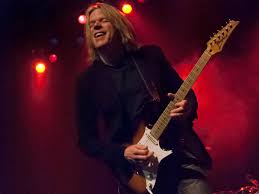
Andy Timmons — £500 · Sweet Spot Tone
Andy Timmons's powerful and driving tone took shape during an era of reinvention, grunge, and raw expression and remains one of the most sought-after sounds on guitar. Ibanez AT signature through a Roland JC-120 and Mesa Boogie — Timmons' lyrical melodic leads balance technical facility with pure emotion, making him one of the most underrated voices in rock guitar. At the £500 · Sweet Spot mark — the sweet spot — enough to get genuinely close to the sound without breaking the bank — the build centres on a Squier Classic Vibe 60s Stratocaster running through a Boss Katana 50 MkII, with Joyo Vintage Overdrive completing the signal chain, totalling ~£477.
Build Andy Timmons's £500 · Sweet Spot Rig
3 pieces · Total ~£477
What guitar does Andy Timmons use?
Andy Timmons is primarily associated with strat style guitars. At a £500 budget, Squier Classic Vibe 60s Stratocaster delivers the essential tonal character.
What to Buy
£500 · Sweet Spot — Complete Gear List
Why This Rig Works
How Andy Timmons's gear choices create the signature tone
Squier Classic Vibe 60s Stratocaster
The alnico V pickups are the real deal — they deliver genuine Strat chime, quack and warmth that responds naturally to pick attack. An ideal foundation for Hendrix, Mayer, Gilmour or SRV tones.
Joyo Vintage Overdrive
Joyo Vintage Overdrive — overdrive coloring added to the signal.
Boss Katana 50 MkII
Its 'Brown' amp character at low gain is an excellent approximation of the Fender-style clarity that Hendrix, Mayer, Gilmour and SRV all relied on. Built-in effects mean you're a few knob turns away from the right tone.
The Combined Tone
Ibanez AT signature through a Roland JC-120 and Mesa Boogie — Timmons' lyrical melodic leads balance technical facility with pure emotion, making him one of the most underrated voices in rock guitar.
Tone Tips
Getting the Sound Right
- A slapback delay (150-200ms, 1 repeat, low mix) on a clean Deluxe Reverb thickens the sound without audible echo — the repeat arrives close enough that it sounds like more speaker, not a separate event. Set mix at 20-25% maximum
- The middle position (positions 2 and 4 on a 5-way switch) gives the classic quack — use it for rhythm and funk-influenced playing
- Volume above 4 on a boutique clean amp in a small room will be very loud — these amps are designed for stage use and the tone at correct volume is very different
- Kick in the boost only for solos or moments needing extra presence — the contrast between boosted and non-boosted creates dynamic structure in the song
- Mix level matters more than repeat count — 2-3 repeats at correct mix level is more musical than 8 repeats at low mix
- Spring reverb sounds different from hall or plate — spring has a metallic, wobbly quality that is the classic guitar amp reverb sound
Avoid These Pitfalls
Common Mistakes When Chasing This Tone
- Leaving the guitar volume at 10 — single coil brightness at full volume can be harsh. Rolling back to 8-9 tames the top end without killing output.
- Running multiple pedals into the input — boutique amps are designed for the natural guitar signal. Too many pedals before the input changes the input impedance and alters the amp's response.
- Setting the boost level too high relative to the base tone — a boost for solos should raise the presence of the guitar, not cause a volume jump that overwhelms the mix. Level matching matters.
- Not setting delay to song tempo — a delay that doesn't match the song tempo creates a rhythmic clash that builds and becomes increasingly obvious. Tap the tempo every time.
- Playing at bedroom volume and expecting full blues tone — tube amps need to push air to bloom correctly. A cold amp at low volume sounds flat and lifeless.
- Using the bridge pickup as the default — the bridge is an accent position, not where the warmth and expressiveness of blues lead tone lives.
Budget Alternatives
Same Tone, Different Budget
FAQ
Andy Timmons Tone — Common Questions
Andy Timmons is primarily associated with strat style guitars. At a £500 budget, Squier Classic Vibe 60s Stratocaster delivers the essential tonal character.
Andy Timmons's amp is boutique clean voiced — clean with headroom, pushed by an overdrive pedal. At the £500 level, Boss Katana 50 MkII is the closest match.
Yes — £500 covers a real guitar and amp in the right tonal family. This rig totals £477 and captures the essential character. The guitar and amp account for 80% of the tone; pedals are secondary at this budget.
Andy Timmons's essential pedals include Delay, Reverb. At the £500 tier: Joyo Vintage Overdrive. Delay is the most important pedal — the others add nuance.
Andy Timmons's tone is defined by melodic-lead, lyrical, strat-expressiveness. The combination of strat guitar and boutique clean amp creates a sound that is immediately recognisable.
Andy Timmons's gain approach is clean-boosted — a clean amp pushed by an overdrive pedal. The pedal adds colour; the amp adds body. At £500, this is replicated through Boss Katana 50 MkII paired with Joyo Vintage Overdrive.
Andy Timmons — £500 · Sweet Spot Complete Rig
~£477Guitar
Squier Classic Vibe 60s Stratocaster
Overdrive
Joyo Vintage Overdrive
Amp
Boss Katana 50 MkII
Tone Match
Closest Real-World Tone Match
If you like Andy Timmons's tone, these players use a similar approach — same gear philosophy, comparable sound characteristics.
Related Tones