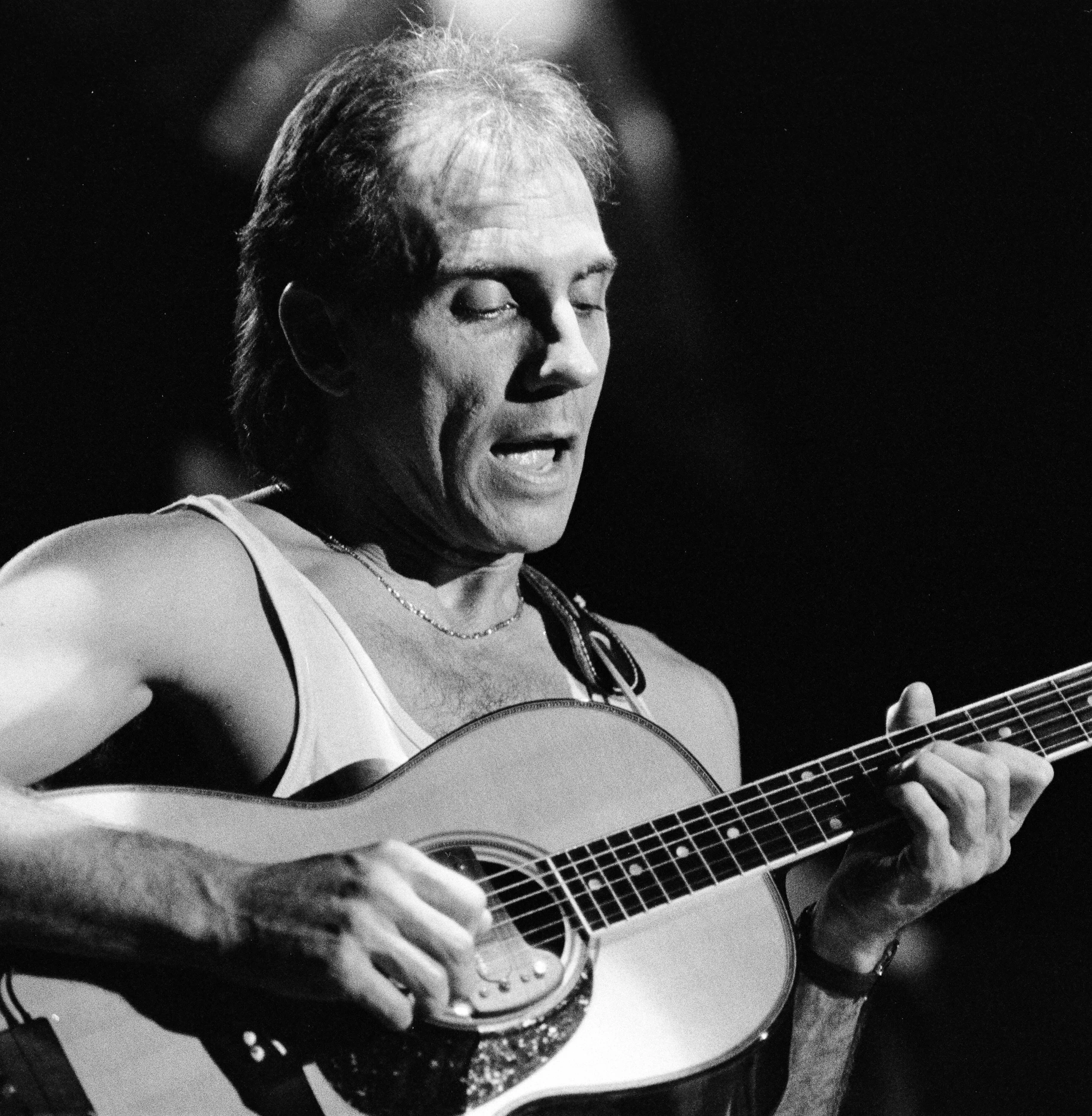
Larry Carlton
Larry Carlton — Mr. 335 — has been one of the most hired session guitarists in Los Angeles from the early 1970s through the present, appearing on thousands of recordings across pop, jazz, R&B, and rock. His association with the Gibson ES-335 defines one of the most immediately identifiable guitar tones in recorded music: the warm, semi-hollow sustain of the 335 through a Dumble amplifier producing a singing, fluid lead voice. His work on Steely Dan's Aja and Gaucho, Joni Mitchell's Court and Spark, and dozens of other studio classics established the standard for jazz-inflected session guitar lead playing. Room 335 (1978) is the essential solo showcase.
Warm, singing semi-hollow guitar through a Dumble — the ES-335's double-cutaway body and PAF humbuckers produce a sustaining, harmonically rich tone through the Dumble's legendary gain circuit. Carlton's leads flow like a fluid improvisation even when technically demanding: there is no effort visible in the phrasing. The tone sits between jazz warmth and blues-rock sustain, equally comfortable in either context.
Signal Chain Order
Why Larry Carlton's Rig Works
The ES-335's semi-hollow construction — solid center block plus resonant hollow wings — is precisely what lets Carlton's tone "sustain like a Les Paul but breathe like an archtop," as his own signature sound is described: the center block provides Les Paul-adjacent sustain and feedback resistance, while the hollow wings add an acoustic complexity and openness a true solid body lacks. That specific combination is why the 335 became so identified with him that his nickname is literally the guitar model.
The Dumble's smooth, harmonically complex gain character (rather than a more aggressive, cutting distortion) matters directly for session work spanning pop, jazz, and rock — a smoother saturation blends into varied production contexts without imposing an aggressive rock character that might clash with a Steely Dan or Joni Mitchell arrangement, which is part of why his famous "Peg" solo sits so naturally within that specific sophisticated pop-jazz production.
That effortless, fluid quality often noted in his playing — solos that sound improvised even when technically demanding — depends on a tone that responds smoothly and predictably to picking dynamics without any harsh transitions between clean and driven; the Dumble's famously musical touch-sensitivity gives him that consistent, controllable response, letting technical demands disappear behind what sounds like completely natural, unforced phrasing.
Guitars
Gibson ES-335 ('60s vintage)
1968–presentCarlton's defining guitar — the vintage ES-335 with PAF humbuckers and semi-hollow construction is the instrument that gave him his nickname Mr. 335. The 335's combination of acoustic resonance (from the hollow wings) and solid center block produces a tone that sustains like a Les Paul but breathes like an archtop.
Amplifiers
Dumble Overdrive Special
1980–presentThe Dumble ODS is one of the most sought-after amplifiers in existence — hand-built by Howard Dumble in limited quantities for specific clients. Carlton's Dumble produces the warm, harmonically complex gain that defines his tone from Room 335 onward.
Amp guide →Fender Tweed Deluxe
1968–1980Used through the early studio period — the Tweed Deluxe's natural breakup at moderate volume provides the warm, slightly gritty tone of his early Steely Dan and session work.
Effects Pedals
Ibanez TS-808 Tube Screamer
1980–presentMild boost into the Dumble for additional sustain on lead passages.
Boss DD-3 Delay
1985–presentModerate delay for adding dimension to fluid lead lines.
Key Albums & Tone
Title track Room 335, Sleepwalk, Nite Crawler — the solo album showcase. The ES-335 through the Tweed Deluxe: the warm, fluid lead tone on the title track is one of the most imitated guitar sounds in jazz-fusion and session guitar.
Peg solo — Carlton's most famous session contribution. The brief guitar solo on Peg is one of the most transcribed rock guitar solos in existence. ES-335 through the Tweed Deluxe at moderate breakup: a single, melodically complete statement.
Frequently Asked Questions
What guitar does Larry Carlton use?
Gibson ES-335 ('60s vintage). Carlton's defining guitar — the vintage ES-335 with PAF humbuckers and semi-hollow construction is the instrument that gave him his nickname Mr. 335. The 335's combination of acoustic resonance (from the hollow wings) and solid center block produces a tone that sustains like a Les Paul but breathes like an archtop.
What amp does Larry Carlton use?
Dumble Overdrive Special and Fender Tweed Deluxe. The Dumble ODS is one of the most sought-after amplifiers in existence — hand-built by Howard Dumble in limited quantities for specific clients. Carlton's Dumble produces the warm, harmonically complex gain that defines his tone from Room 335 onward.
What pedals does Larry Carlton use?
Larry Carlton uses Ibanez TS-808 Tube Screamer, Boss DD-3 Delay.
What is Larry Carlton's signature sound?
Warm, singing semi-hollow guitar through a Dumble — the ES-335's double-cutaway body and PAF humbuckers produce a sustaining, harmonically rich tone through the Dumble's legendary gain circuit. Carlton's leads flow like a fluid improvisation even when technically demanding: there is no effort visible in the phrasing. The tone sits between jazz warmth and blues-rock sustain, equally comfortable in either context.
About This Data
Gear information for Larry Carlton is compiled from live performance footage, rig-rundown interviews, manufacturer and signature-model documentation, and cross-referenced guitar press coverage — not a single source. Where accounts conflict (a common issue with decades-old gear history), we favour the version corroborated by the most independent sources and note genuine ambiguity in the text rather than presenting a guess as settled fact.
This page is maintained by Alex Hall, last reviewed July 2026. Spotted something out of date or inaccurate? Let us know — corrections are usually made within a few days.