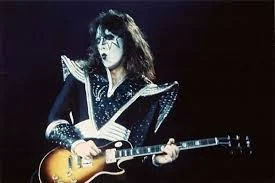
Song Rig
Detroit Rock City
Ace Frehley · Destroyer · 1976
Tone Overview
What Makes This Sound Unique
Opening riff perfection — a driving, palm-muted descent that establishes the heavy-rock template for the next decade. Ace's tone on Destroyer is slightly more produced and polished than earlier KISS, with more studio separation. The rhythm tone is tight and punchy; the lead tone is singing and sustained.
Signal Chain
- 1Gibson Les Paul Custom
- 2Marshall Super Lead (Destroyer-era modifications)
- 3studio effects (room reverb, tape delay for lead)
Amp Settings
Slightly more controlled than the live KISS tone — Destroyer was a landmark production (Bob Ezrin). The rhythm guitar has a tighter, more defined character. The lead tone adds studio reverb and tape delay for the singing sustain quality.
Technique
How to Play It
Palm-muted driving riff with a descending chromatic passing tone — the opening riff uses a chromatic note between scale degrees that gives it extra menace. Lead sections: full Les Paul sustain with wide vibrato and big bends.
Budget Alternative
Achievable With
Les Paul → Marshall JCM800 or DSL50 → noise gate for tightness. Lead tone: add room reverb and a touch of tape delay (Boss RE-20 or analog delay unit).
Your Gear
Adapt to My Amp
More from Ace Frehley
Other Song Rigs
Rock and Roll All Nite
Dressed to Kill · 1975
The definitive party anthem guitar tone — simple, driving, massive. Ace Frehley …
View rig →Shock Me
Love Gun · 1977
Ace Frehley's self-written KISS track and perhaps his most complete guitar perfo…
View rig →Cold Gin
Kiss · 1974
The debut album opener's longest track — Ace uses his Les Paul/Marshall combinat…
View rig →Back in the New York Groove
Ace Frehley · 1978
Ace's biggest commercial hit as a solo artist — a disco-influenced rock track wh…
View rig →Parasite
Hotter Than Hell · 1974
Ace's most aggressive early track — a straightforward hard rock riff that shows …
View rig →