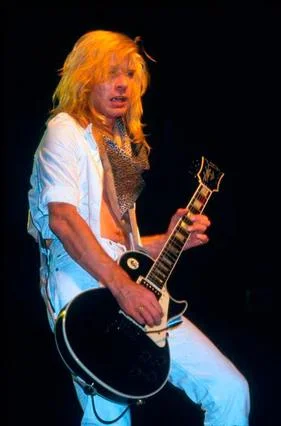
Tone Profile
Steve Clark — Tone DNA & Signal Chain
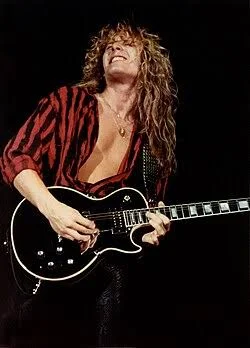
Steve Clark was one half of Def Leppard's twin-guitar attack — alongside Phil Collen, Clark's combination of blues feeling and hard rock power helped create the polished, harmony-drenched sound of Pyromania (1983) and Hysteria (1987). His Les Paul and ES-335 tones added a warmth and personality that balanced Collen's more precise superstrat approach.
Tone Analysis
Steve Clark's tonal fingerprint across 10 dimensions, derived from their signature gear and playing style.
Signal Chain
Steve Clark's core signal path — the order of guitar, pedals, and amp that defines the tone.
Signal Chain
Budget Recreation Options
Every budget tier below gives you an authentic path to Steve Clark's tone. Higher budgets add nuance — they don't fix a fundamentally wrong rig.
Sound Characteristics
Upgrade Path
Start with the £200 rig to validate the tone is right for you, then upgrade in order of impact.
- Guitar first — body and pickup type define the foundational character.
- Amp second — this is where 60% of the tone lives.
- Technique — pick attack, vibrato, and dynamics account for more tonal difference than any single gear upgrade at this point.
Similar Tones — You Might Also Like
Guitarists with a matching tonal fingerprint — calibrated across gain, saturation, warmth, aggression, and 9 other tone dimensions.