Rig Builder
Budget Rig Breakdown
Signal Chain
GuitarCV Strat
ODJoyo Vintage
AmpKatana 50

££ Mid-Range$380

£ Budget$37

Technique
Key Tone Tips
- Scalloped fretboard: the wood between frets is carved away — string bends and vibrato require less finger pressure
- Dorian mode (minor with raised 6th) is Blackmore's primary scale — darker than major, brighter than natural minor
- Treble booster before amp: sharpens the attack and drives the amp into harmonic saturation
- Bridge pickup of the Strat gives the cutting, nasal quality central to the sound
- Bach two-part invention fingerings: practise right-hand lead with left-hand bass notes simultaneously
- Classical phrasing: long note values, strong sense of resolution to the root or 5th
- Amp EQ: treble 8, mid 5, bass 4 — bright and forward in the mix
- Vibrato is fast and even — Blackmore's vibrato has a controlled mechanical quality
- Study "Smoke on the Water", "Highway Star" solo and "Child in Time" for the full range
Background
About Ritchie Blackmore's Sound
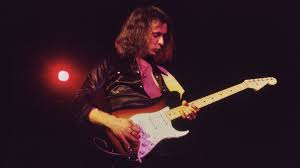
Ritchie Blackmore fused classical music — Bach, Baroque modes and minor key drama — with hard rock aggression to create the foundation of neoclassical rock guitar. His Fender Stratocaster through a Marshall stack (boosted with a Dallas Rangemaster) produced a bright, sharp and harmonically complex tone that inspired generations of metal guitarists.