Sound Like John Sykes
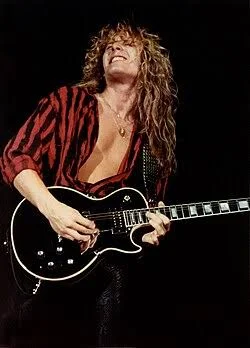
Getting John Sykes's heavy and assertive sound is within reach at any budget. John Sykes defined the sound of late 1980s hard rock with the massive, creamy lead tone he forged on Whitesnake's 1987 album — arguably the most commercially successful guitar sound of its era. Playing a modified PAF-loaded Les Paul through cranked Marshalls, Sykes combined Gary Moore's melodic sensibility with a ferocious vibrato and an aggressive attack that made every note sustain seemingly forever. The guides below cover the full range — from the £200 entry point to the £2,500 premium build. Compare tiers and choose the level that suits you.
Quick Answer
To sound like John Sykes, start with a Epiphone Les Paul Standard into a Boss Katana 50 MkII, with a Joyo Vintage Overdrive as your key effect.
Tone Analysis
John Sykes's Guitar Tone — In Depth
Tone Philosophy
John Sykes produced two of the best albums in 1980s hard rock — Thin Lizzy's Thunder and Lightning and Whitesnake's 1987 self-titled record — and then largely withdrew from commercial music. His playing on those two records demonstrates a complete mastery of the British hard rock guitar tradition: melodic, emotionally committed, technically precise without being technically showy.
The Signature Sound
The Whitesnake 1987 tone — Still of the Night, Here I Go Again — is a Gibson Les Paul through a Marshall JCM800 or Super Lead, with the gain pushed to the edge of maximum sustain. Sykes' lead tone sustains indefinitely on bent notes. His rhythm tone has a muscular mid-range presence that fills the space left by the keyboard-heavy arrangement.
Key Gear
His primary guitar is a Gibson Les Paul Standard with Seymour Duncan pickups. Marshall amplifiers are central. His live and studio setups have been relatively conventional by the standards of his era — the tone comes from the guitar-amp interaction rather than complex effects.
Playing Approach
Sykes' left-hand vibrato is particularly distinctive — wide, fast, and emotionally intense in a way that suggests classical training applied to rock context. His bent notes have a physical weight that comes from heavy strings and precise pick attack.
Legacy
Whitesnake's 1987 remains a hard rock landmark. Sykes's performance on the album represents the British hard rock guitar tradition at its most polished.
Budget Comparison
Pick Your Budget Level
£500 · Sweet Spot
~£507
- GuitarEpiphone Les Paul Standard
- OverdriveJoyo Vintage Overdrive
- AmpBoss Katana 50 MkII
£1,000 · Pro-Level
~£966
- GuitarEpiphone Les Paul Special
- OverdriveIbanez TS9 Tube Screamer
- AmpBoss Katana 100 MkII
- DelayStrymon Timeline
£2,500 · Premium
~£2475
- GuitarGibson Les Paul Junior
- OverdriveKing Tone Duellist OD
- AmpMarshall DSL40CR
- DelayStrymon El Capistan
- ReverbWalrus Audio Fundamental Reverb
Shop Now
Buy the Key Gear — £500 Sweet Spot
Guitar, amp and essential effects for the authentic John Sykes sound. The guitar and amp together account for 80% of the tone.
Complete the Rig
Essentials Every Guitarist Needs
These aren't exciting — but every rig needs them. Buy once, sorted forever.
Tone Profile
John Sykes's Sound
Modified Gibson Les Paul with PAF-style humbuckers (often a single-cut Les Paul Standard with DiMarzio Super Distortion in the bridge) into a cranked Marshall JCM800. The tone is thick, sustained and heavily mid-forward — the overdriven Marshall provides the saturation while the Les Paul provides the warmth and compression. Sykes often boosted with a Boss SD-1 or MXR Distortion+ to further saturate the front end.
Modeling Amps
Get John Sykes's Tone on Your Modeler
Targeting Marshall (Plexi / JCM800). Use these amp models and IRs as your starting point — dial in from there using the knob settings above.
Low master, drive at 6–7 for Plexi crunch; Brit 2204 for JCM800 lead
Keep presence at 5, let the amp breathe — avoid over-EQing
Song Match
Which John Sykes Songs Suit Your Amp
Tone Match
Closest Real-World Tone Match
If you like John Sykes's tone, these players use a similar approach — same gear philosophy, comparable sound characteristics.
Weekly Tone Tips
One setting, one artist insight, one gear pick. No noise.