Song Rig
Autumn Leaves
Joe Pass · Virtuoso · 1973
Tone Overview
What Makes This Sound Unique
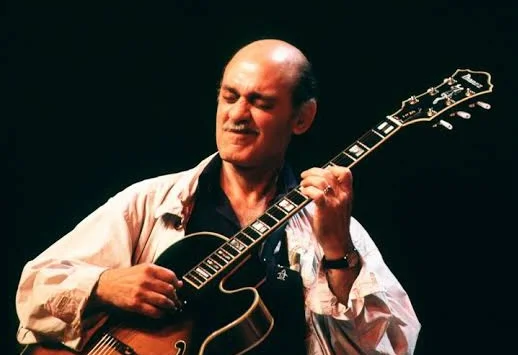
The most famous solo jazz guitar recording — Joe Pass alone with a Gibson ES-175, demonstrating that an archtop jazz guitar is a complete solo instrument capable of handling bass, harmony, and melody simultaneously. The tone is warm, slightly compressed by the floating pickup, and definitively 'jazz guitar'.
Signal Chain
- 1Gibson ES-175 (floating single pickup)
- 2Small studio amp (clean)
Amp Settings
Nearly acoustic in character — the ES-175 pickup outputs a very clean signal with the amp providing minimal coloration. The floating single pickup near the neck produces a warm, vocal quality on sustained melody notes.
Technique
How to Play It
Walking bass + chord + melody simultaneously — Joe Pass plays all three elements simultaneously on a single guitar: the thumb walks bass notes while the fingers maintain the chord voicing and the highest voice carries the melody. This 'solo guitar' technique requires absolute independence of all four right-hand fingers.
Budget Alternative
Achievable With
ES-175 or L-5 style archtop → very clean amp → practice the three-voice independence: walk bass notes with the thumb on beats 1 and 3, maintain chord with fingers 1-2, while the melody note (highest string of the chord) follows the tune.
Your Gear
Adapt to My Amp
More from Pass
Other Song Rigs
Night and Day
Virtuoso · 1973
The Virtuoso album's longest exploration — a Cole Porter standard that Joe Pass …
View rig →All the Things You Are
Virtuoso · 1973
The most harmonically sophisticated jazz standard in the Virtuoso repertoire — i…
View rig →Cheek to Cheek
Virtuoso · 1973
Pure, round and unaccompanied — Joe Pass's ES-175 speaks without support from ba…
View rig →Satin Doll
Virtuoso No. 2 · 1976
Silky and mid-focused — Pass swings this Ellington standard with a relaxed but p…
View rig →Blues for Basie
Portraits of Duke Ellington · 1974
Swinging and bluesy with a hint of edge — Pass allows a touch more attack here, …
View rig →