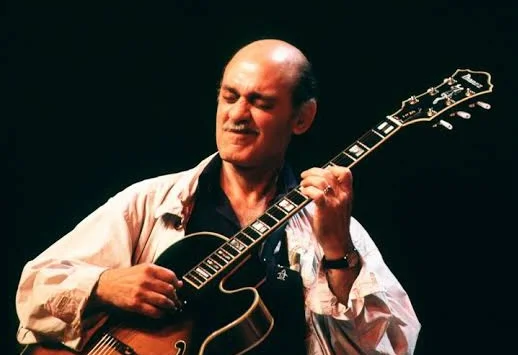
Song Rig
Satin Doll
Joe Pass · Virtuoso No. 2 · 1976
Tone Overview
What Makes This Sound Unique
Silky and mid-focused — Pass swings this Ellington standard with a relaxed but precisely articulated tone. The ES-175's natural compression and warm output make every chord voicing sit comfortably together without harshness.
Signal Chain
- 1Gibson ES-175 (neck pickup)
- 2Studio amplifier (Polytone or similar)
Amp Settings
Very low gain — the Polytone mini-brute amplifiers Pass used in later years were extremely clean and transparent. Slight room ambience; almost no added reverb.
Technique
How to Play It
Shell voicings (root-3rd-7th or root-7th-3rd) with melody on top — the jazz guitarist's toolkit distilled to its essentials.
Budget Alternative
Achievable With
Any archtop or semi-hollow through a Polytone or Roland Jazz Chorus at low volume. Eastman T486 is an affordable ES-175 substitute.
Your Gear
Adapt to My Amp
More from Pass
Other Song Rigs
Autumn Leaves
Virtuoso · 1973
The most famous solo jazz guitar recording — Joe Pass alone with a Gibson ES-175…
View rig →Night and Day
Virtuoso · 1973
The Virtuoso album's longest exploration — a Cole Porter standard that Joe Pass …
View rig →All the Things You Are
Virtuoso · 1973
The most harmonically sophisticated jazz standard in the Virtuoso repertoire — i…
View rig →Cheek to Cheek
Virtuoso · 1973
Pure, round and unaccompanied — Joe Pass's ES-175 speaks without support from ba…
View rig →Blues for Basie
Portraits of Duke Ellington · 1974
Swinging and bluesy with a hint of edge — Pass allows a touch more attack here, …
View rig →