Song Rig
Blues for Smoky
Kenny Burrell · Kenny Burrell · 1957
Tone Overview
What Makes This Sound Unique
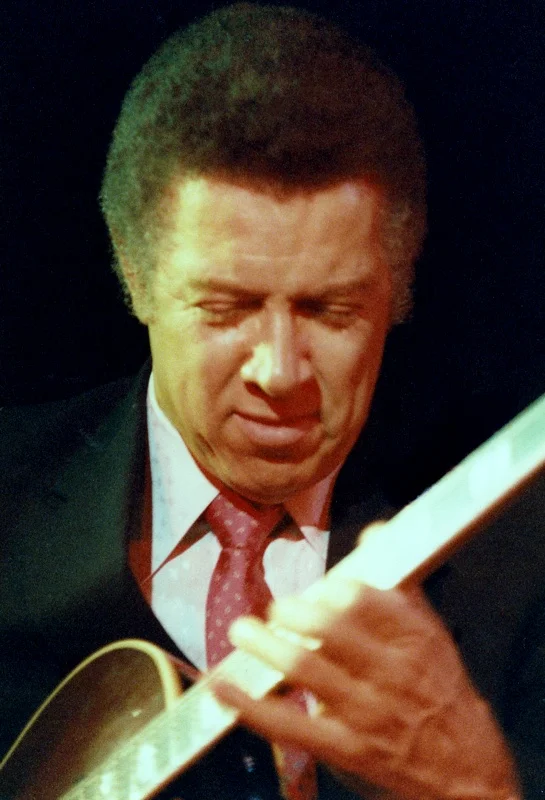
Burrell's earliest Blue Note recording — a faster, more bebop-influenced blues that shows his technical range before the more restrained Midnight Blue soul-jazz approach. The ES-175 tone of 1957 has a slightly brighter, more metallic quality than the later warmer ES-335 recordings.
Signal Chain
- 1Gibson ES-175 (1957 model, floating single pickup)
- 2Clean studio amp
Amp Settings
Slightly brighter than Midnight Blue — the ES-175's floating pickup has a different frequency response than the ES-335's neck pickup, with more bite and less warmth.
Technique
How to Play It
Bebop blues — Blues for Smoky uses bebop scale vocabulary (chromatic approach notes, bebop scales) over a 12-bar blues form, creating a more harmonically sophisticated blues than the soul-jazz simplicity of Midnight Blue.
Budget Alternative
Achievable With
ES-175 or similar archtop → clean amp → practice bebop vocabulary over 12-bar blues: replace the standard minor pentatonic scale approach with major-key bebop scales that target chord tones on strong beats.
Your Gear
Adapt to My Amp
More from Burrell
Other Song Rigs
Chitlins Con Carne
Midnight Blue · 1963
The most famous jazz guitar blues ever recorded — a shuffling minor blues that b…
View rig →Midnight Blue
Midnight Blue · 1963
The album's title track and Burrell's most emotionally resonant slow blues — the…
View rig →Satin Doll
Kenny Burrell · 1957
Definitively warm and round — Burrell's tone on the Blue Note recordings is the …
View rig →A Night in Tunisia
Kenny Burrell · 1957
Swinging and exotic — the Dizzy Gillespie standard suits Burrell's confident beb…
View rig →Gloria Free
Guitar Forms · 1965
Orchestral and adventurous — Guitar Forms is Burrell's collaboration with Gil Ev…
View rig →