Song Rig
Chitlins Con Carne
Kenny Burrell · Midnight Blue · 1963
Tone Overview
What Makes This Sound Unique
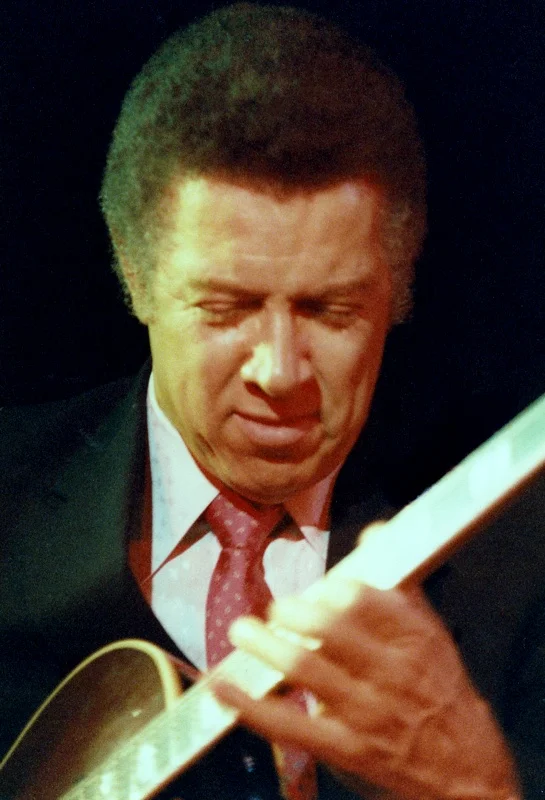
The most famous jazz guitar blues ever recorded — a shuffling minor blues that became a jazz standard. Burrell's Gibson ES-335 through a warm clean amp produces a meaty, mid-forward tone that sits perfectly in the soul-jazz groove. The P-90 or early humbucker pickup's warmth is ideal for the blues-influenced phrasing.
Signal Chain
- 1Gibson ES-335 or L-5 CES (Burrell used multiple instruments)
- 2Small Fender or Gibson amp (very clean)
Amp Settings
Warm, bass-forward, mid-heavy — Chitlins Con Carne's minor blues feel is served by the darkest, warmest jazz guitar tone setting. High bass and mids give the single notes a meat and weight appropriate to the funky minor blues.
Technique
How to Play It
Minor blues in jazz context — the song uses a minor blues progression (rather than major blues), which requires minor pentatonic and Dorian scale vocabulary instead of the major blues vocabulary. The phrases are slower and more deliberate than bebop lines.
Budget Alternative
Achievable With
ES-335 or hollow-body guitar → clean amp → warm EQ (high bass and mid, low treble) → practice minor blues: the minor blues scale (minor pentatonic + flat 5th) in minor keys creates the characteristic tension that Chitlins Con Carne exploits.
Your Gear
Adapt to My Amp
More from Burrell
Other Song Rigs
Midnight Blue
Midnight Blue · 1963
The album's title track and Burrell's most emotionally resonant slow blues — the…
View rig →Blues for Smoky
Kenny Burrell · 1957
Burrell's earliest Blue Note recording — a faster, more bebop-influenced blues t…
View rig →Satin Doll
Kenny Burrell · 1957
Definitively warm and round — Burrell's tone on the Blue Note recordings is the …
View rig →A Night in Tunisia
Kenny Burrell · 1957
Swinging and exotic — the Dizzy Gillespie standard suits Burrell's confident beb…
View rig →Gloria Free
Guitar Forms · 1965
Orchestral and adventurous — Guitar Forms is Burrell's collaboration with Gil Ev…
View rig →