Song Rig
Mockin' Bird Hill
Les Paul · New Sound! Les Paul · 1951
Tone Overview
What Makes This Sound Unique
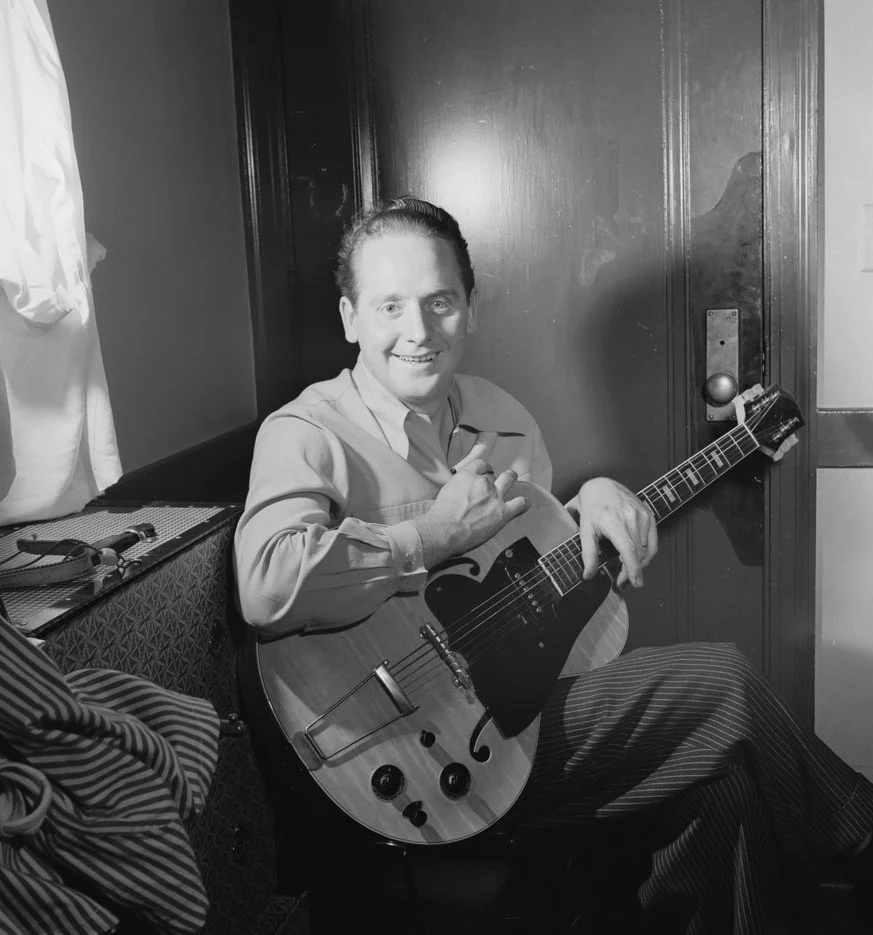
A country-influenced pop record showing Les Paul's range beyond pure showmanship — a warm, clean archtop tone (he used archtops before the solid-body became his trademark) with multiple-overdubbed guitar parts creating a full ensemble from one player.
Signal Chain
- 1Gibson Les Paul prototype or archtop (pre-1952)
- 2Custom recording setup
Amp Settings
Country-warm and clean — Mockin' Bird Hill uses a warmer, less trebly tone than the jazz-adjacent How High the Moon. The acoustic-adjacent sound suits the country melody.
Technique
How to Play It
Multiple-voice guitar orchestration — Les Paul writes separate guitar parts (bass, rhythm, lead, countermelody) and plays them one at a time on his tape machine, creating a guitar ensemble from a single instrument.
Budget Alternative
Achievable With
Any clean-toned electric guitar → DAW overdubbing → write separate parts for each guitar role: bass notes, rhythm chords, countermelody, lead melody. Record them separately and blend. This is the foundation of modern multitrack recording.
Your Gear
Adapt to My Amp
More from Les Paul
Other Song Rigs
How High the Moon
New Sound! Les Paul · 1951
The invention of multitrack recording disguised as a pop record — Les Paul used …
View rig →Vaya Con Dios
Bye Bye Blues · 1953
Les Paul and Mary Ford's best-selling record — a reverbed, slightly warm guitar …
View rig →Lover (When You're Near Me)
The New Sound · 1948
The earliest demonstration of multitrack overdubbing on a commercial record — Le…
View rig →The World Is Waiting for the Sunrise
Les Paul & Mary Ford At Home · 1951
Les Paul and Mary Ford's most famous recording — the combination of Paul's multi…
View rig →Tiger Rag
Les Paul Trio · 1945
Pre-electric Les Paul — this 1945 trio recording shows his jazz guitar roots bef…
View rig →